Illustration: Chen Xia/Global Times
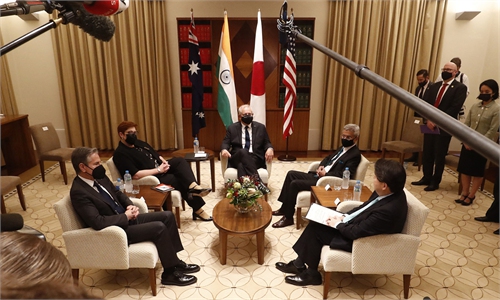
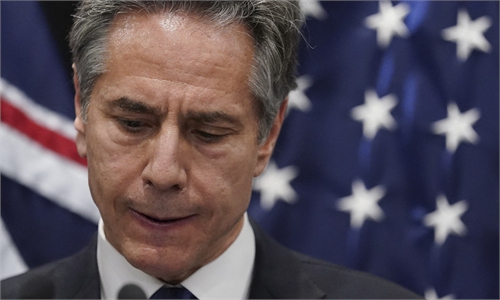
About a month after US Secretary of State Antony Blinken paid a rare visit to Fiji, Washington on Tuesday reportedly named a Special Presidential Envoy to lead negotiations with three Pacific island countries, including content of US' economic assistance for the countries.The US is currently engaged in negotiating amendments to certain provisions of the Compacts of Free Association (COFA) with the Republic of the Marshall Islands (RMI), the Federated States of Micronesia (FSM), and Palau, Reuters reported. The COFA negotiations "govern US economic assistance" for these three countries.
The US accelerating cajolement toward Pacific island countries in recent years has been widely interpreted as moves attempting to rival China in the region. The latest envoy appointment, in the Reuter's view, is a "signal that countering China remains a US priority."
It is no news that the US has been seeking to confront China in nearly every possible way; and it is also no news that US' so-called economic assistance toward others always comes with attached political strings which essentially serves the US' hegemonic interest. It is never about the national interest of the assistance recipient countries or their people.
The Pacific island countries have been overlooked by the US for decades; now not only that it has been involved into the White House's newly released Indo-Pacific Strategy, Blinken's visit to Fiji was the first by a US secretary of state in 37 years.
In the new Indo-Pacific Strategy, the US unsurprisingly touted for its American type of democracy again, claiming that the US will be "a partner in strengthening democratic institutions, the rule of law, and accountable democratic governance."
First and foremost, the US is in no position to define or write the rules of democracy. The notorious political interference it has been launching in the affairs of other developing countries under the guise of financial aid has been generating persistent fallout to these countries and regions. Some even fell into a state of continuous chaos and could not find a way out to develop independently.
As for the developing countries' actual development needs, they are not on the priority list of the US. The previous Trump administration dropped out of the Paris Agreement in November 2020, choosing to go against the global efforts to tackle the climate change - exactly one of the things that the Pacific island countries care most.
Though the Biden administration rejoined the agreement after taking office, and Blinken, during his "historical visit" in Fiji, pledged more American help on the climate change issue to Pacific island countries, it may be no more than just a frivolous promise because whether the following implementation is accountable or whether the promise could survive the US' future presidential elections remains unclear.
By contrast, China has been promoting cooperation with developing countries under a mutual beneficial and mutual respect approach, with no political strings attached. The over 2,000 projects concluded under China-proposed Belt and Road Initiative (BRI) are vivid examples that joining hands with China brings about tangible benefits to local development, especially when the US-led Western group has never passed a chance to vilify the BRI or drive wedges between China and others.
In any event, the Pacific island countries are not battlefields for the US to roll out its geopolitical maneuvers; and economic assistance should be aimed to facilitate the development of recipient countries and regions, instead of a vicious intention to confront China or any other country.
No sensible country wants to become a pawn amid great power competitions. At the end of the day, the Pacific island countries and their people will distinguish the evil intention and the hypocrisy behind Washington's rhetoric.
The author is an editor with the Global Times. bizopinion@globaltimes.com.cn
RELATED ARTICLES