Illustration: Chen Xia/GT
The America COMPETES Act of 2022, a multi-hundred-billion-dollar legislation full of hostility against China, has just been passed by the US Senate, and will be reconciled in the US House of Representatives for final passage, according to US media outlets. As some US politicians are complacent about the progress in concocting another political tool to confront China in the tech arena, other China hawks in Washington clamor it is still not tough enough.The legislation, which pledges massive subsidy for US semiconductor sector and other key industries to compete with China and reduce reliance on Chinese products, is full of ideological bias and provocations against China on several fronts, including the Taiwan question and human rights issue. But US Senator Marco Rubio on Tuesday claimed that the bill doesn't build sufficient safeguard to protect US research and industrial investment from China.
Rubio, who is notorious for his irrational attacks on China for political expediency, said the problem cannot truly be solved until "China stops lobbying American companies to protect its interest," because his legislation blocking imports from China has received opposition from American companies. Clearly Rubio has no clue about what he is talking about, but US companies are clearly aware of the danger of such radical moves to their and the US' interests.
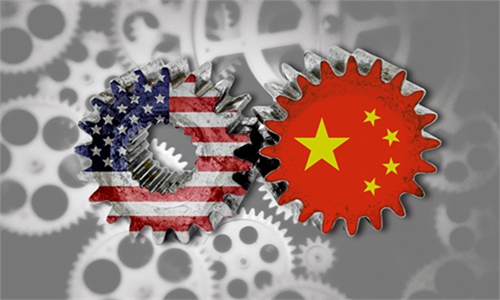
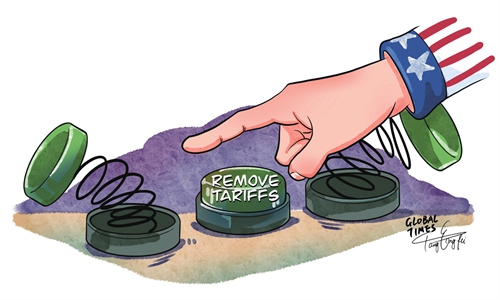
Rubio's rhetoric fully underscores the current political environment in Washington that prioritizes an ideology-driven zero-sum game over mutually beneficial economic outcomes. In a bizarre vibe of demonstrating who is tougher against China, US politicians are concocting more and more legislations that severely undermine bilateral economic relationship and sabotage technology cooperation with China.
Last June, the US Senate passed the US Innovation and Competition Act (USICA), which plans to spend $250 billion to support technology development in preparation for a full-scale confrontation with China in the technology field. But the bill has been on hold in the House of Representatives since then.
In January, the House of Representatives announced that it would introduce its own version of a similar bill, namely The America COMPETES Act of 2022. The nearly 3,000-page legislation also aims to strengthen the US domestic supply chain, advanced technology research and development, and scientific research, so as to enhance US competitiveness and outcompete with China.
After the bill was proposed, there were comments in US media outlets that if the bill was implemented, it would be the largest action by the US government to deal with China in the intensifying technology competition. But the bill also has two serious problems: double standards and danger to global technology development. This bill, which is full of Cold War mentality, poses the risk of further splitting global scientific and technological cooperation and further disrupting the global industrial chain.
As the world is still suffering a chip supply crunch due to COVID-19 pandemic impacts and geopolitical gaming factors, the global chip industry is facing a restructure. Once taking effect, the so-called COMPETES Act will further deepen the gap between China and US technology research and industries, which in turn will worsen the global chip shortage.
The US is extremely anxious about the decline of its relative advantage in the high-tech field, but driven by a twisted political agenda aimed at confronting China, there is little chance for it to achieve the goal of reviving technological innovation by passing the legislation.
If the US increases subsidies and develops technology to attract the return of the manufacturing, while continuing to force its allies to create a "China free" technology circle, then the world's technology field will inevitably be divided into two. That might be ideal for radical anti-China politicians in Washington, but for the business community in the US and around the world, that's a dangerous and costly path forward.
The author is a reporter with the Global Times. bizopinion@globaltimes.com.cn
RELATED ARTICLES