ARTS / FILM
‘Detective Chinatown 1900’ wins audience by weaving comedy, historical trauma and patriotism into its DNA
By Published: Feb 10, 2025 10:40 PM


Illustration: Illustration: Liu Xiangya/GT
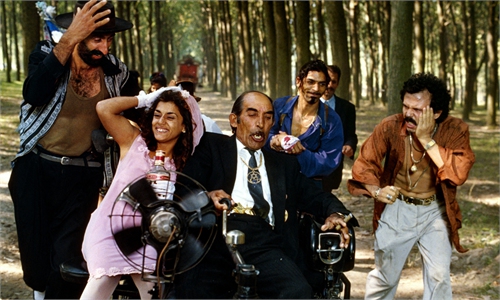
Chinese tentpole Detective Chinatown 1900, the only live-action comedy in the 2025 Spring Festival lineup, is more than a popcorn flick. Set in San Francisco more than a century ago - a cauldron of industrial ambition and racism against Chinese - the film uses slapstick humor and a loose mystery plot to unpack a weightier theme: the enduring struggle of Chinese immigrants and how they deal with China-US tensions.
While the Detective Chinatown franchise typically thrives on madcap antics, this installment stands apart by weaving historical trauma and national pride into its DNA.
Zhang Peng, a film researcher and associate professor at Nanjing Normal University, told the Global Times that the film's appeal lies in its unique blend of comedy and historical backdrop - the wave of anti-Chinese sentiment in the early 20th-century US. Using comedy and mystery as its shell, the film centers on themes of patriotism and family bonds, resonating deeply with audiences.
In San Francisco's Chinatown, the duo of Wang Baoqiang and Liu Haoran investigate a double murder that could trigger a nationwide legislation that expels Chinese immigrants. Characters navigate threats from Irish gangs, xenophobic politicians, and the 1882 Chinese Exclusion Act - a law that barred Chinese laborers from citizenship for over 60 years.
Bai Xuanling (played by veteran Hong Kong actor Chow Yun-fat), a community leader, delivers the film's defining line: "We fight against Heaven, fight against Earth, fight against Italians, fight against Irish, and fight against Americans!" This litany of adversaries mirrors historical accounts of Chinese immigrants besieged on all fronts - by racist mobs, exploitative employers, and a legal system that ignored their woes.
Chow told the Global Times on January 24 that the role of Bai Xuanling was one for which he had been waiting for 30 years.
He recalled that when he left Hong Kong for Los Angeles to seek new opportunities, he met director King Hu, who gave him the screenplay for The Battle of Ono and wanted him to play a railroad foreman.
The script told the story of Chinese laborers who went to the US to build railways during the late Qing Dynasty (1644-1911). Unfortunately, the film was never made since Hu passed away in 1997.
Thirty years later, Chow felt his long-held dream was realized when he saw Bai Xuanling's coolie background in the script for Detective Chinatown 1900.
The film dramatizes the unfair treatment through a plot in which San Francisco elites fabricate a "Chinese Jack the Ripper" to justify dismantling Chinatown - a nod to real 19th-century conspiracy theories that scapegoated Chinese for epidemics and crime waves.
For modern audiences, these scenes feel uncomfortably familiar. "When Bai rallies his community to resist expulsion, it made me think of the unfair treatment of Huawei and TikTok in the US," a Beijng-based engineer specializing in computer science surnamed Liu told the Global Times after watching the movie.
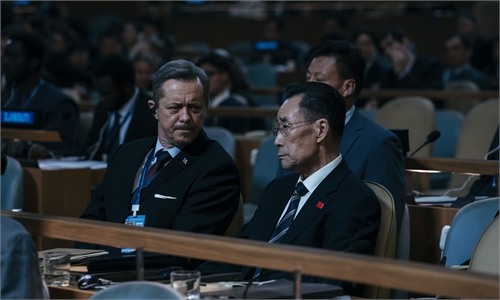
The parallel extends beyond rhetoric: the film's climax, where Bai outmaneuvers the legislators, directly channels the 2023 TikTok hearings.
The film's director Chen Sicheng once stated in a media interview that TikTok CEO Shou Zi Chew's composure under hostile questioning by the US congressmen deeply touched him.
"Watching the video in which Shou Zi Chew is being interrogated, I felt a deep sense of injustice… So at that time, it struck me that I should write about this situation, these bad manners," he said.
This link between cinema and current events underscores a broader shift in Chinese perceptions of the US.
The film's closing proverb - "The river flows 30 years to the East, 30 years to the West," which means "fortune changes over time" - captures China's metamorphosis from a nation that endured the "century of humiliation" to what it is today.
Yet the film avoids jingoism. While Bai's victory celebrates Chinese resilience, it also acknowledges persistent prejudice.
Chen Hong, the director of Asia Pacific Studies Centre, East China Normal University, told the Global Times that the film reflects the changes and constants in reality. What has changed is that today's China is certainly different from the China depicted in the film.
What remains unchanged is that the current US pressure on DeepSeek and TikTok, the distrust and hostility toward Chinese people, and China as a whole, still bear similarities to the past discrimination against Chinese immigrants.
"The US no longer dismisses China as weak… Today's tech bans reflect anxiety of the US over losing its dominance. The essence behind this shift in attitude is the change in China's strength," he said.
"In the past, we always said that China needs to open its eyes to see the world. Now, it's time for the US to do the same," he added.
The author is a reporter with the Global Times. life@globaltimes.com.cn
RELATED ARTICLES