BUSINESS / PRESS RELEASE
14th International Symposium on Digital Earth opens in Chongqing, featuring solutions for UN SDGs
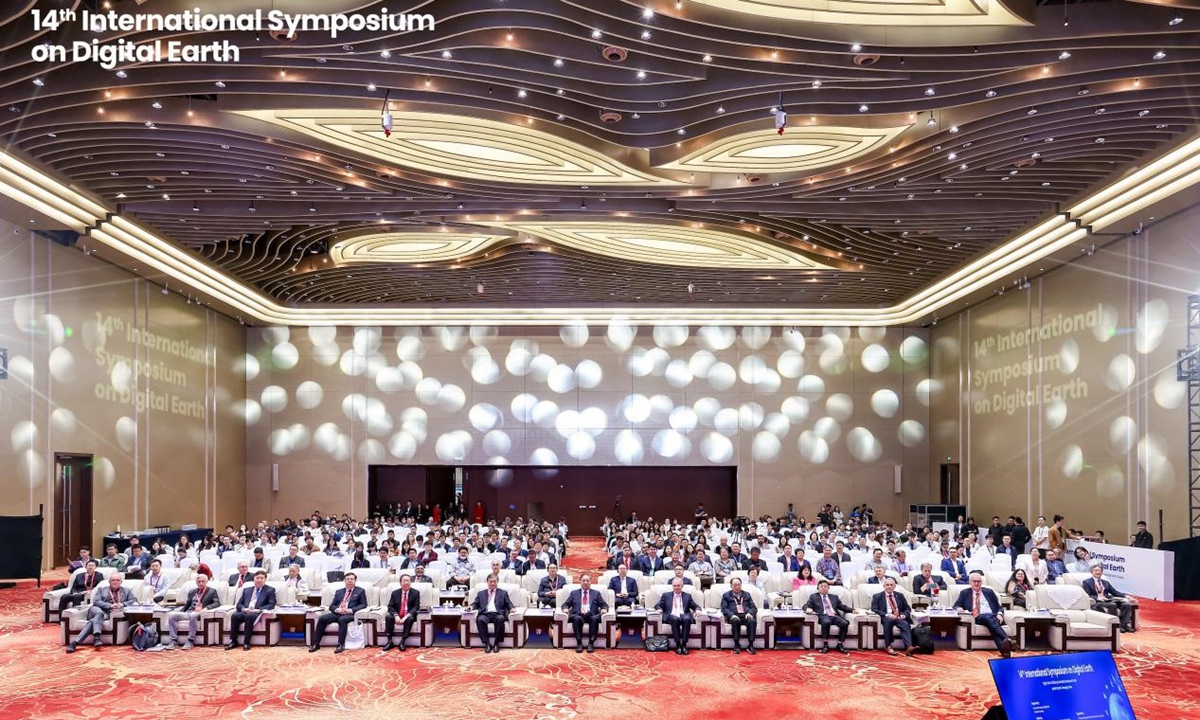
Photo: Courtesy of the 14th International Symposium on Digital Earth
On April 22, the 14th International Symposium on Digital Earth, co-hosted by the International Society for Digital Earth (ISDE) and Southwest University of China, kicked off in Chongqing. With the world racing toward the 2030 deadline for the UN Sustainable Development Goals (SDGs), the event rallied nearly 700 delegates from 30 countries and regions around the theme, “Digital Earth Facilitating Sustainable Development Goals.” Representatives from governments, academia, industry, the United Nations, and other international bodies dove into technological innovation, global ecology, and sustainability.
Distinguished speakers at the opening ceremony included Chongqing Vice Mayor Ma Zhen, the 77th UN General Assembly President Csaba Kőrösi, ISDE President Alessandro Annoni, Southwest University President Wang Jinjun, and CAS International Cooperation Deputy Director Wang Zhenyu (via video). Academicians from China and Austria, along with Canadian engineering fellow David Coleman, also graced the occasion.
Academician Guo Huadong of CAS, also ISDE Honorary President and Chairman of the symposium, chaired the remarks. Guo stressed urgent global SDG challenges but voiced optimism that Digital Earth technologies are opening new pathways to achieve these goals through rapid digital transformation.
Csaba Kőrösi highlighted digital technology’s potential, urging coordinated global and scientific efforts for effective action. Alessandro Annoni, celebrating the event’s return to China, lauded advances in quantum AI, digital twins, and nano-satellites, while urging open science and data to bridge persistent development gaps. Wang Zhenyu reaffirmed CAS’s focus on innovation and cross-border collaboration. Wang Jinjun described Digital Earth as reshaping 21st-century science and practice, positioning Southwest University at the frontier of digital geography, AI, and national strategies, with a strong commitment to building Digital Chongqing.
ISDE honored Alessandro Annoni and Li Deren with the “ISDE Fellow” title for transformative contributions. Additional accolades, including the Digital Earth Medal, Education Award, Service Award, Conference Organizing Award, and Outstanding Young Scientist Award, celebrated global pioneers and contributors in recognition of their dedication to Digital Earth development.
Plenary sessions featured Li’s keynote on “Spatio-temporal Intelligence for SDG,” showcasing real-time crisis mapping, economic tracking, and digital twin in smart grid. Kőrösi addressed digital solutions to accelerate the SDGs, stressing national planning and accessible, standardized data. Guo Huadong spotlighted the Big Earth Data Science Engineering Program, the SDGSAT-1 satellite, SDG Big Data Platform, Reports on Big Earth Data, and the UNESCO-endorsed Digital SDGs Programme, all fueling global sustainability.
The ISDE's flagship event returns to China for the third time since its 1999 inception. Over three days, attendees engaged with 8 keynote speeches, 53 sessions, and 470 presentations covering DSP, disaster monitoring, big Earth data, AI applications, and SDG implementation. A World Earth Day event hosted by Southwest University's Geography School garnered significant participation, while the 2025 Chongqing Declaration on Digital Earth was endorsed at closing.
Co-hosted by the Chinese National Committee of ISDE, CBAS, Southwest University, and supported by nearly 40 global organizations, the symposium reflects ISDE's mission since 2004 to advance Digital Earth through academic exchange, innovation, and international collaboration across 16 countries, two journals, and partnerships with prominent international bodies.
