ARTS / CULTURE & LEISURE
China Pavilion opens at Venice Architecture Biennale 2025
Architects interpret tradition and modernity
By Sun Langchen and Published: May 11, 2025 11:11 PM
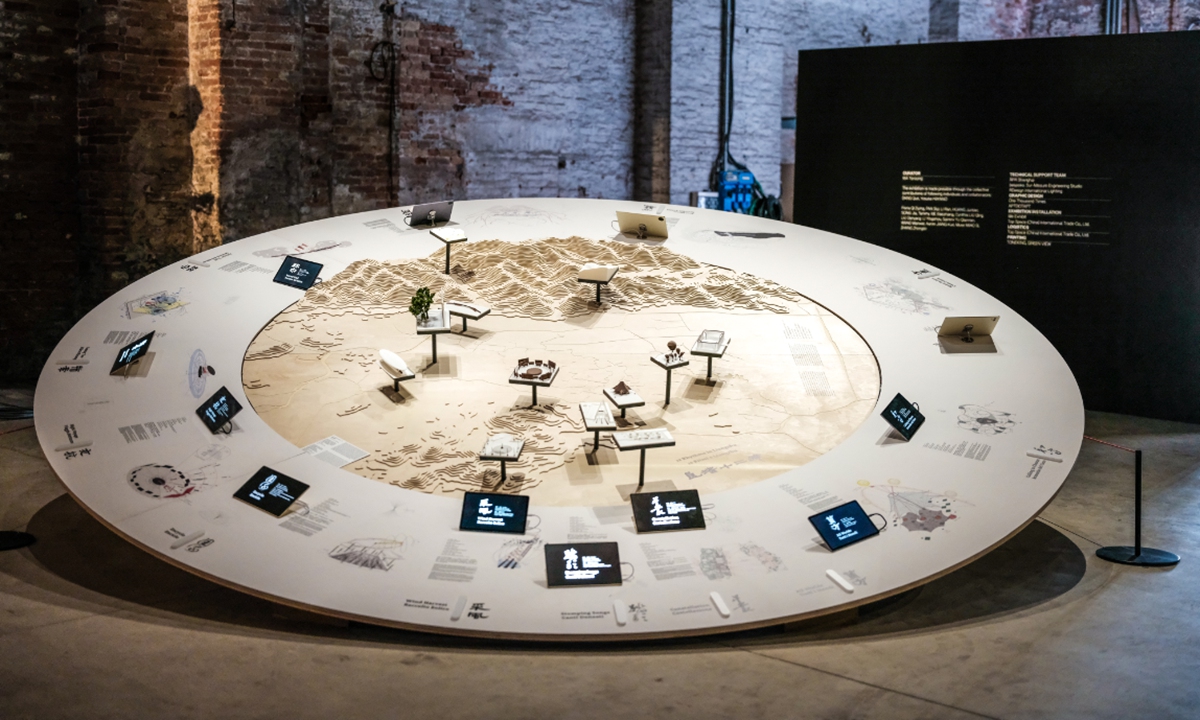
Photo: Courtesy of the interviewee
The Venice Architecture Biennale 2025's China Pavilion officially opened on Saturday under the theme "Co-Exist." Curated by renowned Chinese architect Ma Yansong, the exhibition brings together 12 multidisciplinary participants presenting 10 works that explore how traditional Eastern philosophy, particularly the concept of harmony between humanity and nature, can coexist and evolve with modern technological development in the transition from industrial civilization to the intelligent age, an exhibiting architect told the Global Times on Sunday.
Jia Guide, Chinese ambassador to Italy, delivered a speech at the opening ceremony, noting that over the past two decades of meticulous development, the China Pavilion has become a prominent cultural window in Venice that allows visitors from around the world to appreciate the beauty of Chinese modern art and design and to glimpse a genuine, multidimensional China.
Ma told the Global Times that the joint presentation of these works at the exhibition aims to be an ongoing process of being seen and discussed, showcasing the ways young architects interpret traditional Chinese culture and approach problems with a focus on modernity and the future. The pavilion highlights the different possibilities for the continuation and evolution of Chinese cultural heritage.
He expressed the hope that the China Pavilion can offer solutions from China, enabling the world to see Chinese wisdom.
Founded in 1980, the Venice Architecture Biennale is one of the most prestigious international platforms for architecture. During the event, countries are invited to showcase their latest architectural ideas and innovations through national pavilions. The 19th edition continues this legacy, focusing on sustainability, resilience and the future of human habitats.
According to official records, this year the China Pavilion features exhibits inspired by significant cultural landmarks and themes, including the Liangzhu Civilization, Dunhuang Grottoes, Beijing Central Axis and various urban development projects.
Drawing on the ancient Chinese worldview of "unity between Heaven and humanity," the participating architects integrate this philosophy into their approaches to material innovation, urban regeneration and landscape redesign, offering what Ma describes as "Chinese solutions" to global challenges.
One of the exhibition's centerpieces is 12 Rhythms in Liangzhu, presented by the China Academy of Art. Inspired by the ritual music of ancient Liangzhu, a 5,000-year-old archaeological site, the sound installation blends traditional Chinese instruments such as bells, guqin, chime stones, sheng, flute and xun to narrate a spatial story. It links the ancient Liangzhu ruins with the modern-day region, illustrating the evolution of the landscape, water systems, rural areas and urban life through sound.
Another exhibit is focused on the wisdom of traditional Chinese architecture, showcasing the springtime scenery along the Beijing Central Axis to visitors. Designers including Chen Feiyue from Dune Workshop, a Beijing-based studio, chose several key points along the Central Axis to represent these scenes by using close-up, soft, abstract point cloud images with gentle colors that consists of a three-minute video. Chen told the Global Times that places like Qianmen Street and the Bell and Drum Towers have always been presented as dignified and majestic throughout history, but in this exhibition they are presented from a human perspective, emphasizing an intimate and personal experience.
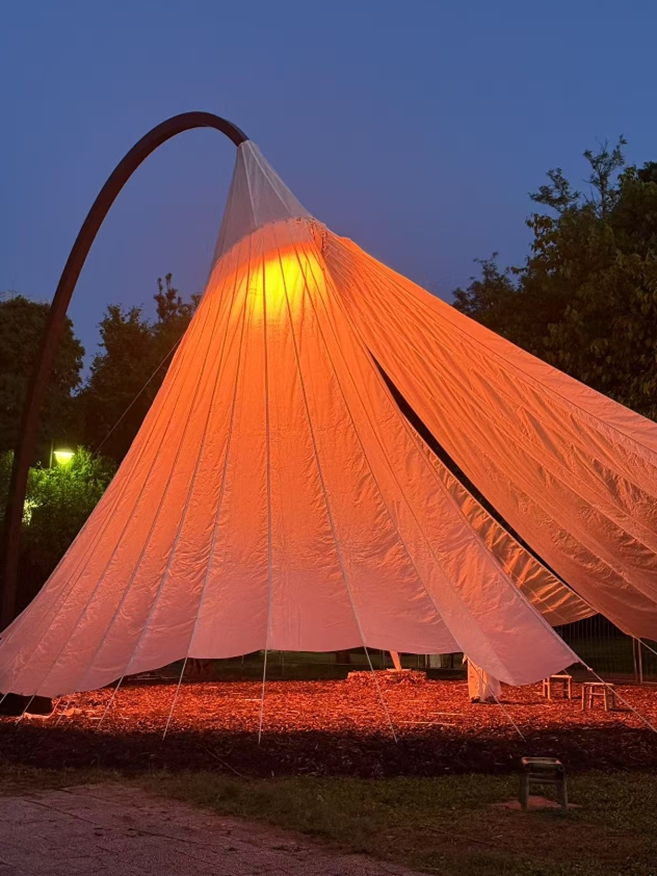
Photo: Courtesy of the interviewee
The installation Canopy takes inspirations from the traditional Chinese caisson ceiling. Using inexpensive green construction mesh collected from 12 architectural sites across China, the work reinterprets traditional aesthetics and expresses the Chinese vision of a harmonious and beautiful living environment.In addition to China's pavilion, a rural revitalization project titled "Langtou Experiment" is also featured in the main exhibition hall. This initiative focuses on rejuvenating Langtou, a 700-year-old village in South China's Guangdong Province, through a process of collective creativity and cultural preservation.
At the heart of the project is Chunyangtai, a new cultural hub that includes art venues, homestays, exhibitions, green spaces and a community market. These diverse elements aim to transform Langtou into a new cultural landmark for Lingnan culture.
The lead architect Zhang Yonghe told the Global Times that since Chunyangtai opened, Langtou has drawn lots of visitors. What has surprised them is that beyond the contemporary architecture and exhibitions, what's truly remarkable are the ancient alleyways, pastoral surroundings and the vibrant lives of local villagers.
"Our goal is not just to renovate buildings, but to revitalize the village's economy and everyday life," Zhang said.
At the Venice Biennale, the Langtou experiment is presented through models and videos showcasing the village's transformation and the people involved. A cultural fish lantern performance was also brought to Venice. It features illuminated lantern installations rich in Lingnan cultural symbolism floating along the city's iconic gondolas.
"Fish lanterns are traditionally used in Langtou's Lantern Festival to bless families and the village," said Shen Min, head of the Langtou Rural Revitalization Project.
"This time, we lit them in Venice, connecting the heritage of a Chinese village with the world, and allowing international visitors to witness the living pulse of Chinese tradition."
Lucia Pasqualini, former Italian Consul General in Guangzhou, Guangdong Province, called the Langtou project "beautiful" and expressed hope that more people will come to appreciate the cultural depth of such places.
RELATED ARTICLES