ARTS / CULTURE & LEISURE
CFA’s bids for qualifiers a bold move to boost morale

Illustration: Chen Xia/GT
The Chinese Football Association (CFA) announced Tuesday its plan to host three international teams for friendlies in early September in China during FIFA's international match window, drawing mix reactions.The announcement came on the heels of the CFA's bid to host the fourth round of the 2026 World Cup Asian qualifiers, a decision made even before the national team secured qualification for that stage.
With the national team needing two wins in June against Indonesia and Bahrain to keep their World Cup hopes alive, the CFA's proactive approach has drawn mixed reactions. While critics argue the CFA's move risks "spending excessive money to host others," but the strategy carries deeper implications for stabilizing morale for the national team as well.
The national team's position in Group C of the World Cup Asian qualifying third round has left fans anxious. Currently, the national team sits at sixth in the group, meaning they need to secure two wins in the remaining two matches to advance.
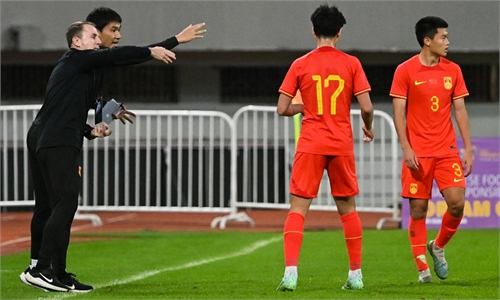
That makes the CFA's bid for the World Cup Asian qualifying fourth round and organization of friendlies a calculated gamble: leveraging home advantage to galvanize the team when they qualify, but what's more importantly is, demonstrating confidence in the team. As the CFA noted in its statement, "The CFA plans to actively bid to host this stage of the tournament, aiming to ensure that the national team can continue to pursue its goal of qualifying for the 2026 FIFA World Cup."
Advocates argue that bidding for the qualifying matches, even before qualification is confirmed, has a critical psychological purpose, as the CFA's move sends a message to players and coaches that the governing body believes in their ability to succeed.
While the stakes are higher for China in the World Cup qualifiers, a similar dynamic is still possible. If the Chinese team secures a playoff spot, hosting matches could provide logistical benefits such as reduced travel fatigue and familiar playing conditions.
Critics have questioned the wisdom of hosting friendlies if the national team fails to qualify for the fourth round. However, the CFA's September friendlies proposal serves a dual purpose: It provides vital international exposure for players regardless of World Cup outcomes. Young talents like 18-year-old striker Wang Yudong, who has impressed in the Chinese Super League (CSL) by tying the top in the scoring list, stand to gain from facing overseas opponents.
Moreover, the friendlies address a pressing need. In recent years, China has hosted few high-profile international matches. No top-tier clubs or national teams visited the Chinese mainland even though the fan demand was huge in 2024, with friendlies limited to lower-ranked Asian teams.
This dearth of quality opposition has hindered domestic players' growth, as seen in the national team's unpreparedness in the World Cup Asian qualifiers third round opening game with a 7-0 humiliation by Japan in September 2024. By inviting stronger teams to play friendlies, the Chinese national team could simulate the intensity of World Cup qualifiers and bridge the gap between domestic and international standards.
Critics say that the financial costs of hosting international matches is considerable. If the national team fails to qualify, the CFA could face a backlash over perceived waste. But even if the national team exits the World Cup Asian qualifiers, the friendlies could serve as a test ground for young players, allowing coaches to experiment with tactics and build momentum for future campaigns.
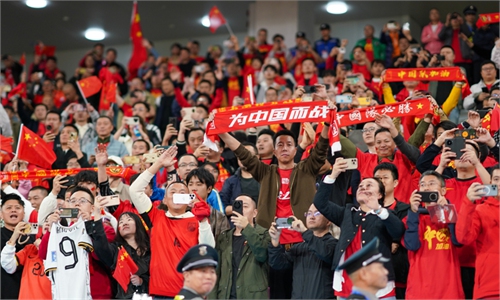
The return on investment of hosting international games at home could also be substantial as it boosts stadium utilization and fan engagement, which in turn funds grassroots programs. For host cities, it could also be a tourism booster, as seen in Hangzhou in March when the national team played a qualifier against Australia. The game set a new national attendance record with 70,188 people.
Public opinion remains divided. While some fans view the CFA's moves as a desperate attempt to deflect ever-growing criticism, others see them as a necessary long-term strategy. This aligns with broader trends in Chinese football, in which a growing segment of fans prioritizes sustainable growth over short-term results.
While the immediate focus is on the June qualifiers, these moves could safeguard a clearer path in developing Chinese football. Conversely, failure could deepen public cynicism and set back the reforms the CFA is implementing.
Ultimately, the CFA's strategy hinges on two interconnected goals: stabilizing morale and fostering talent. By creating a supportive environment for the national team and providing young players with competitive opportunities, a foundation is being laid for future success.
The author is a reporter with the Global Times. life@globaltimes.com.cn
RELATED ARTICLES