ARTS / CULTURE & LEISURE
East China’s Wuxi launches pet travel bus as more cities embrace services for furry friends
Pet-friendly services embraced in many Chinese cities
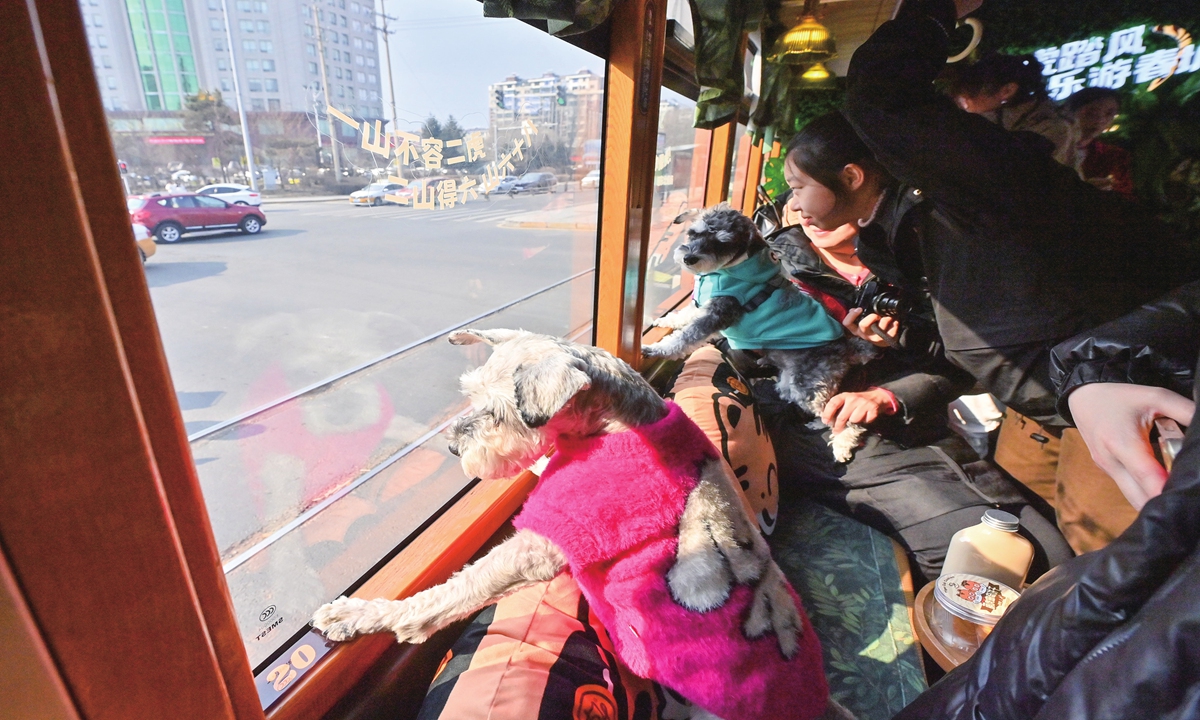
Pets and their owners look outside the window on a pet-friendly bus in Changchun, Northeast China's Jilin Province on March 16. Photo: VCG
In the early summer sunshine by the shores of Taihu Lake, China's third-largest freshwater lake, a group of furry little "tourists" were on a dedicated bus with their human companions, setting off for a day of adventure. The bus they boarded was among the country's first batch of pet-friendly bus routes, which was recently launched in Wuxi, East China's Jiangsu Province and allowed owners to bring their pets along for customized scenic rides and suburban getaways.
Many pet owners often face difficulties when taking pets on an outing on public transportation. "Usually, trying to travel with their pets means driving or calling a cab. But with this special bus service, they can travel together and enjoy a better experience. Since its debut, the service has quickly won the hearts of local pet lovers," said Du Mingqi, the manager of the dedicated bus line at Wuxi Public Transport Group, as reported by CCTV.
The pet-friendly bus is just a very little part of a broader movement toward more inclusive, pet-friendly urban environments across China. With pet ownership on the rise, more and more places are exploring ways to create a pet-friendly living despite the absence of nationwide unified standards or regulations for such initiatives. The scope of pet-friendly spaces is not just expanding public transit, but also extended to shopping malls, boutique hotels and scenic areas.
An inclusive public transit
"I really hope that buses like those in Wuxi, where people can hop on with their dogs and head to the suburbs, will catch on in more cities," Tao Ran (pseudonym), who lives in Beijing with her golden retriever, told the Global Times.
"In Beijing, if I want to take my dog out to hike in the mountains in the suburban Miyun district, I have to drive myself or rent a car. Sure, there are a few day-trip buses that allow pets, but they're few and far between," said Tao.
But with the country's recent launching of a pilot high-speed railway pet consignment service, Tao said that she believed the public transportation facilities will become more and more open and tolerant to pets.
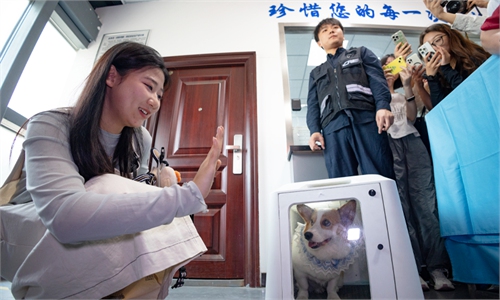
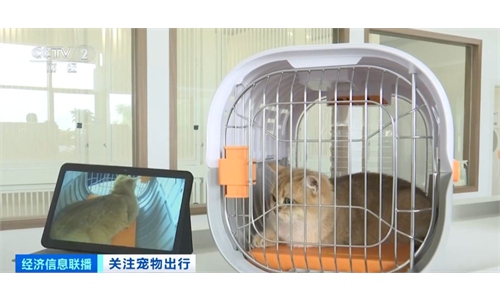
In April, China's railway authorities launched a pilot pet-shipping service on the Beijing-Shanghai high-speed train routes. The initiative allows passengers to reserve space for one healthy, small-sized cat or dog under a "separate but supervised" model. Pets are transported in specially designed, climate-controlled containers located in a separate cargo area, with staff monitoring their conditions throughout the trip.
The pilot service will operate on 10 railways between five stations including Jinan, Nanjing, and Hangzhou along the Beijing-Shanghai high-speed railway line.
This marks the first time such a service has been introduced on China's high-speed rail network, a significant step in meeting the rising demand for pet-friendly travel options, Zhang Yi, CEO of the iiMedia Research Institute, told the Global Times.
"The high-speed rail pet transport service is an innovative and commendable response by the authorities to the expanding pet market," Zhang said. "We're also seeing similar efforts from some airlines. These developments are natural responses to evolving consumer needs."
In May, the country's first airport pet terminal went into operation at Guangzhou Baiyun International Airport in South China's Guangdong Province, providing services needed for pet air travel, including quarantine, booking and agency services, cargo transport, pet check-in and foster care service.
The pet travel service has become available in over 300 Chinese cities on Chinese ride-hailing app Didi since its launch in November. So far, nearly 2 million pets have been registered on the platform, with dogs and cats accounting for nearly 95 percent, China Internet Information Center reported.
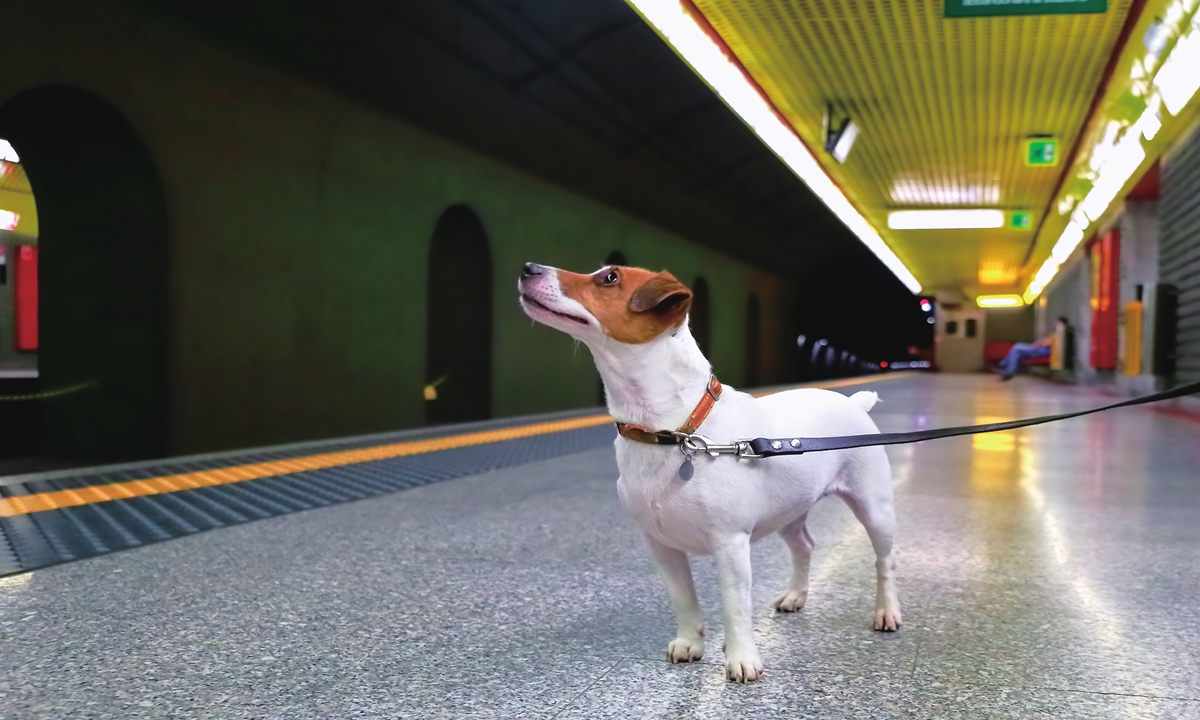
A dog waiting on the platform of a station Photo: VCG
Positive shift emerging
Besides public transit, pet-friendly facilities were also expanding in other public spaces, such as parks, shopping centers, hotels and restaurants.
In Shanghai, the Xisha Mingzhu Lake Scenic Area, a national 5A-level tourist site, has opened to dogs that weigh no more than 15 kilograms. According to the park regulations, the dogs must be on a leash no longer than 2 meters and wear a muzzle all time when in the park.
East China's Wenzhou has also opened its first pet-themed park, with agility equipment like hurdles, slides, and hoops designed especially for dogs. Coincidentally, pet elevators and pet restrooms have been launched at a comprehensive shopping center in Hangzhou, East China's Zhejiang Province.
"Since launch of the pet-friendly facilities in July 2024, we've hosted over 10 pet-friendly events, resulting in a significant increase in guest flow. In the second half of 2024, the number of customers has increased by 20 percent year-on-year," said a staff member from the shopping center.
Urban public facilities have generally become more tolerant of dogs in recent years, said Qiu Fengwen, a post-90s who lives in coast city Qingdao in East China's Shandong Province and takes her nine-year-old male poodle "Lucky" to self-driving tour almost every year, especially in some southern and southwestern cities like Chengdu, Chongqing, and Changsha.
Qiu told the Global Times that usually many hotels are labeled as "pet-friendly" on booking apps and homestay hosts often allow access to her dog.
Some large malls allow small and medium-sized pets in strollers and many parks are also pet-friendly, allowing leashed pets and offering water stations, Qiu said, but emphasized the number of such facilities was far from enough compared to the increasing number of pets.
According to the 2025 China Pet Industry White Paper, the number of pet dogs and cats in the country's urban areas reached 124 million. The urban pet (dogs and cats) consumer market reached 300.2 billion yuan (about $40.9 billion).
Qiu believes that as pet ownership becomes more widespread, society will become more pet-friendly, with more places shifting from "no pets allowed" to "pets welcomed." "I hope my Lucky can one day run and play freely on the beaches and in the seaside parks of Qingdao," she said.
RELATED ARTICLES