ARTS / CULTURE & LEISURE
Diverse events held to celebrate International Museum Day
80% of counties in China have at least 1 museum
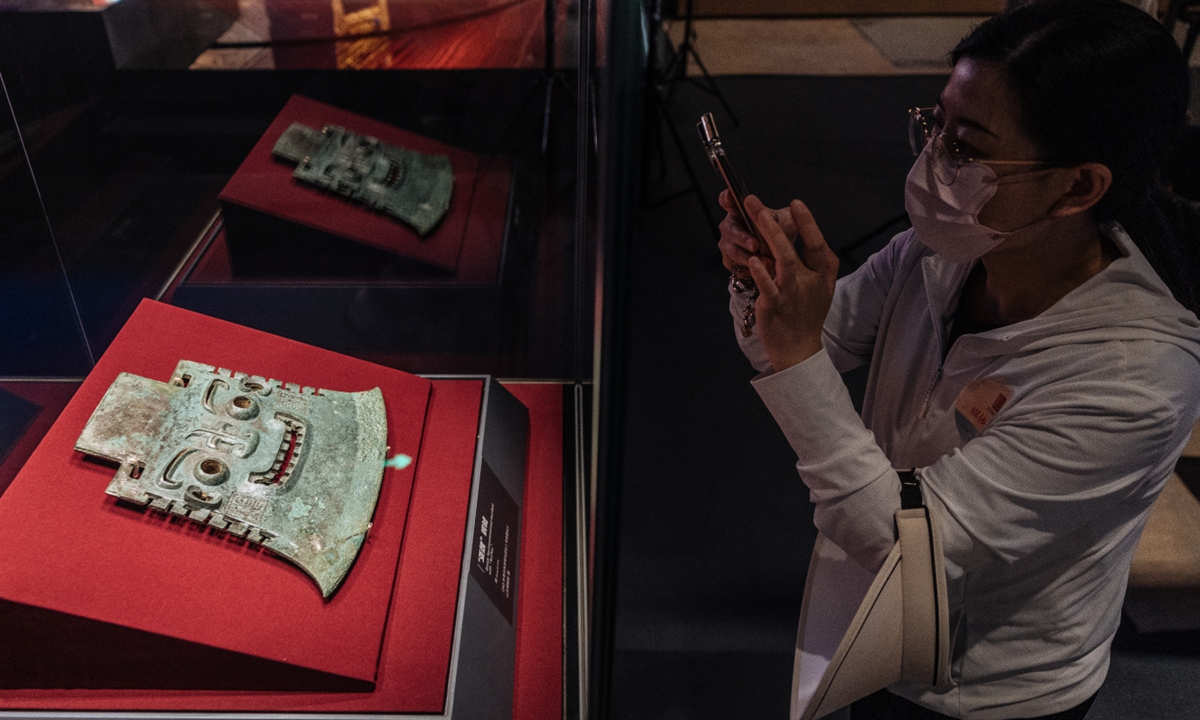
A visitor explores a Shang Dynasty relics exhibition at the Grand Canal Museum in Beijing on May 18, 2025. Photo: Li Hao/GT
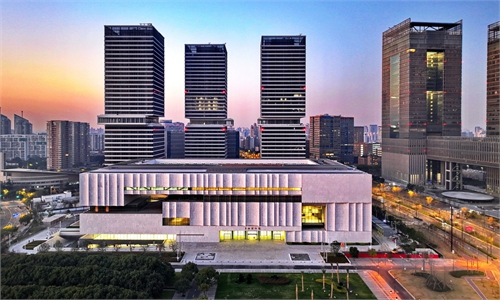
Including the release of the National Museum Development Report (2024), a diverse range of events were held at The Grand Canal Museum of Beijing on Sunday to celebrate the 2025 International Museum Day. The Grand Canal Museum of Beijing is also this year's main venue in China to mark the global museum day that falls annually on May 18 worldwide.At the opening ceremony of China's main venue event, a report about the development of Chinese museums in the year of 2024 was released. According to the report, as of the end of 2024, China had 7,046 registered museums, an increase of 213 from 2023. With the high coverage of museums nationwide, 80 percent of Chinese counties now have at least one museum. Also in 2024, a total of 43,000 exhibitions and 511,000 educational events were held by Chinese museums nationwide.
Noting that these figures reveal that the growth of China's museum sector is "closely tied to its coverage and deepening engagement with the public," Yao Yuanlin, an on-site museum policy expert, told the Global Times that the report acts as a guide for individual institutions to make "data-based development plan for the future."
Other than focusing on coverage, Liu Yang, director of the Museum and Social Relics Department of the National Cultural Heritage Administration (NCHA), highlighted to audiences the increasing "professionalism" of Chinese museums. Over the year 2024, Chinese museums' collections exceeded 67 million items. Additionally, 894 international projects were carried out and 2,672 publications made.
"Chinese museums are also dedicated to other sectors such as education, public service and especially the creative and innovative development," Liu noted.
Besides the issued report, a list of the most innovative Chinese museums of the year 2025 was released at the event. Four museums were named on the list: the Nanjing Imperial Examination Museum of China, the Hangzhou Linping Museum, the Hubei Provincial Museum and the Zhengzhou Museum.
"We've developed a high-tech system for detecting micro marks on relics. A creative path is needed for museums of all sizes, even ones like us. AI and technology are very much integrated in Chinese museum systems," Chen Yinü, the deputy director of the Hubei Provincial Museum, told the Global Times.
At the event, white humanoid robots moved around the venue, showcasing how they "work" in museum settings. Chen Zhenfeng, a technology company developer, told the Global Times that they have developed AI-powered human-looking digital guides for various museums, and are helping museums deliver more interactive services to the public.
"These digital means respond to this year's theme of finding 'the future of museums in rapidly changing societies," Yao remarked.
Other agendas at the opening ceremony included announcing that Haikou, Hainan Province, will host the Chinese Exposition of Museums and Relevant Products and Technologies in 2026 and that Harbin, Heilongjiang Province, is set to become China's main venue of events for the 2026 International Museum Day.
A seasonal celebration called the "Beijing Museum Season" was also launched. It will run until October. Aiming at establishing a stronghold for conserving Asian cultural heritage, the headquarters of the Alliance for Cultural Heritage in Asia (ACHA) will be established in Beijing under a framework agreement signed by the ACHA and the People's Government of Beijing Municipality during the opening ceremony.
"We used red threads to create the exhibition's visuals. It delivers the vitality of Chinese civilization's continuity," Gao Hongqing, the exhibition's curator, told the Global Times. He also added that this exhibition incorporates AI guides, digital restoration displays, and high-definition imaging to create a more immersive experience for visitors.
"I believe technology and traditional culture are not in opposition - they can enhance and complement each other. By combining modern techniques with ancient artifacts, we aim to bring these distant histories closer to today's visitors," Gao noted.
RELATED ARTICLES