BUSINESS / PRESS RELEASE
From WCIF in Chengdu, the world sees a vibrant West China
The 20th Western China International Fair (WCIF) was held in Chengdu, Sichuan Province, from May 25 to 29, 2025. As one of the most influential international exhibitions held in western China, the WCIF has not only become an important window to observe the development of the region, but also presents a new and modern image of the country’s west – vibrant, innovative and open-minded.
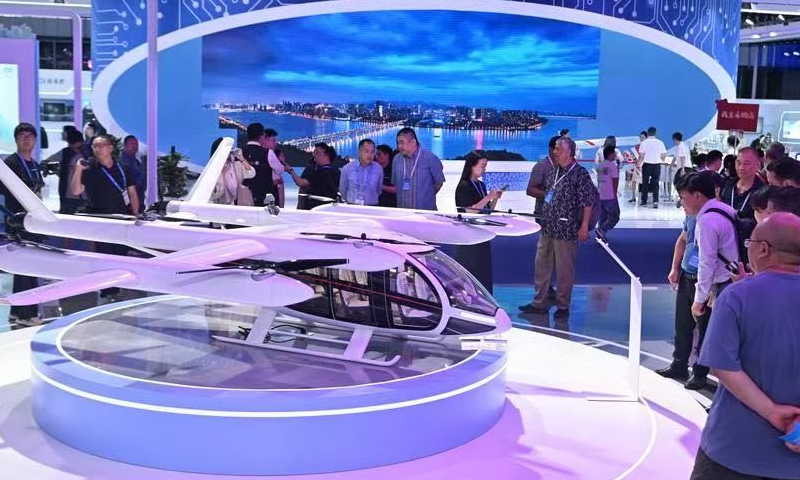
Upon entering the Sci-Tech Innovation Hall, the exhibition booth of Sichuan Development (Holding) Company immediately captured attention. An endearing robotic dog warmly greeted visitors by shaking hands, forming heart gestures with its paws – this was one of the exhibits from Sichuan Development, the "Sky-Land Integrated Cross-Domain Collaborative robotic dog" developed by Jingrong Lianchuang.

Western China is rich in natural and unique tourism resources, which have long been its "ace cards" for attracting businesses. With the deepening of the country’s Western Development Strategy, the region has achieved breakthroughs in resource development and utilization, demonstrating enormous growth potential.
This event marked the debut of Sichuan Natural Resources Investment Group at the WCIF, and its performance was stellar, quickly becoming a focal point of the exhibition. After its hall officially opened, it instantly became a "must-visit hotspot," with visitors eager to embark on a wondrous journey with nature.
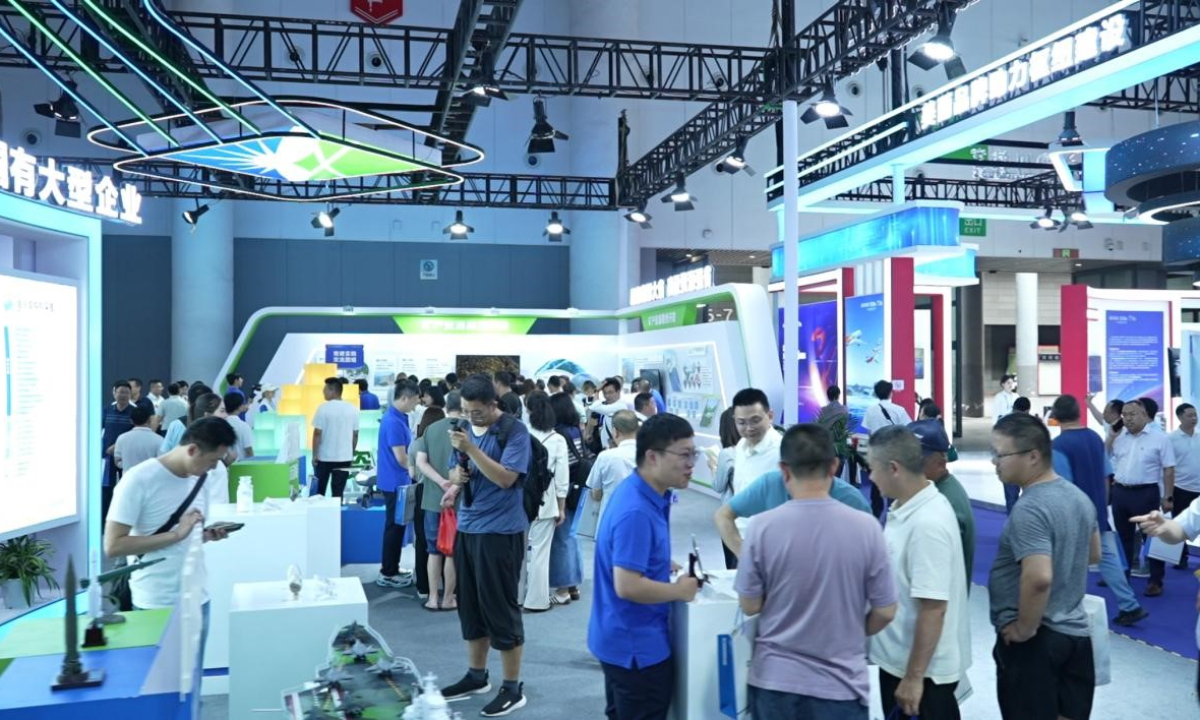
"It’s our first time at the WCIF, and we’ve brought some serious stuff," said a representative from Sichuan Natural Resources Investment Group. Currently, the group is fully advancing its "Eight Major Resource Projects" – vanadium-titanium, rare earths, gold, lithium, oil and gas, coal, phosphorus, and lead-zinc – while striving to establish itself as a hub for natural resource sci-tech innovation in southwestern China. "We hope to identify potential partners at the fair and continue driving high-quality project implementations,” the representative said.
As the host of the WCIF, Sichuan signed 76 high-tech manufacturing projects with investments nearing 100 billion yuan, along with 38 emerging and future industry projects – such as AI, the metaverse, and commercial aerospace – with investments exceeding 30 billion yuan, showcasing its potential in new quality productive forces.
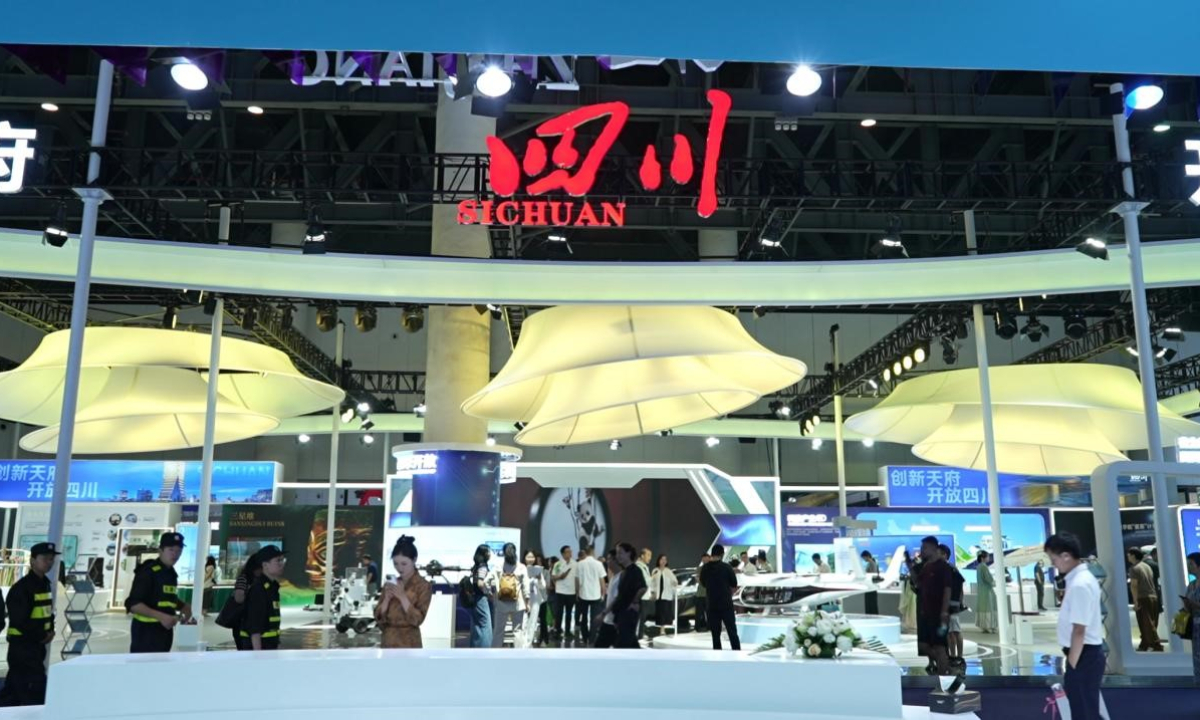
Chongqing’s exhibition area featured powertrain platforms, smart driving, and smart cockpits, reflecting its new goal of building an "intelligent connected new energy vehicle capital." Inner Mongolia’s hall showcased models of the Shenzhou manned spacecraft and wind turbines, vividly narrating its ties to China’s manned space program and its strides in energy transformation.
The WCIF is not only a stage for western China to showcase its strengths but also a crucial platform for deepening domestic and international cooperation.
At this year’s fair, many enterprises from the eastern provinces also participated, with east-west collaboration yielding impressive results. As one of the guest provinces of honor, Zhejiang’s exhibition hall highlighted the green energy projects in Sichuan promoted by Zhejiang Energy Group, the intelligent production lines of Tianzhihua Company that helped Pingshan’s textile industry cluster exceed 10 billion yuan in size, and the new materials industrial base in Dazhou invested with 23 billion yuan by Zhengkai Group. These projects demonstrate how capital, technology, and management expertise from the country’s east are accelerating their flow westward, injecting new vitality into the high-quality development of the western regions.
While east-west collaboration unleashes synergies, "west-west cooperation" is also gaining momentum. Chengdu Kaiyuan Digital Intelligence Engineering Consulting Group signed agreements for Qinghai’s intelligent computing center and new energy projects, with intended investments exceeding 9.5 billion yuan. Sichuan Natural Resources Investment Group also targeted Qinghai, intending to invest 1.5 billion yuan in mineral resource development and ecological restoration.
Ma Shunxiang, Deputy Director of the Economic Cooperation Division of Qinghai’s Department of Industry and Information Technology, noted that as a guest province of honor, the WCIF enhanced Qinghai’s economic exchanges and cooperation with other provinces, potentially bringing more investment and development opportunities while aligning the province with international standards.
According to a representative from Sichuan’s Economic Cooperation Bureau, during this year’s WCIF, western regions jointly promoted investment opportunities by leveraging their respective geographical advantages, resource endowments, industrial development strategies, and investment policies. Together, they unveiled over 2,200 cooperative projects with investments exceeding 3.7 trillion yuan. As the host, Sichuan introduced more than 100 projects with investments surpassing 560 billion yuan, including 96 projects in six frontline industries (totaling over 500 billion yuan) and 11 projects in emerging and future industries (totaling over 60 billion yuan).
An official from the Sichuan International Expo Group also stated that they will continue to optimize the pathways and methods of "co-hosting, sharing, and mutual benefit" to attract more investors from around the world to focus on, engage with, and invest in western China. This will demonstrate the significant achievements of the WCIF in expanding high-level opening-up, deepening regional exchanges and cooperation, and boosting the development of a modern industrial system.
The vast development potential and market prospects of western China have attracted significant attention from international companies and investors. Saravoot Yoovidhya, CEO of Thailand’s T.C. Pharmaceutical, said in an interview during the WCIF that under major strategic opportunities such as the New Western Development Drive and the Chengdu-Chongqing Economic Circle, the fair has not only deepened cooperation between foreign enterprises like T.C. Pharmaceutical and western China but also revealed the region’s tremendous growth potential.
From high-tech industries to green energy, and from east-west collaboration to global partnerships, the WCIF has showcased a more open, innovative, and green modern western China. As Vanuatu’s Deputy Prime Minister and Minister of Finance Johnny Koanapo remarked at the opening ceremony, "Western China holds immense potential in renewable energy, advanced manufacturing, and logistics, offering tremendous opportunities for enterprises and investors worldwide.’’
Photo: Xinhua
As the host province of the WCIF, Sichuan’s exhibition hall was one of the most eye-catching highlights.Upon entering the Sci-Tech Innovation Hall, the exhibition booth of Sichuan Development (Holding) Company immediately captured attention. An endearing robotic dog warmly greeted visitors by shaking hands, forming heart gestures with its paws – this was one of the exhibits from Sichuan Development, the "Sky-Land Integrated Cross-Domain Collaborative robotic dog" developed by Jingrong Lianchuang.
Photo: GT
At this year’s fair, Sichuan Development (Holding) Company focused on four core industries – aerospace, biomedicine, advanced materials, and eco-environmental protection – showcasing a selection of self-developed and investment-incubated sci-tech innovations. These included single-crystal turbine blades for aircraft engines, independently developed and manufactured by its subsidiary Chengdu Hangyu, the world’s first Airbus A350 carbon fiber-reinforced polymer wing structure component from Gardner Aerospace, and the global first prototype "Ultra Magnus" humanoid robot from Chengdu Aegis Robotics, an enterprise invested in by Sichuan Sci-Tech Innovation Investment Group.Western China is rich in natural and unique tourism resources, which have long been its "ace cards" for attracting businesses. With the deepening of the country’s Western Development Strategy, the region has achieved breakthroughs in resource development and utilization, demonstrating enormous growth potential.
This event marked the debut of Sichuan Natural Resources Investment Group at the WCIF, and its performance was stellar, quickly becoming a focal point of the exhibition. After its hall officially opened, it instantly became a "must-visit hotspot," with visitors eager to embark on a wondrous journey with nature.
Photo: GT
Inside the exhibition hall, the friendly interactions of the "Earth Craftsman" mascot drew crowds for photo opportunities, the 15kg silver bar had everyone trying to lift it with one hand, and the displays of vanadium-titanium magnetite concentrate and rare earth new materials sparked lively discussions. Many potential partners showed strong interest in the group’s capabilities in full-chain mineral resource development and smart geological hazard prevention technologies."It’s our first time at the WCIF, and we’ve brought some serious stuff," said a representative from Sichuan Natural Resources Investment Group. Currently, the group is fully advancing its "Eight Major Resource Projects" – vanadium-titanium, rare earths, gold, lithium, oil and gas, coal, phosphorus, and lead-zinc – while striving to establish itself as a hub for natural resource sci-tech innovation in southwestern China. "We hope to identify potential partners at the fair and continue driving high-quality project implementations,” the representative said.
As the host of the WCIF, Sichuan signed 76 high-tech manufacturing projects with investments nearing 100 billion yuan, along with 38 emerging and future industry projects – such as AI, the metaverse, and commercial aerospace – with investments exceeding 30 billion yuan, showcasing its potential in new quality productive forces.
Photo: GT
Beyond Sichuan, other western regional exhibitions also have their highlights.Chongqing’s exhibition area featured powertrain platforms, smart driving, and smart cockpits, reflecting its new goal of building an "intelligent connected new energy vehicle capital." Inner Mongolia’s hall showcased models of the Shenzhou manned spacecraft and wind turbines, vividly narrating its ties to China’s manned space program and its strides in energy transformation.
The WCIF is not only a stage for western China to showcase its strengths but also a crucial platform for deepening domestic and international cooperation.
At this year’s fair, many enterprises from the eastern provinces also participated, with east-west collaboration yielding impressive results. As one of the guest provinces of honor, Zhejiang’s exhibition hall highlighted the green energy projects in Sichuan promoted by Zhejiang Energy Group, the intelligent production lines of Tianzhihua Company that helped Pingshan’s textile industry cluster exceed 10 billion yuan in size, and the new materials industrial base in Dazhou invested with 23 billion yuan by Zhengkai Group. These projects demonstrate how capital, technology, and management expertise from the country’s east are accelerating their flow westward, injecting new vitality into the high-quality development of the western regions.
While east-west collaboration unleashes synergies, "west-west cooperation" is also gaining momentum. Chengdu Kaiyuan Digital Intelligence Engineering Consulting Group signed agreements for Qinghai’s intelligent computing center and new energy projects, with intended investments exceeding 9.5 billion yuan. Sichuan Natural Resources Investment Group also targeted Qinghai, intending to invest 1.5 billion yuan in mineral resource development and ecological restoration.
Ma Shunxiang, Deputy Director of the Economic Cooperation Division of Qinghai’s Department of Industry and Information Technology, noted that as a guest province of honor, the WCIF enhanced Qinghai’s economic exchanges and cooperation with other provinces, potentially bringing more investment and development opportunities while aligning the province with international standards.
According to a representative from Sichuan’s Economic Cooperation Bureau, during this year’s WCIF, western regions jointly promoted investment opportunities by leveraging their respective geographical advantages, resource endowments, industrial development strategies, and investment policies. Together, they unveiled over 2,200 cooperative projects with investments exceeding 3.7 trillion yuan. As the host, Sichuan introduced more than 100 projects with investments surpassing 560 billion yuan, including 96 projects in six frontline industries (totaling over 500 billion yuan) and 11 projects in emerging and future industries (totaling over 60 billion yuan).
An official from the Sichuan International Expo Group also stated that they will continue to optimize the pathways and methods of "co-hosting, sharing, and mutual benefit" to attract more investors from around the world to focus on, engage with, and invest in western China. This will demonstrate the significant achievements of the WCIF in expanding high-level opening-up, deepening regional exchanges and cooperation, and boosting the development of a modern industrial system.
The vast development potential and market prospects of western China have attracted significant attention from international companies and investors. Saravoot Yoovidhya, CEO of Thailand’s T.C. Pharmaceutical, said in an interview during the WCIF that under major strategic opportunities such as the New Western Development Drive and the Chengdu-Chongqing Economic Circle, the fair has not only deepened cooperation between foreign enterprises like T.C. Pharmaceutical and western China but also revealed the region’s tremendous growth potential.
From high-tech industries to green energy, and from east-west collaboration to global partnerships, the WCIF has showcased a more open, innovative, and green modern western China. As Vanuatu’s Deputy Prime Minister and Minister of Finance Johnny Koanapo remarked at the opening ceremony, "Western China holds immense potential in renewable energy, advanced manufacturing, and logistics, offering tremendous opportunities for enterprises and investors worldwide.’’
