SOURCE / PRESS RELEASE
72-hour brainstorm! International youth seek digital agriculture secrets in China
Under a light drizzle, Peruvian agripreneur Robinson stepped into the home of He Yuechi in Nanzhuang village, Dali, Yunnan Province. The three-to-four-story house with a garden courtyard left him quietly amazed: "This is quite different from farms in my country."
Similar moments of revelation occurred at the Science and Technology Backyard citrus demonstration garden in Binchuan, Dali. Kenyan agripreneur Caleb's eyes lit up when he heard the "28,000 yuan per mu yield" (approximately $59,000 per hectare) - precisely the kind of Chinese This micro-ecological planting concept is highly worth promoting in Africa."
On May 28, 18 young agripreneurs from eight countries, including Peru, Uganda, Kenya, Tanzania, Pakistan, and China, gathered in Gusheng village, Dali, to launch the three-day 2025 Digital Agriculture Innovation Bootcamp Yunnan session.
Co-hosted by the UN Food and Agriculture Organization (FAO), Zhejiang University, and Pinduoduo, the bootcamp was anchored at the village's Digital Commerce to Revitalize Agriculture Science and Technology Backyard. Participants explored the site's talent development model and green, high-value crop production practices, conducted in-depth household surveys to understand farmer behaviors and profiles, and visited demonstration zones for local specialty fruits. The goal was to foster international knowledge exchange and accelerate digital innovation in agriculture.
From these Backyards, agricultural innovation is evolving from a "China Solution" into a "Global Algorithm."
72-Hour Brainstorm
In late May, Gusheng village welcomed the international agripreneurs - winners of the Global Agri-Innovation Competition - for an intensive 72-hour session. On a platform built by the FAO, Zhejiang University, and Pinduoduo, they engaged in a field-level international dialogue with China's Science and Technology Backyards.
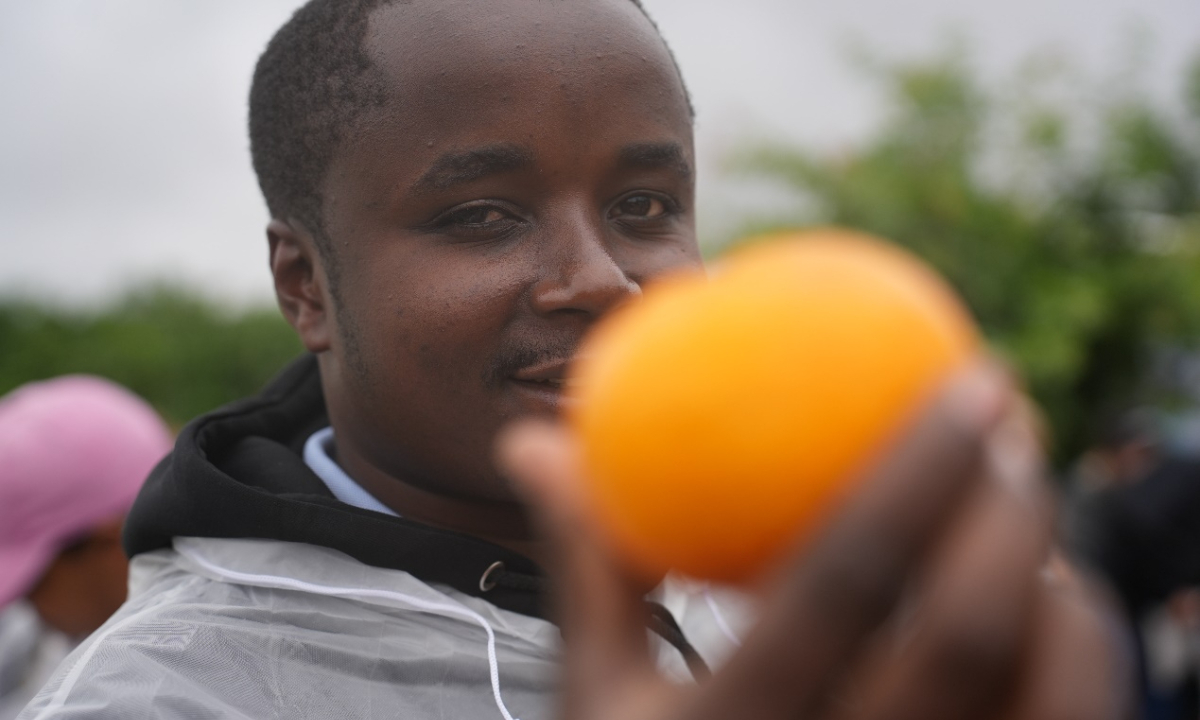
Caleb, who had previously focused on green cold-chain logistics, had limited exposure to upstream farming. However, after tasting the crisp, sweet orah mandarin from the demo garden, seeing the large microbial fermentation systems, and learning about the impressive 28,000 yuan per mu yield, he nodded repeatedly in approval.
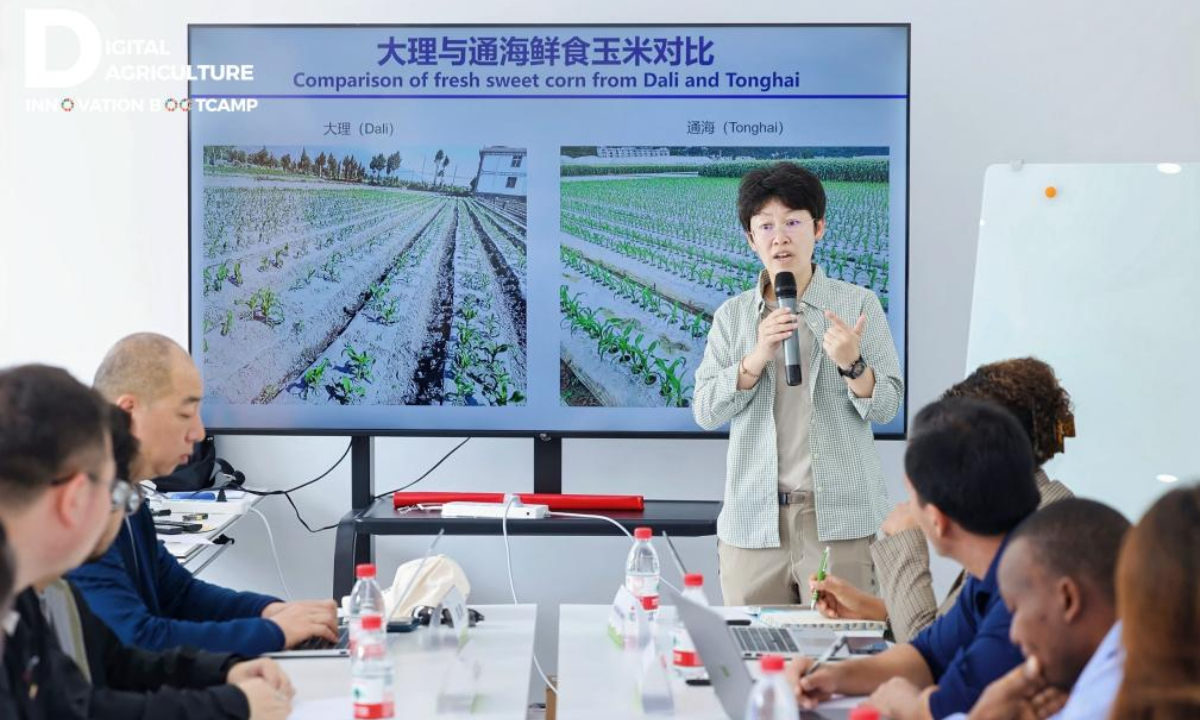
Participants were further impressed by the "Nutrient Smart Management Platform" presented by Jin Kemo, Associate Professor at China Agricultural University (CAU). Jin explained how farmers register with their real names and order fertilizer via smartphone or tablet. The platform provides information on crop types, fertilization schedules, soil nutrient absorption, annual usage, and more. Orders are delivered to farmers' doorsteps within 30 minutes. By managing crop needs and soil conditions on a per-plot basis, the platform is expected to reduce nitrogen and phosphorus runoff into Erhai Lake by over 30 percent in pilot areas.
"In my country, buying fertilizer might require a 5-hour drive. What to use and how to apply it all based on experience," said one participant. "Here, not only is there precise guidance, but farmers order fertilizer like takeout!" The platform, in essence, digitally reconciles two seemingly opposing goals: rigid policy targets (Erhai Lake preservation) and the practical needs of farmers (saving time and earning money).
Nicola, Digital Agriculture Innovation Officer at the FAO Office of Innovation, said, "Here we see government policy guidance, university technology transfer, and diverse corporate support. Each entity contributes value within an efficient collaborative mechanism, ensuring technology solves real production problems."
Wisdom exchange in agricultural technology
As the group shared Yunnan coffee, a silent "technology transfer" unfolded.
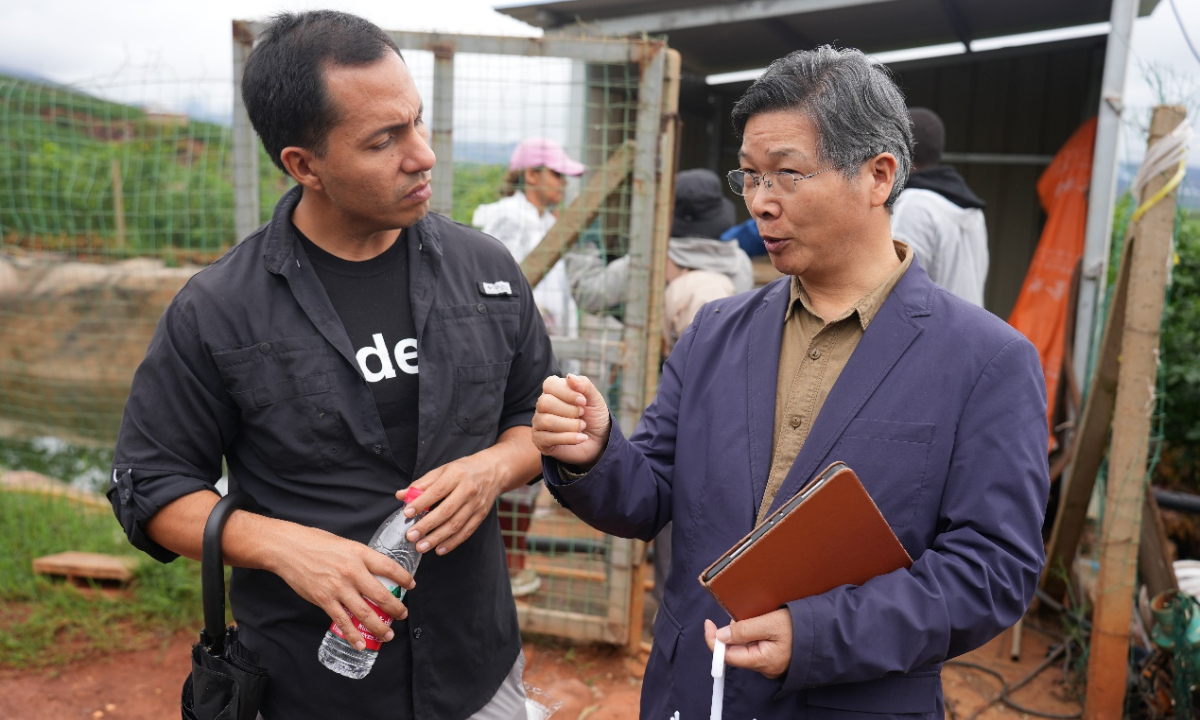
"Farmers won't pay for innovation; they pay for solutions that improve their lives," said Robinson, summarizing his key insight. After visiting local farmers, he resolved to change his approach back ome in Peru: "Build trust first, then introduce the technology."
Through this opportunity, Robinson gained deeper insight into Chinese agriculture: "Mechanized farming and advanced concepts are gradually transforming local farms. Agriculture here is advancing toward ecological protection, high value, and high yield, supporting sustainable agri-food systems."
This echoed a Ugandan participant's reflection: "We often blame farmers for being conservative. But it's not that they reject technology; it's that the technology hasn't learned to speak their language."
Meanwhile, international agripreneurs offered fresh ideas to the Backyards. Discussions on produce packaging for specific markets sparked new branding insights, while Uganda's coffee cooperative model of "pricing by flavor profile" inspired conversations about value-based pricing strategies.
When one participant suggested adding a Swahili-language label to the Backyard's bulletin board, it underscored a critical point: for China's agricultural solutions to go global, they must not only export technology but also adapt to local contexts. Practical wisdom derived from rainforests and highland deserts is helping reshape the "China Model" into a more resilient global agricultural solution.
"Previously, we focused solely on solving 'field-level' problems," said Jin Kemo. "Now we're learning to view the entire chain through a global lens."
Agricultural ambition behind the '100 Billion Plan'
The latest edition of the Global Agri-Innovation Competition was launched on May 17, themed "Leveraging Emerging Technologies and Digital Public Infrastructure for Sustainable Agri-Food Systems: Enhancing Climate Resilience, Supply Chain Efficiency, and Nutrition Security." It aims to bring together global youth innovators and agri-tech pioneers to develop future-oriented projects.
As a co-organizer, Pinduoduo connects global agri-innovators with the Science and Technology Backyards, creating a platform for exchange.
Asked why Pinduoduo continues to invest in global agri-research, Vice President Hou Kaidi explained: "We aim to create a communication platform that brings together digital agriculture experiences and achievements from around the world, allowing more perspectives, technologies, and resources to be circulated and shared."
Pinduoduo's agricultural commitment is long-standing. Since 2019, the company has supported four Global Agri-Innovation Competitions and two National Science and Technology Backyard Competitions. The Global Agri-Innovation Competitions discovered or incubated 600 youth-led projects across 75 countries, and the Backyard competitions engaged about 1,500 agricultural postgraduates, sharing regional revitalization experiences.
In 2025, Pinduoduo announced a "100 Billion Support Plan," investing significantly in agri-scientific innovation and tech promotion. The strategy is clear: empower interdisciplinary talent to become the "golden keys" unlocking farmers' prosperity.
The convergence of the "Global Agri-Innovator" and "Science and Technology Backyard" initiatives is sparking remarkable change: data is replacing guesswork, AI-powered platforms are replacing ntuition in fertilization decisions, and high-yield demo gardens are shifting agriculture from "low-price bulk" to "green high-value" models.
At Yunnan Haofeng Agriculture's headquarters, participants witnessed the establishment of a CAU professor workstation, demonstrating a seamless collaboration among government, universities and industry. "We aim to harvest the fruits of technology right in the fields," said Hou.
In the drizzle of Gucheng village, Robinson gazed toward the Cangshan Mountains, coffee in hand. "Integrated water-fertilizer irrigation… organic fermentation systems... building farmer trust..." These fragments were forming a "golden key for agricultural transformation." As the 18 agripreneurs departed for their home countries, sparks of wisdom from China's fields quietly began to ignite change across the world.
Similar moments of revelation occurred at the Science and Technology Backyard citrus demonstration garden in Binchuan, Dali. Kenyan agripreneur Caleb's eyes lit up when he heard the "28,000 yuan per mu yield" (approximately $59,000 per hectare) - precisely the kind of Chinese This micro-ecological planting concept is highly worth promoting in Africa."
On May 28, 18 young agripreneurs from eight countries, including Peru, Uganda, Kenya, Tanzania, Pakistan, and China, gathered in Gusheng village, Dali, to launch the three-day 2025 Digital Agriculture Innovation Bootcamp Yunnan session.
Co-hosted by the UN Food and Agriculture Organization (FAO), Zhejiang University, and Pinduoduo, the bootcamp was anchored at the village's Digital Commerce to Revitalize Agriculture Science and Technology Backyard. Participants explored the site's talent development model and green, high-value crop production practices, conducted in-depth household surveys to understand farmer behaviors and profiles, and visited demonstration zones for local specialty fruits. The goal was to foster international knowledge exchange and accelerate digital innovation in agriculture.
From these Backyards, agricultural innovation is evolving from a "China Solution" into a "Global Algorithm."
72-Hour Brainstorm
In late May, Gusheng village welcomed the international agripreneurs - winners of the Global Agri-Innovation Competition - for an intensive 72-hour session. On a platform built by the FAO, Zhejiang University, and Pinduoduo, they engaged in a field-level international dialogue with China's Science and Technology Backyards.
Caleb, who had previously focused on green cold-chain logistics, had limited exposure to upstream farming. However, after tasting the crisp, sweet orah mandarin from the demo garden, seeing the large microbial fermentation systems, and learning about the impressive 28,000 yuan per mu yield, he nodded repeatedly in approval.
Kenyan agripreneur Caleb prepares to taste orah mandarins grown at the Binchuan Citrus Science and Technology Backyard demonstration garden. Photo: Wang Lei
Participants were further impressed by the "Nutrient Smart Management Platform" presented by Jin Kemo, Associate Professor at China Agricultural University (CAU). Jin explained how farmers register with their real names and order fertilizer via smartphone or tablet. The platform provides information on crop types, fertilization schedules, soil nutrient absorption, annual usage, and more. Orders are delivered to farmers' doorsteps within 30 minutes. By managing crop needs and soil conditions on a per-plot basis, the platform is expected to reduce nitrogen and phosphorus runoff into Erhai Lake by over 30 percent in pilot areas.
CAU Associate Professor Jin Kemo introduces the Nutrient Smart Management Platform to international agripreneurs. Photo: Fu Junhao
"In my country, buying fertilizer might require a 5-hour drive. What to use and how to apply it all based on experience," said one participant. "Here, not only is there precise guidance, but farmers order fertilizer like takeout!" The platform, in essence, digitally reconciles two seemingly opposing goals: rigid policy targets (Erhai Lake preservation) and the practical needs of farmers (saving time and earning money).
Nicola, Digital Agriculture Innovation Officer at the FAO Office of Innovation, said, "Here we see government policy guidance, university technology transfer, and diverse corporate support. Each entity contributes value within an efficient collaborative mechanism, ensuring technology solves real production problems."
Wisdom exchange in agricultural technology
As the group shared Yunnan coffee, a silent "technology transfer" unfolded.
"Farmers won't pay for innovation; they pay for solutions that improve their lives," said Robinson, summarizing his key insight. After visiting local farmers, he resolved to change his approach back ome in Peru: "Build trust first, then introduce the technology."
Peruvian agripreneur Robinson (left) discusses an organic liquid fertilizer fermentation system with Wei Longbao, Director of Zhejiang University’s Institute of Food Economics and Agribusiness Management. Photo: Wang Lei
Through this opportunity, Robinson gained deeper insight into Chinese agriculture: "Mechanized farming and advanced concepts are gradually transforming local farms. Agriculture here is advancing toward ecological protection, high value, and high yield, supporting sustainable agri-food systems."
This echoed a Ugandan participant's reflection: "We often blame farmers for being conservative. But it's not that they reject technology; it's that the technology hasn't learned to speak their language."
Meanwhile, international agripreneurs offered fresh ideas to the Backyards. Discussions on produce packaging for specific markets sparked new branding insights, while Uganda's coffee cooperative model of "pricing by flavor profile" inspired conversations about value-based pricing strategies.
When one participant suggested adding a Swahili-language label to the Backyard's bulletin board, it underscored a critical point: for China's agricultural solutions to go global, they must not only export technology but also adapt to local contexts. Practical wisdom derived from rainforests and highland deserts is helping reshape the "China Model" into a more resilient global agricultural solution.
"Previously, we focused solely on solving 'field-level' problems," said Jin Kemo. "Now we're learning to view the entire chain through a global lens."
Agricultural ambition behind the '100 Billion Plan'
The latest edition of the Global Agri-Innovation Competition was launched on May 17, themed "Leveraging Emerging Technologies and Digital Public Infrastructure for Sustainable Agri-Food Systems: Enhancing Climate Resilience, Supply Chain Efficiency, and Nutrition Security." It aims to bring together global youth innovators and agri-tech pioneers to develop future-oriented projects.
As a co-organizer, Pinduoduo connects global agri-innovators with the Science and Technology Backyards, creating a platform for exchange.
Asked why Pinduoduo continues to invest in global agri-research, Vice President Hou Kaidi explained: "We aim to create a communication platform that brings together digital agriculture experiences and achievements from around the world, allowing more perspectives, technologies, and resources to be circulated and shared."
Pinduoduo's agricultural commitment is long-standing. Since 2019, the company has supported four Global Agri-Innovation Competitions and two National Science and Technology Backyard Competitions. The Global Agri-Innovation Competitions discovered or incubated 600 youth-led projects across 75 countries, and the Backyard competitions engaged about 1,500 agricultural postgraduates, sharing regional revitalization experiences.
In 2025, Pinduoduo announced a "100 Billion Support Plan," investing significantly in agri-scientific innovation and tech promotion. The strategy is clear: empower interdisciplinary talent to become the "golden keys" unlocking farmers' prosperity.
The convergence of the "Global Agri-Innovator" and "Science and Technology Backyard" initiatives is sparking remarkable change: data is replacing guesswork, AI-powered platforms are replacing ntuition in fertilization decisions, and high-yield demo gardens are shifting agriculture from "low-price bulk" to "green high-value" models.
At Yunnan Haofeng Agriculture's headquarters, participants witnessed the establishment of a CAU professor workstation, demonstrating a seamless collaboration among government, universities and industry. "We aim to harvest the fruits of technology right in the fields," said Hou.
In the drizzle of Gucheng village, Robinson gazed toward the Cangshan Mountains, coffee in hand. "Integrated water-fertilizer irrigation… organic fermentation systems... building farmer trust..." These fragments were forming a "golden key for agricultural transformation." As the 18 agripreneurs departed for their home countries, sparks of wisdom from China's fields quietly began to ignite change across the world.
