Chinese in Israel and Iran tell GT their firsthand experiences in latest Israel-Iran conflict
By and Li Yawei Published: Jun 16, 2025 08:19 PM

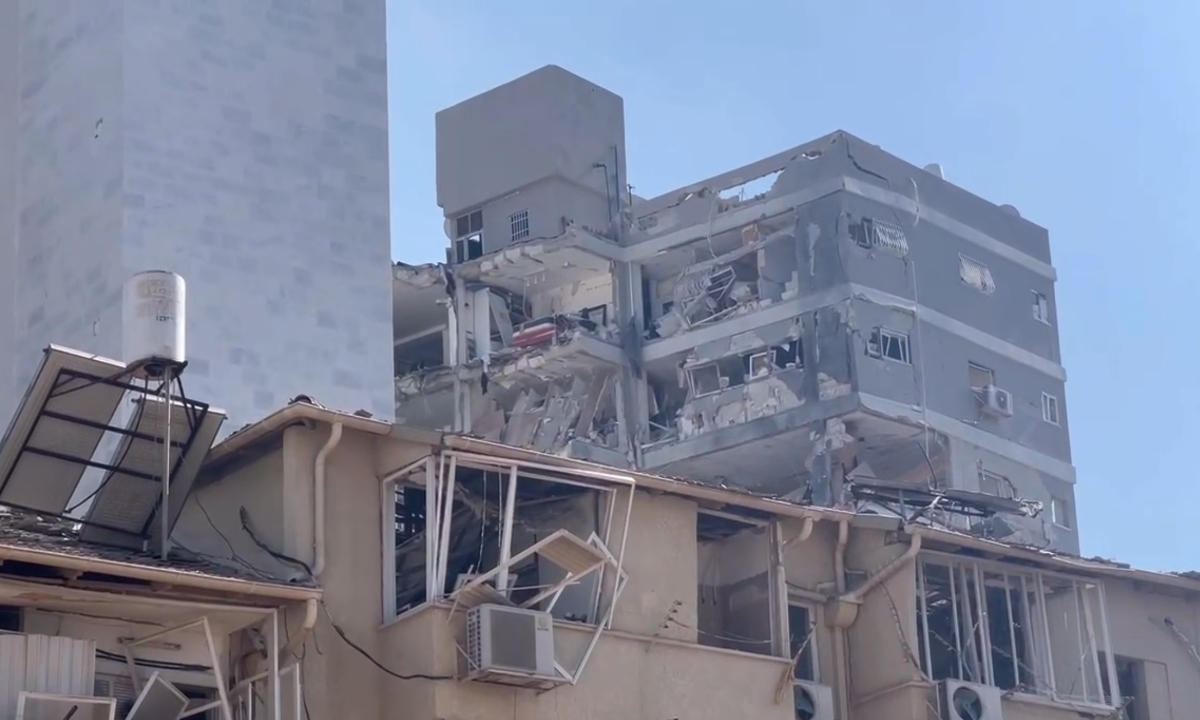
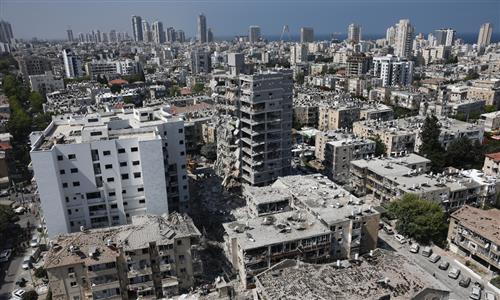
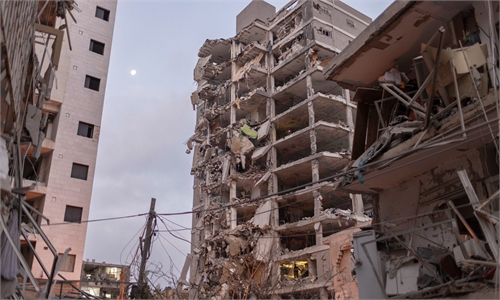
Buildings in Bat Yam, Israel, damaged by missile strikes Photo: Courtesy of Ray
Israel and Iran launched fresh attacks on Sunday local time, with both militaries urging civilians on the opposing side to take precautions against further strikes, raising concerns of a broader regional conflict, Reuters reported. Reporters from the Global Times interviewed several Chinese nationals in Iran and Israel, learning about their experiences during the attacks and the latest situation on the ground.
Ray, a Chinese national living in Israel, witnessed the missile exchange between Israel and Iran on Sunday night local time. "We first saw interceptor missiles launched by Israel streaking into the sky, accompanied by a loud ignition sound," he told the Global Times. "Then we heard the explosion of a successful interception, followed by a cloud forming in the sky."
Ray also experienced the missile exchange between the two countries in October 2024. "While the missile launches this time were less frequent, the impact was more powerful," he said.
"Some residential buildings were hit, and the shockwave affected an area within a one-kilometer radius," he said, adding that he saw severely damaged buildings, shattered windows, and wrecked vehicles.
He also mentioned that air raid sirens now go off frequently in the middle of the night, and the alert duration has increased. "This time, the sirens instructed residents to shelter in nearby air-raid shelters well in advance, with a 40-minute to one-hour gap between the warning and missile detection," he said.
According to Ray, the Israeli government has ordered schools and workplaces to switch to remote operations. Some restaurants have closed, while large supermarkets remain open, though supply is being affected, with fewer items on some shelves.
Another overseas Chinese named Linda, who has lived in Israel for over eight years and has always resided in Tel Aviv, told the Global Times that beginning late Friday night and continuing into Saturday morning, a series of large-scale missile and rocket attacks unfolded. Linda said they were alerted through safety apps on their phones, which issue advance warnings of potential threats and instruct users to take shelter.
They moved repeatedly between their home and a nearby bomb shelter. During the third alert, they received a warning on their phones even before the city's sirens sounded. Recognizing the danger, they immediately left their home.
In Israel, every residence is equipped with a safety room, and public spaces have underground shelters. But given the intensity and penetrative power of the missiles, they judged that even staying in the home's safety room might not be safe.
Instead, they opted for a public underground shelter just one minute's walk away. On their way there during the third wave of attacks, Linda saw three missiles in the sky—some incoming, others interceptors. One missile fell rapidly right in front of her and exploded with a deafening blast.
"This experience truly brought a tremendous impact," Linda said. "Even though I've been through similar situations over the years, each time is different."
"This time, I truly felt the cruelty of war," she said. "Bullets and missiles don't discriminate. No matter who you are, sometimes you just can't escape."
Iran launched a new barrage at Israel on Sunday evening local time, with an explosion seen in the coastal city of Haifa. Israel said it began another series of strikes on military targets across Iran amid international pleas for diplomacy and de-escalation, CNN reported on Monday.
A Chinese student, surnamed Wang, who studies at the University of Tehran, told the Global Times that since June 13, a sense of tension has gripped Tehran like never before. The streets remain busy with traffic and pedestrians, but an undercurrent of anxiety quietly permeates the city.
"From Telegram groups to WeChat chats, the escalating crisis dominates every conversation. Each breaking news alert feels like it could mark a turning point—one that might reshape the entire situation in an instant," he said.
Wang recounted that on Sunday night, he and his uncle, who also lives in Tehran, decided to leave the city and seek temporary shelter in the suburbs. "But as soon as we got on the highway, it became clear we weren't the only ones trying to leave. The entire outbound road was jammed, stretching into a long line of cars. We had to take a remote detour and eventually pulled over briefly on a deserted stretch of road near the western hills of the city."
While parked, they were approached by two patrolling soldiers, and then two more arrived, armed and carrying flashlights. The soldiers questioned them, repeatedly checked their IDs and visas, and took photos before finally letting them go.
Wang said that some Chinese students have already left Tehran. "Every day, the first thing we do after waking up is checking the news to determine whether it's safe enough to go about normal life," he said.
Another Chinese student, Gao Tiankuo, who has been studying in Iran since September 2023, said that when he saw Israel launch strikes against Iran on Friday local time, he did not expect the situation to escalate continuously. He said that overall social operations remain stable, with no large-scale exodus from Tehran. "I initially thought this would be a contained attack," he said, "but the attacks starting Sunday afternoon renewed my anxiety."
Around 2 pm local time on Sunday, Gao heard consecutive activations of air defense systems followed by explosions. Though unable to visually locate the blast sites, he clearly felt vibrations through the windows and ground.
According to Gao, attacks on civilian facilities have fueled anxiety among many Chinese students. Some have organized independent evacuations, while others relocated from Tehran to smaller cities for refuge. Since Sunday, at least two waves of chartered evacuation buses have departed en route to Armenia via Tabriz.
Gao added that on local ticketing apps, bus tickets from Tehran to northwestern Iranian border cities are nearly sold out, with only limited seats available five days later.
Despite the tense climate and conflicting reports, he noticed that Iranians strive to maintain normalcy. When buying groceries, a shop owner told him, "As long as I'm alive, this store opens daily."
Xian Yifan also contributed to this story.
RELATED ARTICLES