BUSINESS / PRESS RELEASE
'Oil Painting Tacheng' - What Makes Tacheng Special?
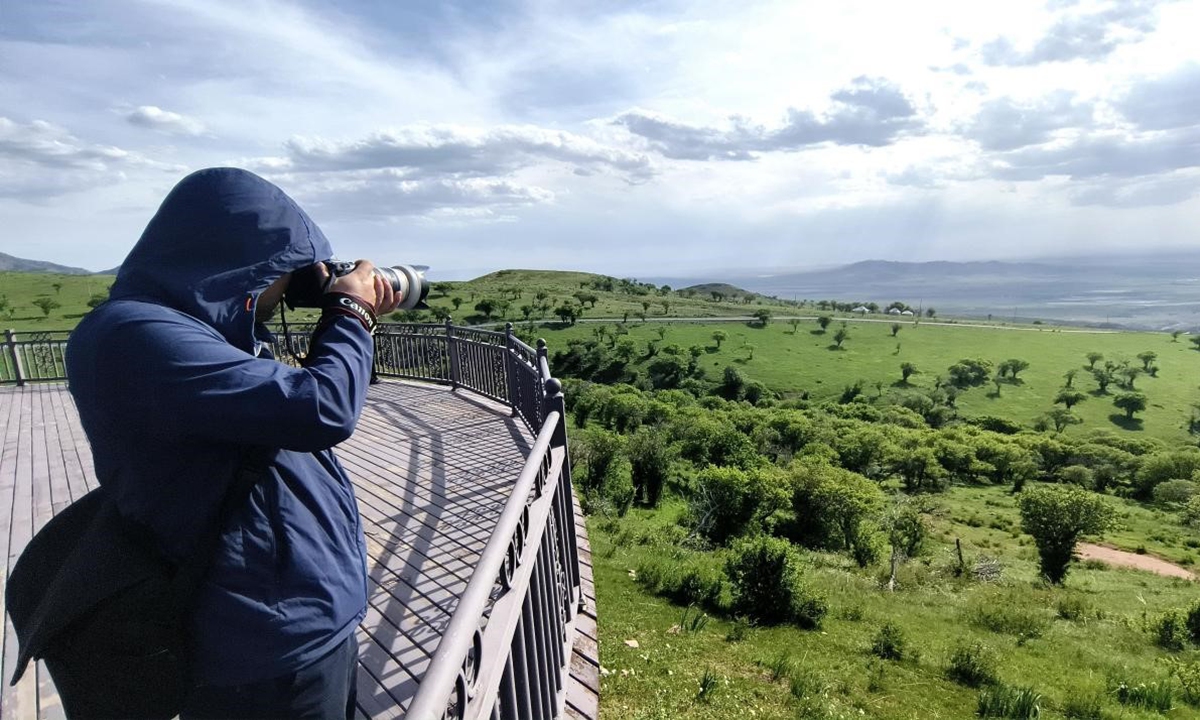
A photographer takes pictures on the viewing platform of the Wild Fruit Forest Scenic Area in Northwest China's Xinjiang Uygur Autonomous Region on May 23, 2025. Photo: Wang Wei
When people talk about Tacheng in Northwest China's Xinjiang Uygur Autonomous Region, they always describe it as an important node on the Grassland Silk Road, a meeting point of Eastern and Western civilizations, combining historical heritage with modern culture, and integrating natural landscapes with cultural customs.
In 2024, Tacheng region received 35.04 million tourist trips with tourism revenue reaching 24.9 billion yuan ($3.46 billion), representing year-on-year increases of 39.8 percent and 61.1 percent, respectively. Entering 2025, tourism development continues its strong momentum. In the first quarter, the region greeted 6.805 million tourist trips, a 21.2 percent increase compared to the same period last year, achieving tourism revenue of 4.45 billion yuan, up 15.3 percent year-on-year, maintaining robust growth.
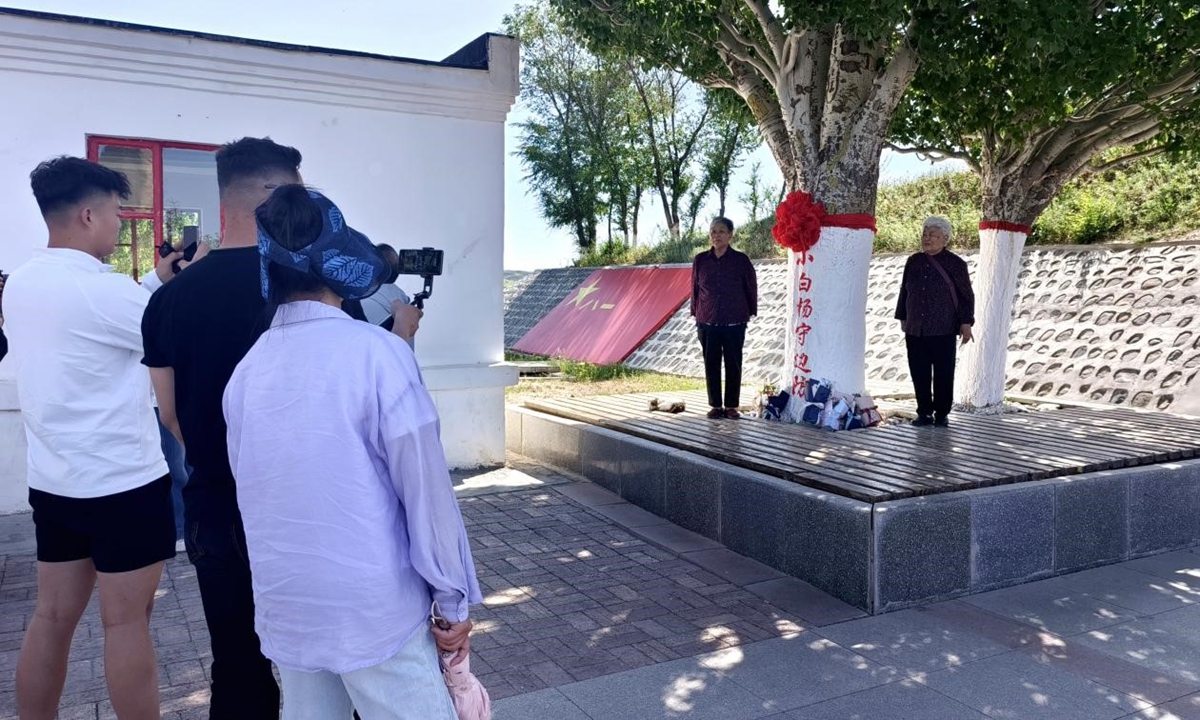
Visitors pose for pictures at the Xiaobaiyang Sentry Post in Northwest China's Xinjiang Uygur Autonomous Region on May 21, 2025. Photo: Wang Wei
"Oil Painting Tacheng" is far more than a simple display of scenery - it is a magnificent epic written with mountains and rivers, waiting for appreciative eyes to read it carefully.
At the foot of the Barlik Mountain area in Yumin County stands the Xiaobaiyang Outpost, where the five-star red flag flutters proudly above the camouflaged watchtower. Wang Jian, a 23-year-old university graduate from Emin County, brought his grandmother and great-aunt to visit the outpost for the first time. The two elderly ladies continuously asked Wang to take photos. "The elderly at home have never been here, so I wanted to show them around," Wang said. The entire family was moved by the "Xiaobaiyang" spirit of the border guards, and was filled with admiration.
The Xiaobaiyang Outpost was converted into a patriotic education base and tourist attraction in 2003, and is also a National Defense Education Demonstration Base. In 2024, Tacheng region launched the "Xiaobaiyang Outpost - Barlik Mountain " tourism route, allowing visitors to experience border defense culture among mountain flowers and grasslands, promoting the upgrade of patriotic tourism from "sightseeing-style" to "experiential-style." During this year's May Day holidays, the outpost saw a 58 percent year-on-year increase in visitor numbers.
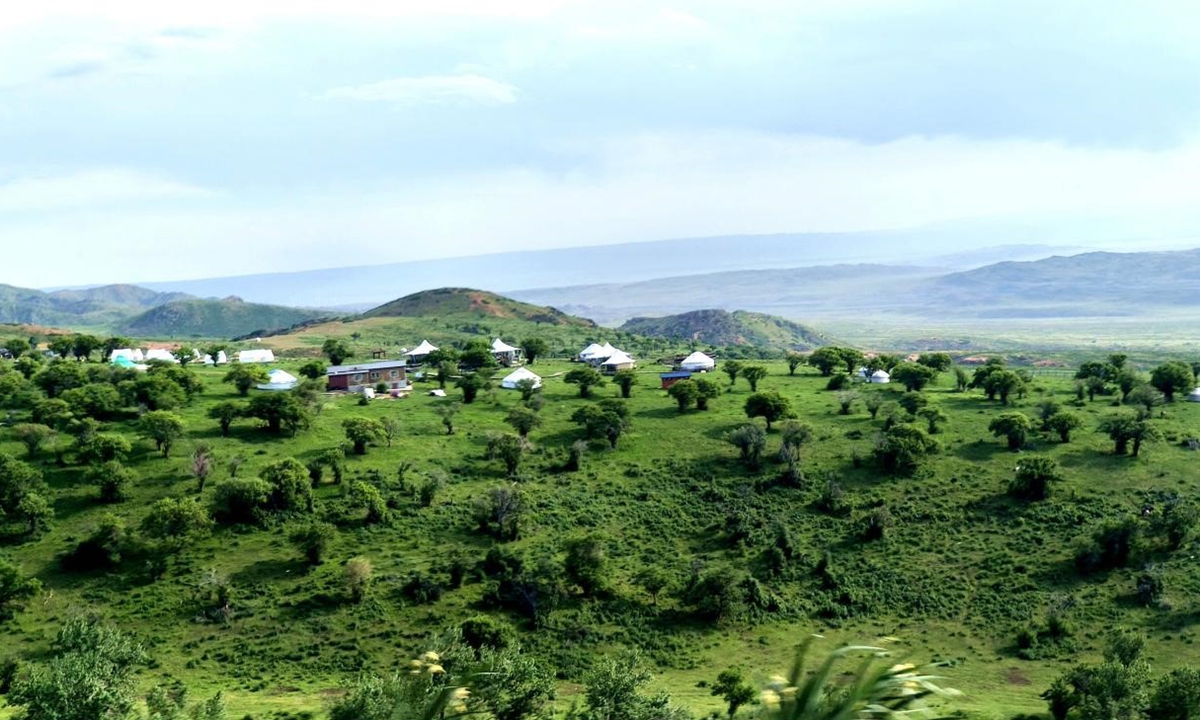
A view of the Wild Fruit Forest, a national 4A-level tourist attraction, in Emin County, Northwest China's Xinjiang Uygur Autonomous Region on May 23, 2025 Photo: Wang Wei
At the National 4A-level Wild Fruit Forest scenic area in Emin County, tourist Zhang Ting from Chengdu exclaimed that she "immediately felt relaxed." As the seventh stop on her Xinjiang journey, Tacheng brought her a completely new experience: "Chengdu doesn't have scenery like this, and the Shili Guaipo we just passed was absolutely amazing!"
In recent years, leveraging three signature routes - G219, S101 and G217 Duku Highway, Tacheng has developed multiple tourism routes. Following a path of diverse business formats and integrated development, the region is building a premier tourist destination and transforming from "transit tourism" to "destination tourism."
At the cross-border tourism promotion conference on May 11 this year, the "Tacheng - Baktu Port - Ala Lake" product became a highlight. Innovative measures such as "24-hour online vehicle pre-declaration," priority customs clearance for self-driving tours, and "appointment-based customs clearance" for personnel were unveiled one by one, demonstrating Tacheng's ambition not only to serve as a node in the northern Xinjiang grand loop but also to become a key hub connecting Central Asian tourism, establishing itself as the preferred departure point for outbound travel and a frontier station for inbound tourism.
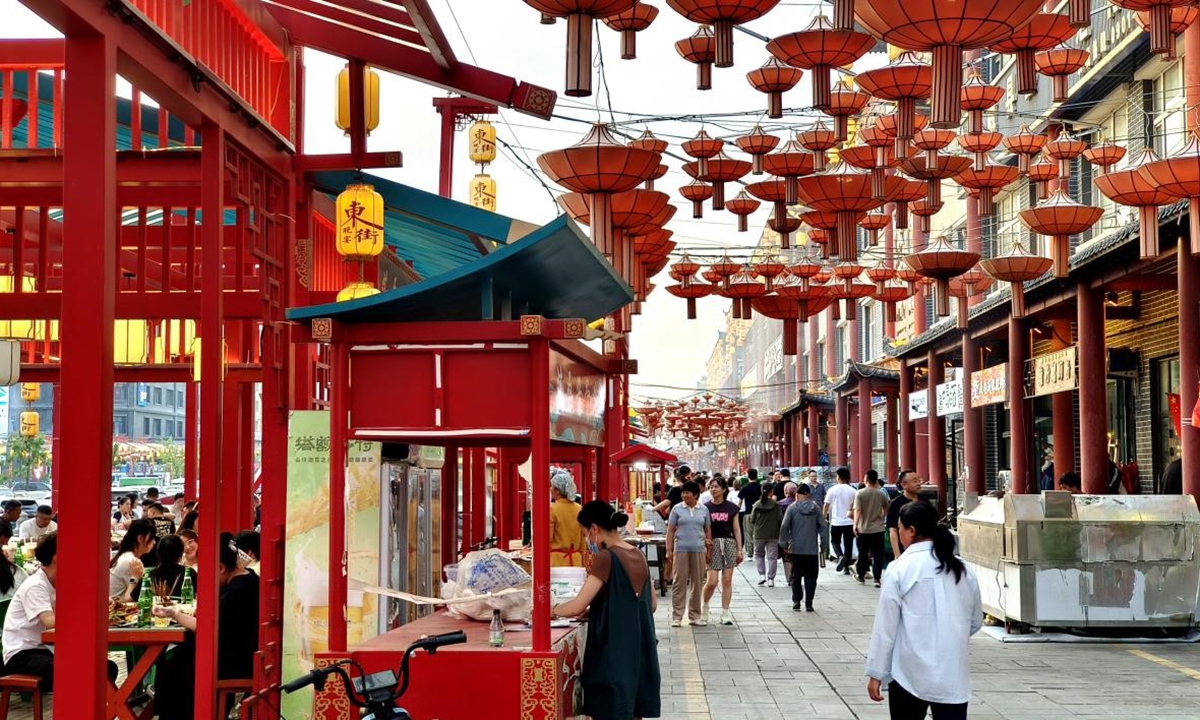
Tourists visit the Dongjie Night Market in Emin County, Northwest China's Xinjiang Uygur Autonomous Region on May 23, 2025. Photo: Wang Wei
On May 24, Tacheng Qianquan Airport handled 2,036 passenger trips, setting a new single-day record. During the May Day holidays, passenger trips exceeded 10,000, reflecting visitors' enthusiasm toward Xinjiang's tourism spots.
Four years ago, Mireguli moved her in-laws' barbecue restaurant, which had built a 30-year reputation, to Emin County's East Street Night Market. Now she has opened branch stores. "We have many regular customers, and visitors from other places come too. My husband has 30,000 to 40,000 followers on Douyin," she said with a smile. During peak tourism season weekends, they can earn 10,000 yuan in a single evening. "Since opening the store, business has grown bigger and bigger, with more and more customers."
As a demonstration district for Xinjiang's night economy, the East Street Night Market integrates diverse business formats with culture and tourism. On the first day of this year's May Day holidays, it handled 8,000 visitor trips with revenue exceeding 4 million yuan. During the Spring Festival period, gathering areas like Emin East Street received 69,200 tourist trips with a revenue of 8.874 million yuan, demonstrating strong consumer vitality.
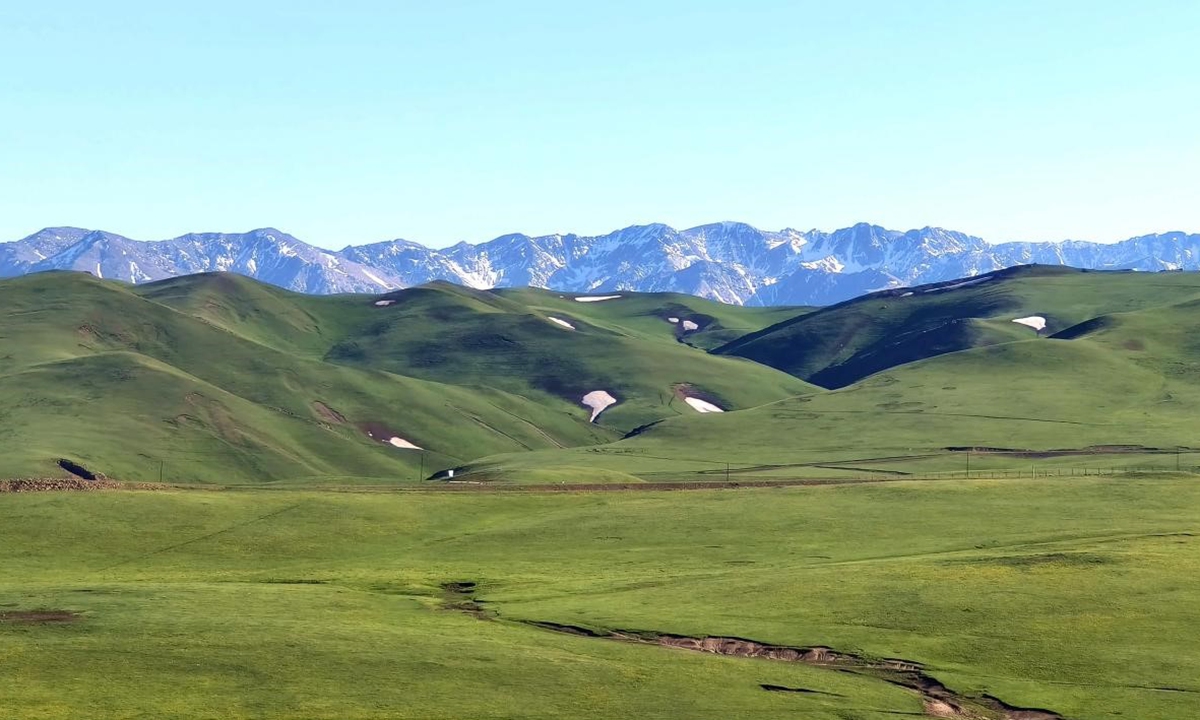
A view of the Akeqiao Grassland in Northwest China's Xinjiang Uygur Autonomous Region on May 23, 2025 Photo: Wang Wei
With red tourism as its soul, scenic tourism as its backbone, and consumption tourism as its wings - to support high-quality tourism development, Tacheng region has released the "Tourism Master Plan (2025-2035)," continuously polishing the "Oil Painting Tacheng-Grassland Sacred Land" brand and soaring in the realm of "poetry and distant places."
