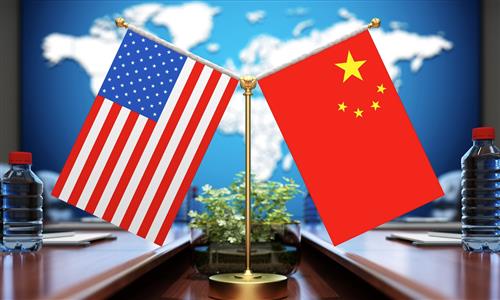
Business communities of China, US share extensive common interests, vast cooperation opportunities: CCPIT
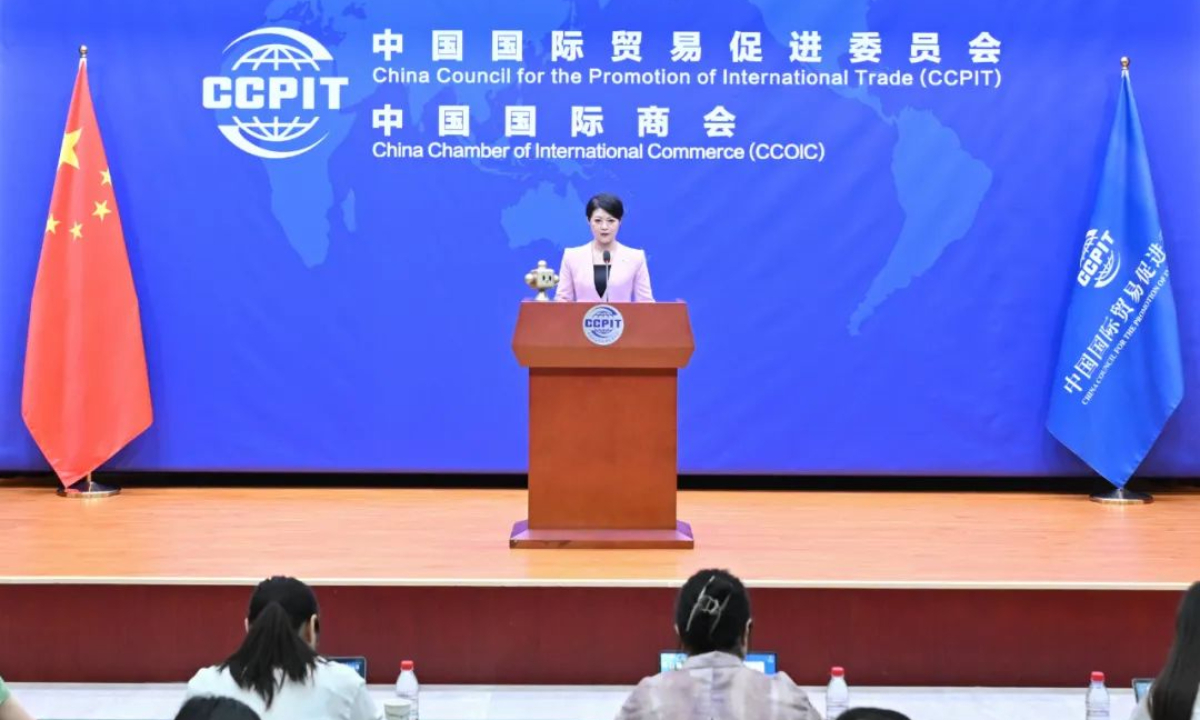
Wang Linjie, spokesperson for the China Council for the Promotion of International Trade (CCPIT) Photo: Screenshot from CCPIT
The business communities of China and the US share extensive common interests and vast cooperation opportunities, playing a significant role in the development of China-US relations, Wang Linjie, spokesperson for the China Council for the Promotion of International Trade (CCPIT), told a press conference on Friday.
Wang made the remarks when asked to comment on a latest survey by the American Chamber of Commerce in China saying that most US companies in China will remain committed to the Chinese market.
Since the beginning of this year, the CCPIT has invited and received 22 delegations of US institutions and business leaders to visit China. They have expressed optimism about China's development prospects and a desire to continue cooperation with China, according to Wang.
We have noted that recently, Michael Hart, president of the American Chamber of Commerce in China, stated that 67 percent of member companies have no plans to relocate, and China remains a primary investment destination, with pragmatic cooperation continuing despite a complex environment. Eric Zheng, president of the American Chamber of Commerce in Shanghai, also noted that people-to-people exchanges form the resilience and vitality of US-China cooperation, and civil society and the business community will continue to be key forces in advancing this cooperation, the spokesperson said.
China-US relations have gone through ups and downs, but have always moved forward. The business communities of China and the US are communities of shared interests, navigating these challenges together. Our exchanges and cooperation have never ceased; instead, they have pressed forward through adversity, becoming closer and more in-depth, she noted.
At the upcoming 3rd China International Supply Chain Expo (CISCE), the number of US exhibitors has increased by 15 percent compared to the previous edition, continuing to lead as the top source of foreign exhibitors, with exhibition space growing by 10 percent. It is expected that several key executives from US Fortune 500 companies will attend the expo's opening ceremony and related events, according to Wang.
In addition, in the first half of this year, nearly 2,500 Chinese companies, approved by the CCPIT, participated in over 30 professional exhibitions in the US, including the Consumer Electronics Show and Hardware Show in Las Vegas. These exhibitions covered fields such as electronics, textiles, consumer goods, pharmaceutical raw materials, optoelectronics, building materials, and energy storage, with a total exhibition area of over 32,000 square meters.
This year marks the 20th anniversary of the China-US Commercial Match-Making Program (CMP), led by the CCPIT and the US Department of Commerce. Over 100 events have been held, serving nearly 3,000 companies and promoting practical cooperation between Chinese and US businesses in fields such as advanced manufacturing, rail transportation, energy conservation and environmental protection, finance, automotive, and firefighting, Wang said.
In April this year, the CMP held a seminar on China-US environmental technology in Beijing. From June to September, it will also host themed events and business match-making activities in Southwest China's Sichuan Province, Beijing, North China's Inner Mongolia Autonomous Region, Southwest China's Chongqing Municipality and other locations, focusing on industries such as green and low-carbon technologies, rail transportation, smart mining, and automotive, providing a practical platform for deepening cooperation between the business communities of both countries, she added.
Promoting mutually beneficial cooperation between China and the US aligns with the shared interests of both countries and the global business community. The CCPIT will implement the consensus reached by the two heads of state, leveraging platforms such as the CISCE and the CMP to actively foster enhanced exchanges and win-win cooperation between the business communities of both countries, continuing to take concrete actions to advance the development of China-US economic and trade relations, Wang noted.
Global Times
RELATED ARTICLES