BUSINESS / PRESS RELEASE
United Family Healthcare highlights its role in innovation and patient-centered care
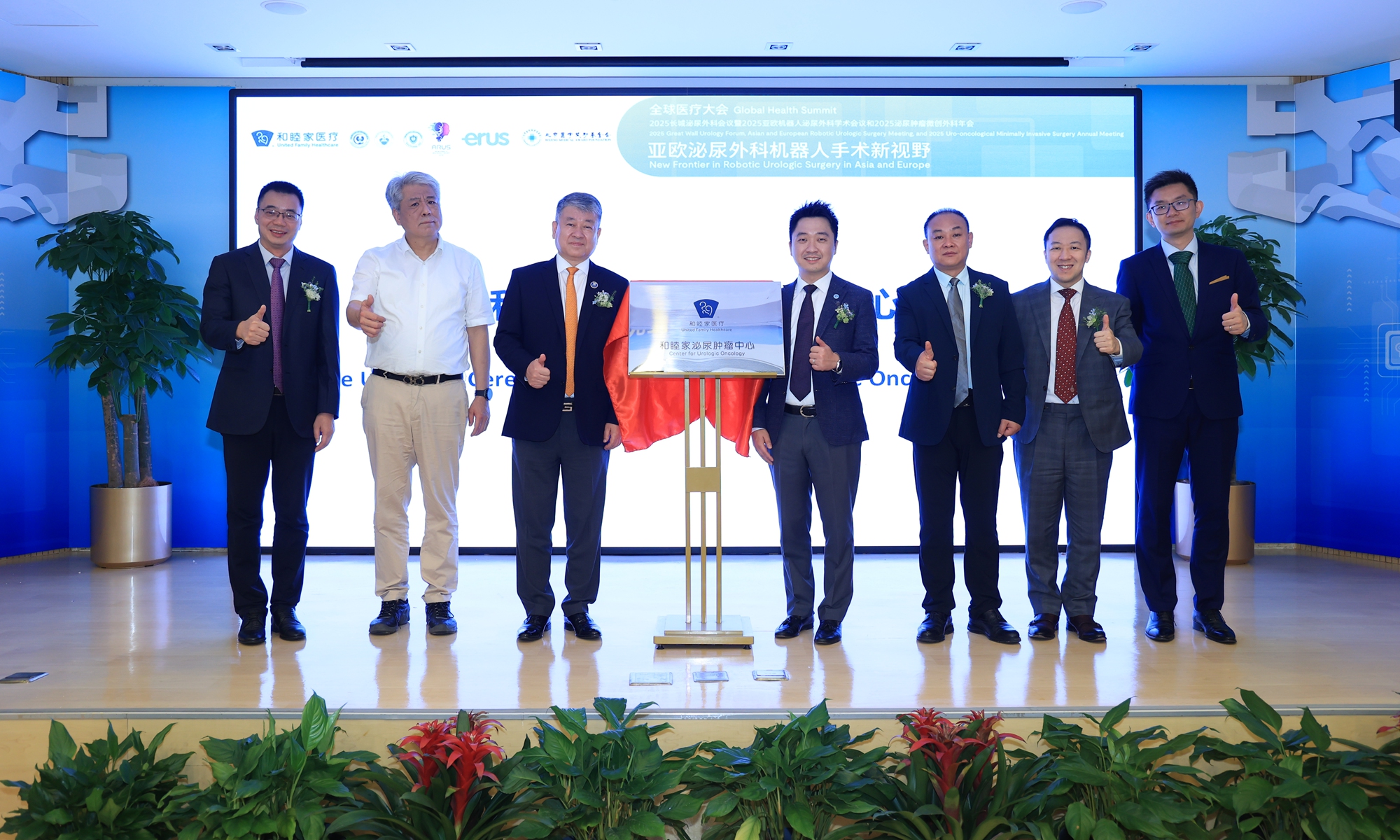
The unveiling ceremony of the Center for Urologic Oncology of United Family Healthcare is held in Beijing on Saturday. Photo: United Family Healthcare
In June 2024, a Zimbabwean patient diagnosed with prostate cancer embarked on an extraordinary 11,000-kilometer journey—from Zimbabwe to Vietnam and finally to Beijing—in search of hope. He ultimately placed his trust in Beijing United Family Hospital, choosing to undergo a robot-assisted radical prostatectomy.
With the Da Vinci XI surgical robot delivering life-saving precision down to 0.1 millimeters, the operation was completed smoothly. In just 37 days, the patient went from diagnosis to recovery, a powerful testament to the borderless nature of modern medicine.
For United Family Healthcare (UFH), this was not an isolated miracle, but a reflection of its consistent commitment to excellence. Founded in 1997, UFH has long been at the forefront of China's private healthcare sector, striving to deliver internationally aligned, patient-centered care to both domestic and global patients.
That spirit of innovation and openness was on full display at the 2025 Great Wall Urology Forum, Asian and European Robotic Urologic Surgery Meeting, and the 2025 Uro-oncological Minimally Invasive Surgery Annual Meeting, held on Saturday at the Beijing United Family Hospital.
The event brought together leading experts from across Asia and Europe. Showcasing cutting-edge robotic technologies and solutions for complex cases. The forum highlighted how surgical innovation can dramatically improve precision and elevate the patients' quality of life.
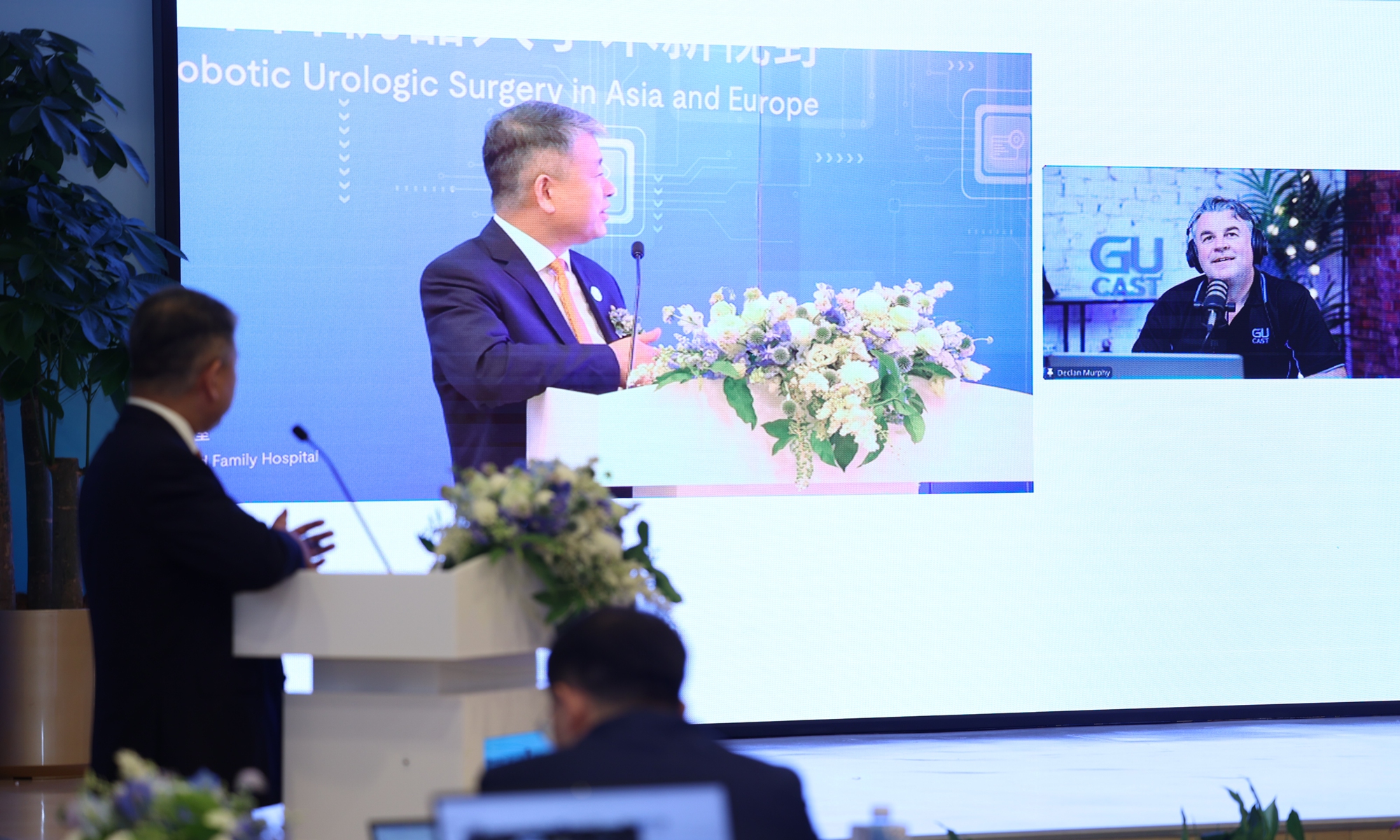
Dr Zhu Gang and Australian urology expert Declan Murphy hold an online discussion on Saturday in Beijing. Photo: United Family Healthcare
International platform
Centered around the theme "New Frontier in Robotic Urologic Surgery in Asia and Europe," the forum brought together leading experts from across the Chinese mainland, the Hong Kong Special Administrative Region, the island of Taiwan, the Macao Special Administrative Region, and countries like Australia, Germany, Belgium, Japan, South Korea, Thailand, India, and the Philippines. Through cross-regional and cross-border academic exchange, the event aimed to drive the integration of technological innovation and clinical practice.
Dr Zhu Gang, Chair of Surgery and Urology of United Family Beijing Market, highlighted that the forum has expanded well beyond its original scope. "We used to organize this event under the name of Beijing United Family Hospital. Now, it is held under the UFH, reflecting a group-wide commitment to international engagement," he said on the sidelines of the forum.
The forum featured innovative elements such as live surgery demonstrations, which showcased real-time breakthroughs in robotic urological procedures, including minimally invasive treatments for complex cases like prostate cancer and kidney tumors. Multinational experts also participated in in-depth case discussions, exploring technical challenges and collaborative solutions in robotic surgery, offering a comprehensive view of cutting-edge clinical approaches in the field.
Led and organized by the UFH, the forum provided an international platform for exchange between Chinese and foreign medical experts. Dr Zhu Gang pointed out that clinical practices, medical technologies, and equipment, highlighting the fact that both the practical value and cutting-edge nature of modern healthcare will be prioritized during the meeting.
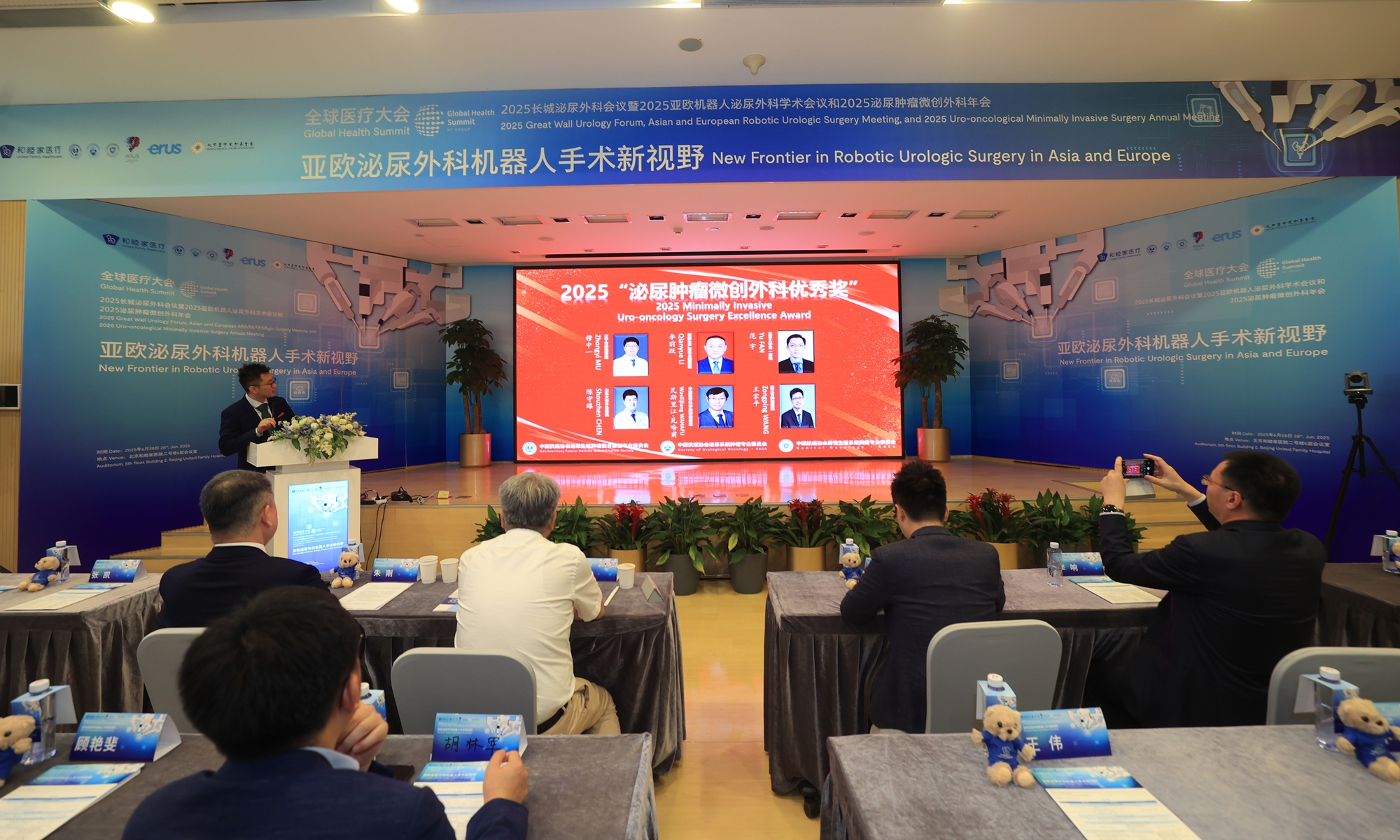
2025 Award for "Minimally Invasive Uro-oncology Surgery Excellence" Ceremony Photo: United Family Healthcare
Technical breakthrough
Beijing United Family Hospital was among the first non-public medical institutions in China to introduce the Da Vinci surgical robotic system. Since Dr Zhu Gang performed the hospital's first robotic-assisted procedure in 2015, the urology team has made steady progress over the past decade, successfully completing numerous complex and high-precision surgeries. Emphasizing precision medicine, the team customizes treatment plans based on tumor stage, patient age, and individual needs. Their approach integrates multidisciplinary expertise to enable seamless management throughout the patient journey, from diagnosis to postoperative recovery.
In essence, robotic surgery at Beijing United Family Hospital refers to "robot-assisted laparoscopic surgery," in which surgeons operate mechanical arms via a control console. Compared to traditional open surgery, this approach offers considerable benefits—minimally invasive procedures, reduced blood loss, shorter hospital stays, and faster recovery, enhancing both safety and quality of care for patients, said Dr Zhu Gang.
Beyond robotic surgery, Beijing United Family Hospital is also advancing the application of holographic imaging in urologic and oncologic procedures. This technology processes CT and MRI data using AI algorithms to produce three-dimensional images that clearly depict anatomical structures. These 3D visuals are applied in pre-surgical planning, intraoperative navigation, doctor-patient communication, and medical education. Dr Zhu Gang said that UFH is currently leading the drafting of national clinical guidelines on the use of holographic imaging in cancer surgery, under the guidance of the China Anti-Cancer Association.
China's medical landscape is shifting from a phase of following global trends to leading them, particularly in fields such as robotic surgery and AI integration, said Dr Zhu Gang, noting that with the support of advanced infrastructure like 5G networks and satellite systems, China has realized remote robotic surgeries not only across provinces but even across continents. "This marks a leap from early experimentation to mature, reliable application, reflecting China's growing leadership in global medical innovation," he said.
Cross-continent responsibility
According to Dr Zhu Gang, with strengths in language accessibility, adherence to international standards, and professional expertise, the Beijing United Family Hospital is well positioned to serve global patients.
In May 2024, a 62-year-old Irish rally driver was seriously injured during the Beijing-Paris Classic Car Rally and was rushed from Gansu Province to the Beijing United Family Hospital, after local hospitals proved inadequate. A multidisciplinary team spanning over 10 departments—including thoracic surgery, neurosurgery, and critical care—provided precise, coordinated treatment. The patient underwent complex interventions for lung infections and brain trauma, supported by pain management and personalized rehabilitation. In 2025, he returned to Beijing to thank the team and share his story at the rally's opening ceremony, where BJU was named official medical partner.
In 2025, Ms Li, a 62-year-old Hong Kong resident, was diagnosed with a large metastatic kidney tumor. Despite suggestions to seek care abroad, she chose Beijing United Family Hospital, where her husband had been successfully treated before. Within 48 hours of diagnosis, she underwent a complex, robot-assisted radical nephrectomy followed by femoral tumor resection and prosthesis reconstruction. With just 150ml of blood loss and early mobilization post-surgery, Ms Li was walking with crutches by day two and discharged a week later. She described her choice as "putting life in the hands of those you trust most," while BJU's team highlighted that trust and precision are at the heart of high-quality cancer care.
"After years of dedicated effort, we are pleased to see that our medical safety, quality, and standards have been recognized internationally, including by patients from around the world. This gives us confidence: with the right technologies, knowledge, and experience, we are fully capable of delivering high-quality medical care to international patients," said Dr Zhu Gang.
Dr Zhu Gang added that an increasing number of international patients are now actively seeking treatment in China, signaling the country's emergence as a growing "medical destination." "Healthcare is an important component of a nation's soft power—it reflects national strength and serves as a key platform for international collaboration," he stated.
When asking the inspiration behind the conference, Dr Zhu Gang explained that being a doctor is a lifelong learning journey. "If you stop learning, you may find yourself unable to practice medicine within just five years, as medical knowledge, techniques, and equipment are constantly evolving."
Notably, the Beijing United Family Hospital holds about 30 medical forums and international medical dialogues each year spanning a vast variety of topics.
"The same applies to medical institutions—we must continuously improve our capabilities to keep pace with advancements and meet patient needs. For individual doctors, for hospitals, and for healthcare groups as a whole, staying up to date with the latest theories and technologies is essential," he said.
Dr Zhu Gang said if China succeeds in improving cancer prevention and treatment, it will significantly benefit global efforts in the fight against cancer. "Just as China has provided medical aid to many developing countries, we hope to share our experience and expertise openly through platforms like this forum—because healthcare knows no borders," he noted.
