ARTS / CULTURE & LEISURE
New findings fill gaps in early history of region in Shanxi
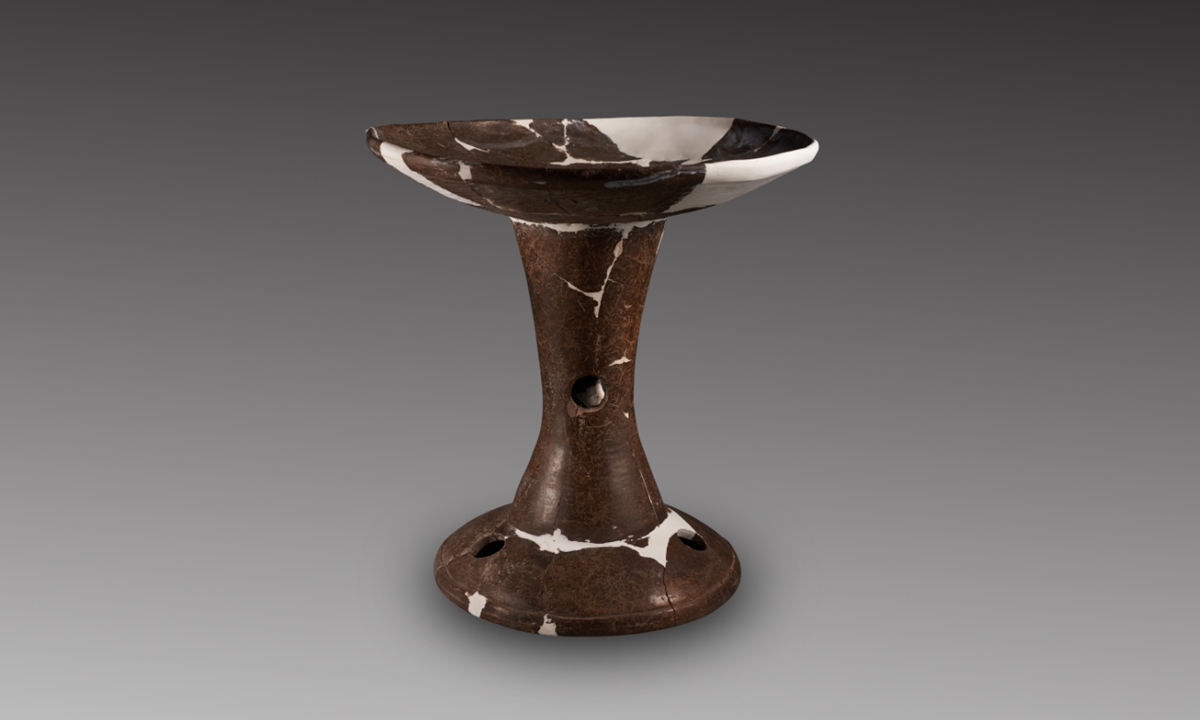
Photo: Courtesy of Shanxi Provincial Institute of Archaeology
The Shanxi Provincial Institute of Archaeology on Wednesday released its findings from the excavation of the early Longshan cave dwellings at the Fengyi site in Lüliang, North China's Shanxi Province, enriching the understanding of settlement patterns and filling gaps in the cultural timeline of the early Longshan culture along the Dongchuan River. Artifacts unearthed included pottery jars and stone tools."This excavation marks the first discovery of cultural remains from the same period in the Lüliang region since the Jinzhong Archaeological Team carried out related work at the archaeological site in Xinghuacun Township on the eastern slopes of the Lüliang Mountains in the 1980s," Zhao Hui, head of the excavation project, told the Global Times on Wednesday.
The cave dwellings found at the Fengyi site are located approximately two kilometers south of the Xinyi site, where early Phase II Miaodigou culture cave dwellings were discovered arranged in rows. The newly discovered dwellings are situated along ridges or mid-slope areas. Although the structures have been partially damaged, the remaining sections clearly reveal a distribution pattern that follows the contours of the terrain. This settlement layout and dwelling style reflect long-standing traditions in this region and across the broader loess hill areas of northern China, according to the China News Service.
According to Zhao, a series of archaeological field studies carried out in recent years across the Sanchuan River Basin, combined with data from archaeobotanical and zooarchaeological research, environmental and geomorphological studies, radiocarbon dating, and human remains analysis, have gradually painted a clearer picture of the region's prehistoric civilization.
For Zhao, these findings provide important evidence for understanding how the two major cultural groups, represented by the Shimao and Taosi sites, interacted and carried out exchanges along the north-south routes through the Lüliang Mountains hinterland in the late Neolithic period.
The early Longshan cultural remains discovered at the Fengyi site represent another significant achievement in recent years by archaeologists working in the Sanchuan River Basin, located in the hinterland of the Lüliang Mountains. These discoveries were made as part of archaeological investigations conducted alongside infrastructure development, with a growing focus on understanding the region's path toward early civilization, according to a press release from the Shanxi Provincial Institute of Archaeology.
"These findings provide concrete evidence for understanding two major late Neolithic cultural groups, represented by the Shimao and Taosi sites," Zhao said.
RELATED ARTICLES