China, Brazil sign cooperation documents to expand partnership on AI, new energy, medicine and infrastructure
Cooperation serves as positive model for other South-South partnerships: expert
Photo: VCG
China and Brazil have signed numerous cooperation documents in fields such as infrastructure, pharmaceuticals, new energy, artificial intelligence (AI) and development strategy alignment, part of their efforts to promote bilateral ties, according to a statement posted by China's National Development and Reform Commission (NDRC) on its website on Monday.
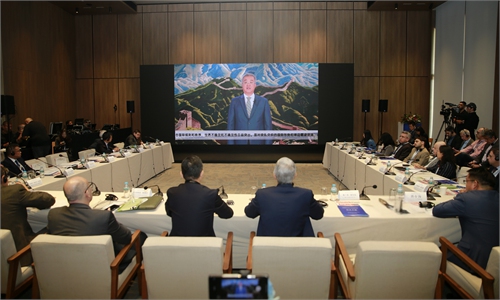
Liu Sushe, vice head of the NDRC, and the heads of the relevant Brazilian departments signed a memorandum of understanding (MoU) on the second phase of cooperation in aligning the development strategies of the two countries, agreeing to expand cooperation in AI and more, on July 5 (local time), according to the statement.
Specifically, officials of the NDRC and the Ministry of Science, Technology, and Innovation of Brazil signed an MoU on jointly establishing an AI application cooperation center. The agreement aims to promote collaboration in AI, including consolidating the foundation for AI development, providing open-source and open-access services and supporting talent cultivation.
The two sides pledged to expand collaboration in infrastructure, pharmaceuticals, and new-energy development. These areas were included in the MoU on the second phase of cooperation in aligning the development strategies of the two countries, said the statement.
The meeting came as Chinese Premier Li Qiang arrived in Brazil's Rio de Janeiro on July 5 to attend the 17th BRICS Summit.
While addressing the plenary session of "Peace and Security and Reform of Global Governance" of the 17th BRICS Summit, Premier Li Qiang said on Sunday that BRICS countries should also focus on development and bolster the drivers of economic growth, adding that they should actively spearhead development cooperation and tap into the growth potential of emerging sectors.
Noting that China will establish a China-BRICS research center on new quality productive forces this year, Premier Li also announced a scholarship established for BRICS countries to facilitate talent cultivation in sectors including industry and telecommunication, the Xinhua News Agency reported on Monday.
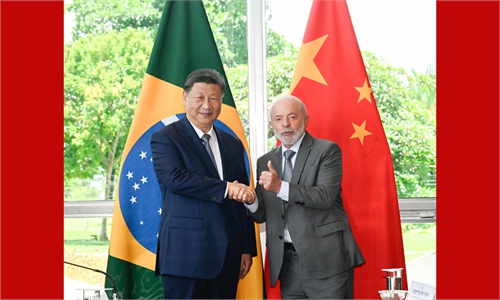
Premier Li said that China is willing to work with Brazil to leverage their complementary strengths and expand cooperation in the digital economy, the green economy, sci-tech innovation and aerospace, during his meeting with Brazilian President Luiz Inacio Lula da Silva, Xinhua reported on Sunday.
Following the meeting, the two sides witnessed the signing of cooperation documents in such fields as fiscal and financial affairs, AI, development strategy alignment and aerospace, according to Xinhua.
Analysts said that the documents are a significant step in deepening the strategic partnership between China and Brazil. They are expected to drive mutual economic growth and technological progress.
This collaboration is set to transform Brazil's resource advantages into tangible development momentum, moving beyond trade to foster value chain integration and enhanced industrial cooperation, Zhou Mi, a senior researcher at the Chinese Academy of International Trade and Economic Cooperation, told the Global Times.
In traditional sectors, Chinese machinery and new-energy vehicles can help Brazil improve its infrastructure and create a more favorable environment for development. "In addition, whether it is AI or new energy, China-Brazil cooperation can significantly enhance the development momentum of both countries and achieve more sustainable growth," Zhou said.
Zhou emphasized that the deepening of China-Brazil cooperation will not only create vast opportunities for both nations but also provide a significant boost to the stable growth and sustainable development of the global economy. He said that this cooperation should be viewed within the broader framework of China's collaborative efforts with Latin American countries and other BRICS nations.
Moreover, it can serve as a positive model for other South-South countries to enhance mutually beneficial cooperation, particularly in the field of science and technology, the expert noted.
Inty Mendoza, chief representative officer at Invest SP, Investment Promotion Agency of São Paulo, Brazil, expressed optimism about the future of China-Brazil economic and trade cooperation.
"China is a major export destination for Brazilian agricultural products, which indicates the confidence Chinese consumers have in Brazilian goods," Mendoza told the Global Times. Many companies from São Paulo are eager to expand into the Chinese market.
Brazil is not only looking to export more high-quality products to China but also welcomes more Chinese electric vehicles, renewable energy solutions, and agricultural inputs into its market. Amid the current global trade uncertainties, Mendoza said that Brazil sees opportunities. "Brazil is a leading producer of agricultural products, with the world's highest output of soybeans, sugar, coffee, and orange juice. We have the quality and quantity to meet China's demand," he added.
From an agricultural perspective, increasing productivity is key, and Mendoza believes that China's advanced agricultural facilities and rapidly developing modern agriculture can offer valuable technology and guidance to Brazil.
RELATED ARTICLES