ARTS / CULTURE & LEISURE
Intl dance festival in Xinjiang brings together 24 troupes from 9 countries
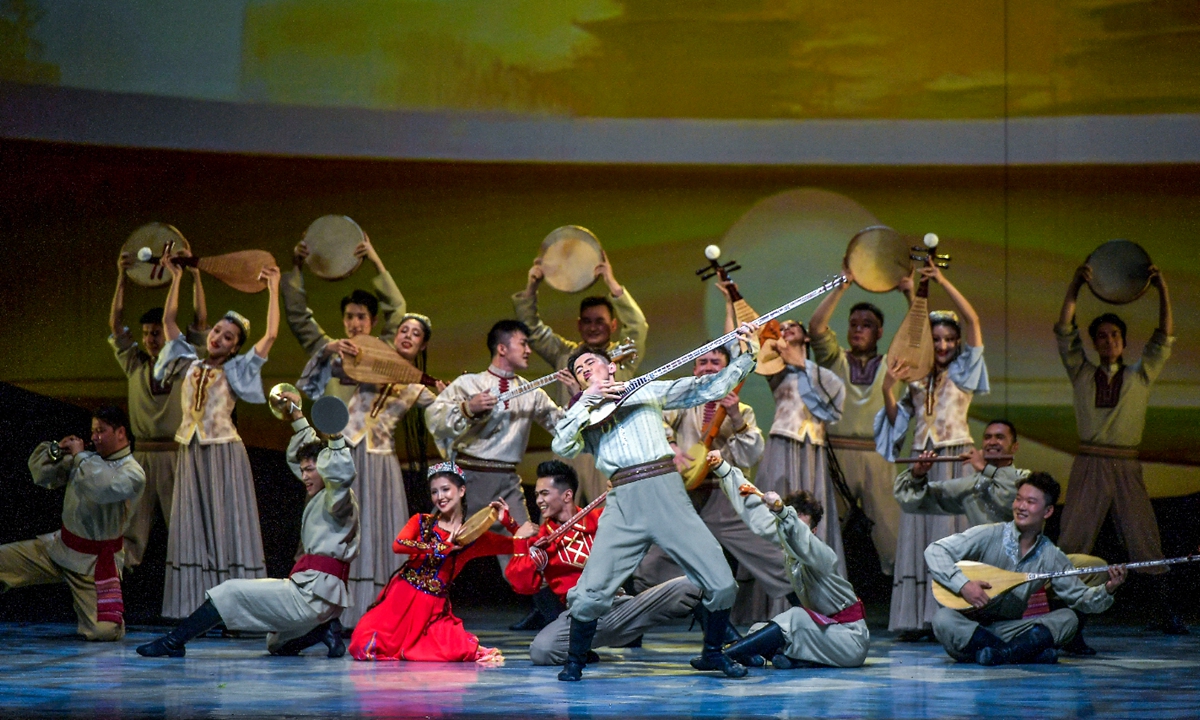
The 7th China Xinjiang International Dance Festival is held in Northwest China's Xinjiang Uygur Autonomous Region.Photo: VCG
The 7th China Xinjiang International Dance Festival is being held in Northwest China's Xinjiang Uygur Autonomous Region, featuring 52 performances over 17 days until August 5.Opening on Sunday in Urumqi, the event brings together 24 art troupes, including groups from eight foreign countries - Kazakhstan, Kyrgyzstan, Tajikistan, Uzbekistan, Turkmenistan, the US, Italy, and Cambodia - as well as 16 domestic teams from China. Performances include dance dramas, operas, ballets, and modern dance shows.Urumqi serves as the main venue, with sub-venues in Ili, Hotan, Aksu, Karamay, Hami and Alaer.
A dance drama was performed on Sunday evening in Urumqi after the opening ceremony. The production blended elements of Uygur, Xibe, Tajik and other ethnic dances, portraying the vibrant and harmonious coexistence of Xinjiang's diverse ethnic groups.
"As someone born and raised in Xinjiang, I grew up immersed in a rich atmosphere of ethnic interaction, cultural exchange, and integration," said Chinese actress Tong Liya, who also starred as the lead dancer in the production.
Tong shared that many details in the drama are drawn from real life in Xinjiang - even the color of the girls' headscarves and the sway of their skirts reflect the careful observations of daily life there.
Actress Madina Memet, born in Urumqi, played a mysterious girl walking through a forest of poplar trees. "To play such a resilient character on the stage in my hometown is the most precious gift of my artistic career," Madina said.
On Sunday evening, the ethnic opera Erquan also debuted at the festival. Centered on the life journey of renowned folk musician A Bing, the opera is a reflection of both the national spirit and the spirit of the times.
Co-hosted by the Ministry of Culture and Tourism, the State Council Information Office, and the regional government of Xinjiang, the event is centered in Urumqi, with six additional branch venues across the region in Ili, Hotan, Aksu, Karamay, Hami, and Alaer.
"The dance festival has grown far beyond a simple platform for artistic performances," Cai Xiaorong, Party secretary of the Xinjiang Art Theater, told the Global Times.
"It has become a window through which Xinjiang connects with the world, offering Xinjiang an international stage full of cultural confidence and artistic appeal. It presents a true picture of Xinjiang's openness, inclusiveness, cultural vibrancy, and social stability."
According to Cai, the dance festival also serves as an effective platform for cultural exchange, bringing together leading stage art from around the globe and promoting dialogue and mutual understanding among civilizations.
"Going forward, we will continue to leverage this valuable platform to present more outstanding works of stage art and let the brilliance of Chinese culture continue shining brightly on the global stage of civilization," noted Cai.
Launched in 2008, it is the first major international arts festival in China centered around dance. During the previous six sessions, it attracted a total of 138 art groups from more than 70 countries and regions that staged over 200 performances, providing a key platform for cultural exchange under the Belt and Road Initiative.
RELATED ARTICLES