SOURCE / PRESS RELEASE
A Decade of Deep Roots: Starbucks Ready-to-Drink (RTD) business Charts the Future with a China-Driven Innovation Chain
At the "Healthy Living Chain" zone of the 3rd China International Supply Chain Expo (CISCE), a giant bottle of Starbucks Jasmine Coffee Tea Latte stopped visitors in their tracks.
As a familiar face at the CISCE, Starbucks has now participated in its third consecutive year. But this year marks a first: behind that towering Jasmine Coffee Tea Latte stands the full presence of Starbucks Ready-to-Drink (RTD) business at the brand's booth, offering visitors a clear view of its localized supply chain — from innovation, sourcing, production, to distribution.
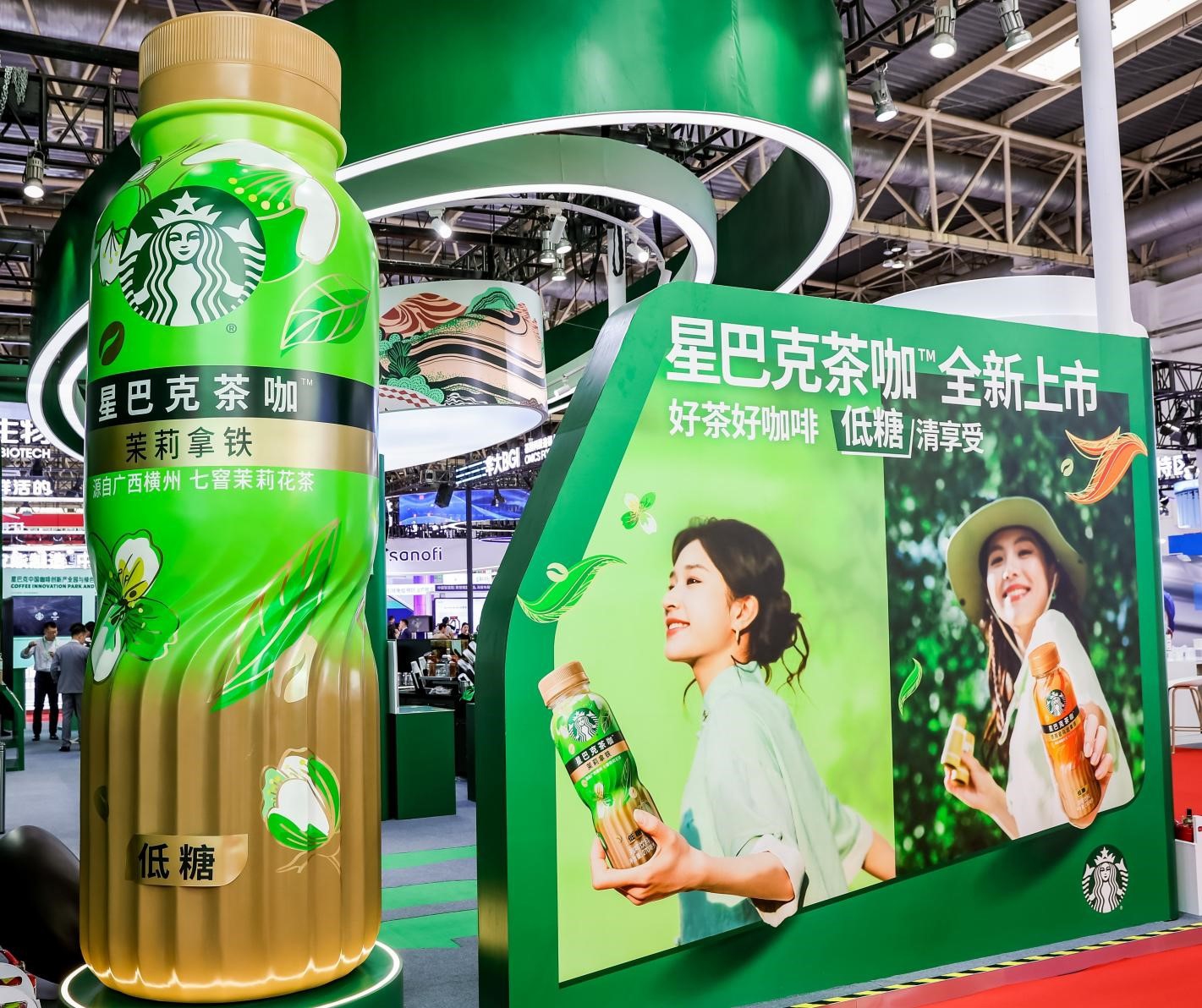
Under the theme "Building Supply Chain of the Future in China," Starbucks vividly showcases its achievements in local innovation and sustainable practices.
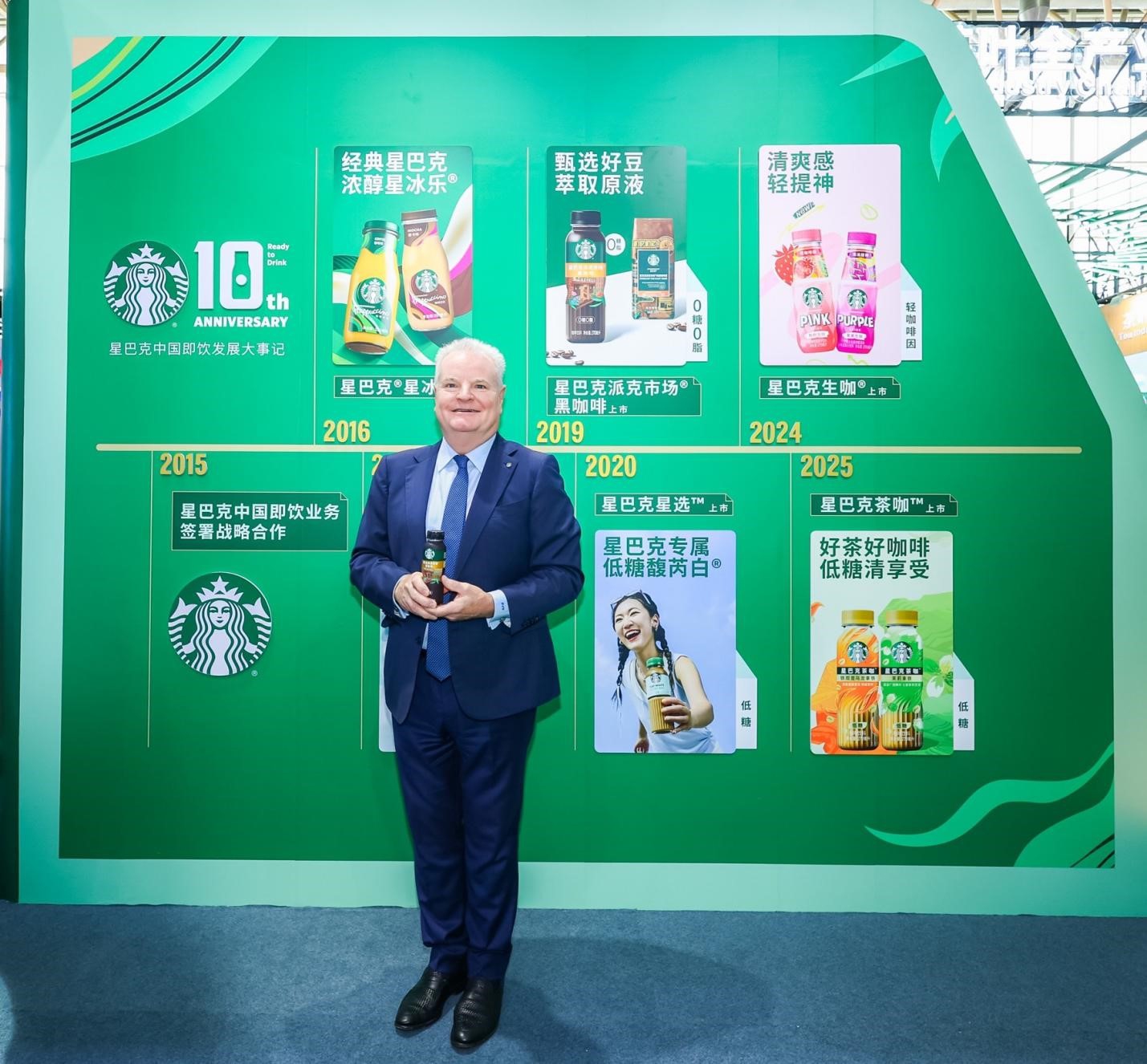
"We see RTD as one of Starbucks' critical growth channels," said David Hanson, China and Asia Pacific Vice President of Channel Development of Starbucks. "Over the past decade, China became the first Starbucks market outside the US to achieve a fully localized RTD supply chain. CISCE provides an excellent platform to share our 10-year progress in China and to explore further opportunities in localized product development and supply chain expansion."
Localized Innovation with a Taste of China: Premium Guangxi Jasmine Tea Meets Single-Origin Brazilian Arabica Coffee Beans
The mixture of premium jasmine tea from Guangxi and single-origin Arabica coffee beans from Brazil reflects Starbucks' commitment to creating custom-crafted flavors for Chinese palates.
This year, the company officially launched its "RTD Coffee Tea" series, headlined by Jasmine Latte and Tieguanyin Oolong Latte. These two products are vibrant examples of Starbucks' "China-style innovation" in RTD. With jasmine tea being scented seven times and premium Tieguanyin from Fujian, the floral notes of Chinese tea harmonize perfectly with the rich aroma of coffee.
As a coffee brand with exceptionally high awareness among Chinese consumers, Starbucks has never neglected local innovation. Since introducing its first RTD product to China in 2016, the company has created a diversified RTD portfolio with eight product lines — all developed and produced locally — driven by the evolving tastes and needs of Chinese consumers.
"Everything we do revolves around our consumers. We must deeply understand their preferences," David noted.
That philosophy guides Starbucks to fine-tune recipes for Chinese taste profiles and drinking occasions. A local R&D team independently creates "China-original" RTD products.
Beyond the Coffee-Tea series, Starbucks has also responded to growing demand for healthier, low-sugar beverages with products such as Pike Place Black Coffee (zero sugar, zero fat), Low-sugar Select Flat White, and Columbia Coffee Latte with a simplified recipe.
Popular in-store drinks have also been adapted into bottled products like lightly caffeinated coffee juice drinks and the Coffee-Tea line, extending the premium Starbucks coffee experience to diverse occasions.
Some of these locally developed products, like the premium "Starbucks Select" RTD series created for China, have even expanded abroad to markets like South Korea — proof of Starbucks' innovation prowess.
Cultivating a Local Supply Chain: The "China Radius" of a Starbucks Coffee
Over the past decade, Starbucks RTD has continually launched trending flavors, steadily enriching its portfolio and strengthening brand affinity among Chinese consumers. Behind these achievements lies a dedicated refinement — a fully localized operational chain that enables Starbucks RTD to respond swiftly to market demands.
"The efficiency and responsiveness of China's supply chain are astonishing!" David commented that with the local supply chain's speed and advanced technology, Starbucks is able to stay close to Chinese consumers and delivers fresh products faster than ever.
That "Taste of China" starts with Chinese ingredients. The Chinese jasmine tea in the RTD Coffee-Tea series comes from Hengzhou, Guangxi, while the Tieguanyin is sourced from Anxi, Fujian — both are top-grade teas.
All RTD packaging is also 100% sourced and processed within China. On the production side, Starbucks operates factories and production lines in Suzhou, Guangzhou, and Tianjin, ensuring nationwide coverage.
In distribution, RTD products already reach over 1,300 counties across China, with points of distribution projected to grow to 550,000 by 2025.
In the online market, Starbucks has expanded across platforms like Tmall, JD.com, and Douyin (TikTok China), while using interactive experiences to deepen consumer connections.
David emphasized: "Starbucks is a brand that values human connection. While we embrace digitalization, we also strive for every consumer touchpoint to reflect the authentic Starbucks experience, extending from our physical coffee store. This approach has helped Starbucks RTD secure a leading position in China's e-commerce channels."
At the same time, Starbucks RTD works closely with Chinese supply chain partners to build a green ecosystem supporting China's "dual carbon" goals. For instance, it continuously adopts recyclable materials to improve packaging sustainability. In 2023, the Starbucks Select RTD series won a Red Dot Product Design Award for its new bottle inspired by coffee glasses and accented with Starbucks' iconic green. Additionally, optimizations in product design, labeling equipment, and production processes have reduced virgin plastic usage from the source. At its production bases, Starbucks implements effective management systems for energy conservation, emissions reduction, water saving, and digital production to minimize negative impact on the environment.
Stellar Results and Steadfast Investment in China's RTD Industry
After a decade-long focus on China and backed by a robust local supply chain, Starbucks RTD has delivered standout results. In fiscal year 2024, Starbucks RTD China achieved double-digit year-on-year growth and maintained a strong hold as the second player in the RTD coffee segment.
In e-commerce, it received accolades such as Douyin's "Super New Product Award." And during the one-year period ending March 2025, its out-of-home penetration rate increased by 28% year-on-year, well above the RTD category's 8% growth.
While China's RTD coffee market is expanding rapidly, competition is fierce. For David, differentiation, localization, and consumer-centricity are the three pillars of brand competitiveness.
Looking ahead, when talking about the future developmental goal and vision, he said: "China is one of the fastest-growing and most promising markets worldwide. We aim for Starbucks RTD to achieve even faster growth here. In fact, we are delighted to see that more and more Chinese consumers become coffee lovers through flavors they're familiar with — like Coffee-Tea. We'll continue to innovate around Chinese consumers' needs, expanding our RTD offerings while reinforcing our leadership in coffee and beyond."
David concluded firmly, "Starbucks RTD will continue to invest steadily across the entire value chain in China. Our commitment to the China market remains unwavering."
As a familiar face at the CISCE, Starbucks has now participated in its third consecutive year. But this year marks a first: behind that towering Jasmine Coffee Tea Latte stands the full presence of Starbucks Ready-to-Drink (RTD) business at the brand's booth, offering visitors a clear view of its localized supply chain — from innovation, sourcing, production, to distribution.
Under the theme "Building Supply Chain of the Future in China," Starbucks vividly showcases its achievements in local innovation and sustainable practices.
"We see RTD as one of Starbucks' critical growth channels," said David Hanson, China and Asia Pacific Vice President of Channel Development of Starbucks. "Over the past decade, China became the first Starbucks market outside the US to achieve a fully localized RTD supply chain. CISCE provides an excellent platform to share our 10-year progress in China and to explore further opportunities in localized product development and supply chain expansion."
Localized Innovation with a Taste of China: Premium Guangxi Jasmine Tea Meets Single-Origin Brazilian Arabica Coffee Beans
The mixture of premium jasmine tea from Guangxi and single-origin Arabica coffee beans from Brazil reflects Starbucks' commitment to creating custom-crafted flavors for Chinese palates.
This year, the company officially launched its "RTD Coffee Tea" series, headlined by Jasmine Latte and Tieguanyin Oolong Latte. These two products are vibrant examples of Starbucks' "China-style innovation" in RTD. With jasmine tea being scented seven times and premium Tieguanyin from Fujian, the floral notes of Chinese tea harmonize perfectly with the rich aroma of coffee.
As a coffee brand with exceptionally high awareness among Chinese consumers, Starbucks has never neglected local innovation. Since introducing its first RTD product to China in 2016, the company has created a diversified RTD portfolio with eight product lines — all developed and produced locally — driven by the evolving tastes and needs of Chinese consumers.
"Everything we do revolves around our consumers. We must deeply understand their preferences," David noted.
That philosophy guides Starbucks to fine-tune recipes for Chinese taste profiles and drinking occasions. A local R&D team independently creates "China-original" RTD products.
Beyond the Coffee-Tea series, Starbucks has also responded to growing demand for healthier, low-sugar beverages with products such as Pike Place Black Coffee (zero sugar, zero fat), Low-sugar Select Flat White, and Columbia Coffee Latte with a simplified recipe.
Popular in-store drinks have also been adapted into bottled products like lightly caffeinated coffee juice drinks and the Coffee-Tea line, extending the premium Starbucks coffee experience to diverse occasions.
Some of these locally developed products, like the premium "Starbucks Select" RTD series created for China, have even expanded abroad to markets like South Korea — proof of Starbucks' innovation prowess.
Cultivating a Local Supply Chain: The "China Radius" of a Starbucks Coffee
Over the past decade, Starbucks RTD has continually launched trending flavors, steadily enriching its portfolio and strengthening brand affinity among Chinese consumers. Behind these achievements lies a dedicated refinement — a fully localized operational chain that enables Starbucks RTD to respond swiftly to market demands.
"The efficiency and responsiveness of China's supply chain are astonishing!" David commented that with the local supply chain's speed and advanced technology, Starbucks is able to stay close to Chinese consumers and delivers fresh products faster than ever.
That "Taste of China" starts with Chinese ingredients. The Chinese jasmine tea in the RTD Coffee-Tea series comes from Hengzhou, Guangxi, while the Tieguanyin is sourced from Anxi, Fujian — both are top-grade teas.
All RTD packaging is also 100% sourced and processed within China. On the production side, Starbucks operates factories and production lines in Suzhou, Guangzhou, and Tianjin, ensuring nationwide coverage.
In distribution, RTD products already reach over 1,300 counties across China, with points of distribution projected to grow to 550,000 by 2025.
In the online market, Starbucks has expanded across platforms like Tmall, JD.com, and Douyin (TikTok China), while using interactive experiences to deepen consumer connections.
David emphasized: "Starbucks is a brand that values human connection. While we embrace digitalization, we also strive for every consumer touchpoint to reflect the authentic Starbucks experience, extending from our physical coffee store. This approach has helped Starbucks RTD secure a leading position in China's e-commerce channels."
At the same time, Starbucks RTD works closely with Chinese supply chain partners to build a green ecosystem supporting China's "dual carbon" goals. For instance, it continuously adopts recyclable materials to improve packaging sustainability. In 2023, the Starbucks Select RTD series won a Red Dot Product Design Award for its new bottle inspired by coffee glasses and accented with Starbucks' iconic green. Additionally, optimizations in product design, labeling equipment, and production processes have reduced virgin plastic usage from the source. At its production bases, Starbucks implements effective management systems for energy conservation, emissions reduction, water saving, and digital production to minimize negative impact on the environment.
Stellar Results and Steadfast Investment in China's RTD Industry
After a decade-long focus on China and backed by a robust local supply chain, Starbucks RTD has delivered standout results. In fiscal year 2024, Starbucks RTD China achieved double-digit year-on-year growth and maintained a strong hold as the second player in the RTD coffee segment.
In e-commerce, it received accolades such as Douyin's "Super New Product Award." And during the one-year period ending March 2025, its out-of-home penetration rate increased by 28% year-on-year, well above the RTD category's 8% growth.
While China's RTD coffee market is expanding rapidly, competition is fierce. For David, differentiation, localization, and consumer-centricity are the three pillars of brand competitiveness.
Looking ahead, when talking about the future developmental goal and vision, he said: "China is one of the fastest-growing and most promising markets worldwide. We aim for Starbucks RTD to achieve even faster growth here. In fact, we are delighted to see that more and more Chinese consumers become coffee lovers through flavors they're familiar with — like Coffee-Tea. We'll continue to innovate around Chinese consumers' needs, expanding our RTD offerings while reinforcing our leadership in coffee and beyond."
David concluded firmly, "Starbucks RTD will continue to invest steadily across the entire value chain in China. Our commitment to the China market remains unwavering."
