US eyes Philippines as refueling hub with report claiming in event of ‘conflict with China’
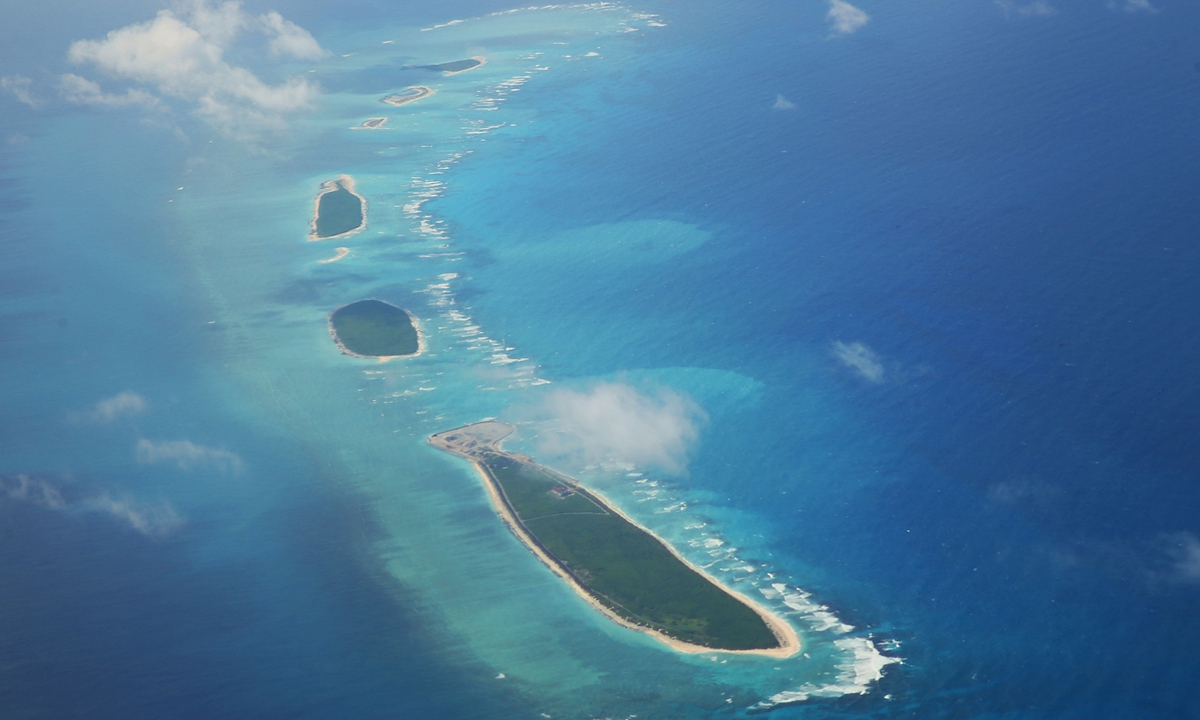
South China Sea Photo: VCG
The US Defense Logistics Agency is seeking to expand its maritime refueling capacity from the Philippines by contracting companies on the southern island of Mindanao to supply up to 42 million gallons of fuel a year, amid what it claimed as concerns of a lack of supply nodes "in the event of a conflict with China," reported the US Naval Institute (USNI) on Tuesday, citing new documents.A solicitation put out by the combat support agency, which is responsible for sustaining US military operations across the globe, is examining the Davao Region in Mindanao for contractor-owned and operated facilities and services that could receive, store and ship naval distillate grade F76 and aviation grade JP5.
Considered locations encompass the western coast of the Davao Gulf, including Davao City, Davao del Sur and Malalag Bay, according to the report.
The USNI claimed these expanded logistical efforts come amid so-called concerns of a lack of supply nodes west of the International Date Line "in the event of a conflict with China," as well as the tyranny of distance between the continental United States and the Western Pacific.
Regarding strengthened military collaboration between the US and the Philippines, China has repeatedly voiced concerns.
The Ministry spokesperson Guo Jiakun on Tuesday reiterated that whatever cooperation the US and the Philippines have, it should not target or harm any third party, still less incite confrontation and heighten tensions in the region.
Only a week ago, the US Embassy in Manila announced that the US Navy plans to build a new boat maintenance facility to help repair Philippine military vessels at the Naval Detachment Oyster Base in Ulugan Bay, Palawan, a Philippine province facing the South China Sea. Project documents highlighted the site's strategic location in the South China Sea as one of the key objectives, according to media reports.
Chen Xiangmiao, a research fellow at the National Institute for South China Sea Studies, told the Global Times that building such facilities targeting the South China Sea carries "obvious military implications" and may serve as a platform for expanding US military presence in the region. He noted that the moves could embolden Philippine military adventurism and escalate confrontations with China in the South China Sea.
RELATED ARTICLES