8.8-magnitude quake causes tsunami waves
Primarily impacts eastern coasts of Taiwan island; no destructive effects on mainland coasts: MNR
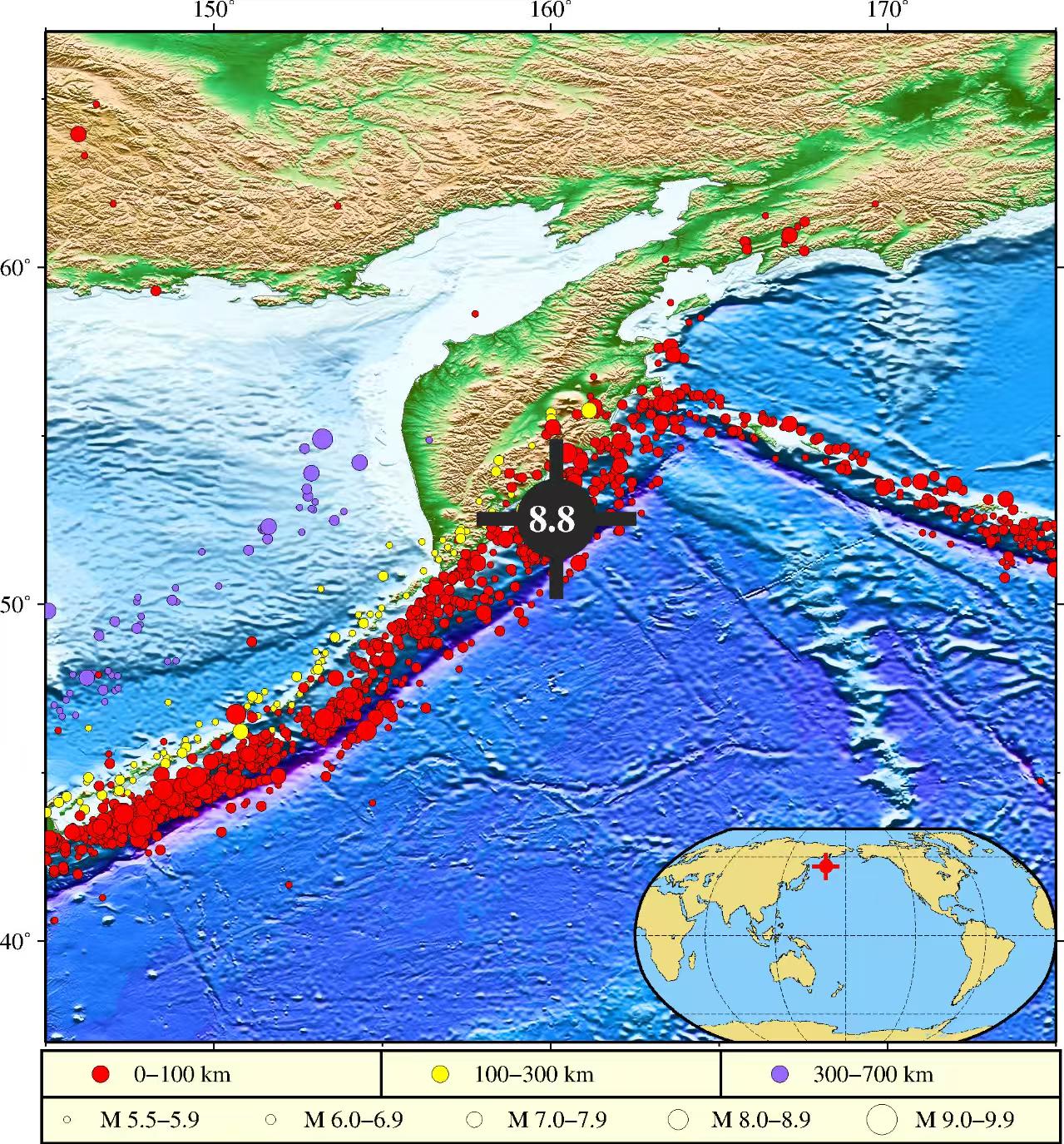
Photo: Ministry of Natural Resources
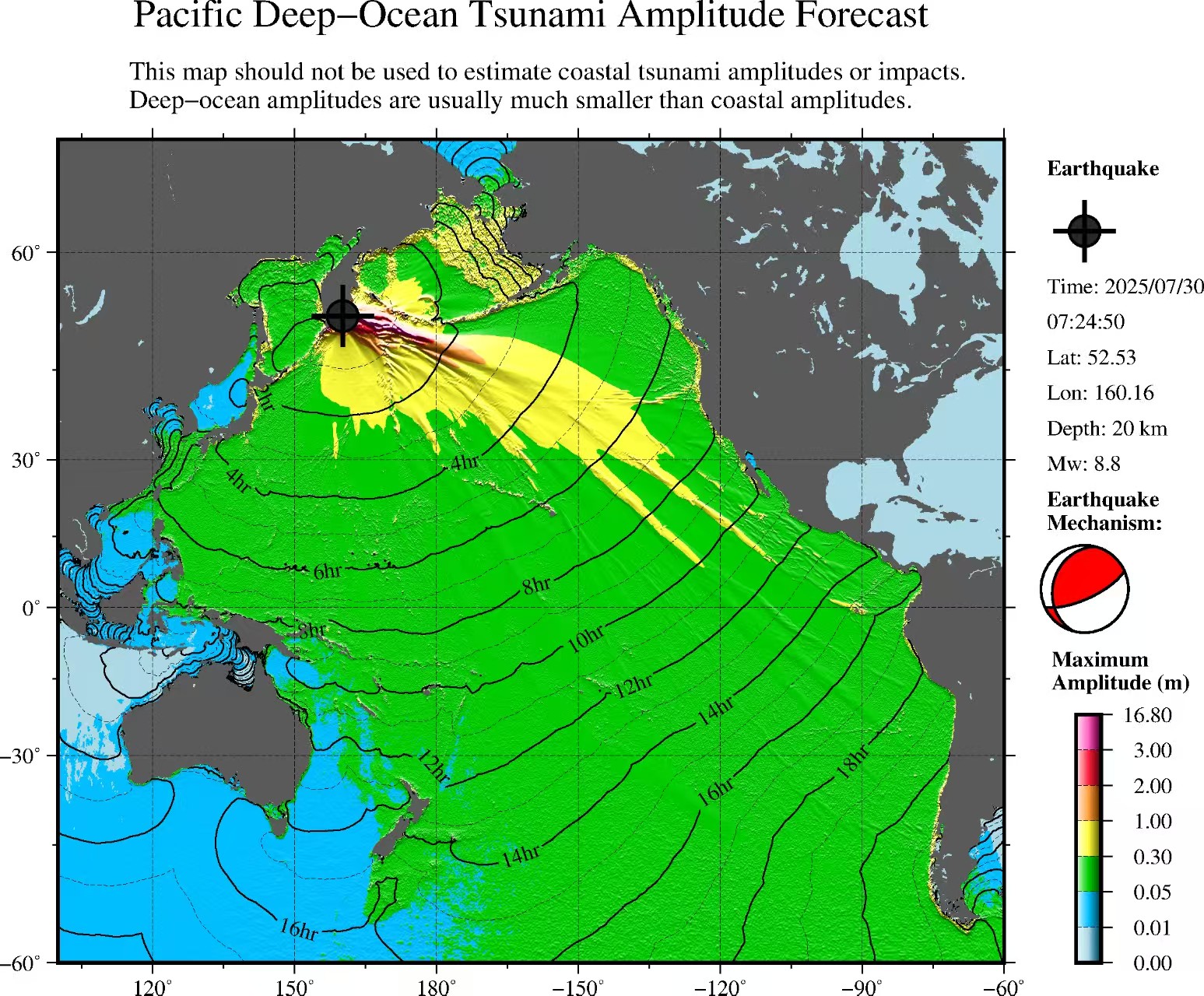
Photo: Ministry of Natural Resources
According to Wednesday night's update from the tsunami warning center of China's Ministry of Natural Resources, the tsunami generated by Wednesday's earthquake off Russia is not anticipated to unleash catastrophic impacts on China's coastal regions in the days ahead; accordingly, the tsunami warning has been lifted.
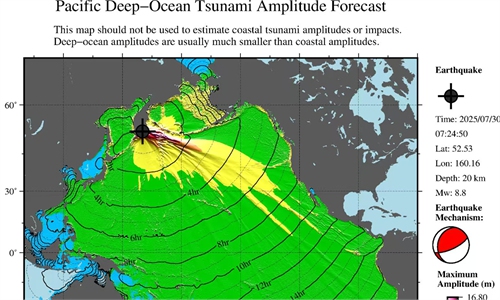
The earthquake struck waters off the eastern coast of Russia's Kamchatka Peninsula at 7:24 am Beijing time (52.53°N, 160.16°E) at a depth of 20 kilometers. The earthquake spawned a trans-Pacific tsunami, with Russia, the US, Japan and China all detecting the tsunami waves, according to the center.
Based on comprehensive evaluation, the center said that the main impact was on Taiwan island's eastern shoreline and that tsunami waves were expected to arrive along the coasts of East China's Zhejiang and Shanghai between 5 pm and 7 pm. The waves would be relatively small and would not have a destructive impact on Chinese mainland coastal areas.
Upon comprehensive evaluation, the tsunami warning has been lifted, said the center.
The Japan Meteorological Agency has revised tsunami warnings to lower level advisories for all areas of Japan as of Wednesday evening. But officials said people should exercise caution until advisories are lifted, Japanese broadcaster NHK reported.
The Chinese Embassy in Japan, the Chinese Consulate-General in Fukuoka and the Chinese Consulate-General in Nagoya issued urgent alerts on Wednesday to Chinese nationals in Japan, warning of the impending tsunami.
The Embassy of China in Japan reminded Chinese nationals and tourists in the affected areas to immediately stay away from the seaside and follow disaster prevention reminders to prepare for emergency evacuation, "Especially if you feel an earthquake near the coast, you should immediately move to higher ground," said the embassy.
"In case of emergency, please dial Japan's emergency assistance numbers immediately, and contact the Chinese Embassy and consulates in Japan for help," said the embassy, attaching Japan's emergency assistance numbers for medical services, police and maritime accidents, as well as the website of the Japanese Meteorological Agency for weather information.
The Chinese Consulate-General in Fukuoka also issued an urgent alert on Wednesday to Chinese nationals in Japan. The tsunami was expected to reach the coastal areas of the Miyazaki, Oita, Kagoshima, and Okinawa prefectures, including their surrounding islands around Wednesday at noon. The Chinese consulate urged Chinese citizens in these regions to closely monitor official tsunami warnings and disaster information, immediately evacuate from beaches, ports, and river mouths, and move to higher ground.
Tsunami waves caused by the earthquake have flooded part of the Russian port town of Severo-Kurilsk, according to the BBC, citing Russia's emergencies ministry. The town has a population of around 2,000 people. Videos on social media appear to show water surging inland near the town.
NHK reported that a tsunami warning of up to three meters was issued along Japan's Pacific coast, from Hokkaido to Wakayama, following the quake east of the Kamchatka Peninsula of Russia.
According to Asahi Shimbun and other Japanese media, Tokyo Electric Power Company ordered workers at the Fukushima Daiichi Nuclear Power Plant to evacuate at 8:51 am after a tsunami advisory was issued. All personnel had evacuated, the company confirmed.
Yoshitaka Ikarashi, a resident of Iwaki in Fukushima Prefecture, told the Global Times that the situation had not significantly affected them at the moment, but preparations were underway to activate a nationwide disaster relief network. "At the same time, we are also preparing food supplies for support," Ikarashi said.
A Chinese national living in Tokyo told the Global Times in the morning that no warning messages had been received on mobile phones, and people nearby appeared unaware of the situation. "The capital remains uninfluenced," the source added.
According to the BBC, Japan's Prime Minister Shigeru Ishiba said authorities are "working to assess the situation," emphasizing that relief efforts will "put human lives first." Ishiba said there were no confirmed reports of damage so far and urged residents under evacuation orders to seek high ground and stay away from coastal areas.
Canada's British Columbia province also issued a tsunami advisory for parts of the coast. Emergency information released on social media platform X urged affected residents to "Stay out of the water. DO NOT go to the shore to observe currents or waves. Avoid low-lying coastal areas, harbors, marinas & beaches until emergency officials say it is safe. Monitor for updates & follow instructions from local authorities." Waves of less than 0.3 meters were expected to reach Tofino at 11:30 pm PDT, authorities said, warning that multiple waves could strike over time and advising people to stay out of coastal waters and away from beaches and harbors.
The quake generated tsunami waves of three to four meters in Kamchatka, said Sergei Lebedev, the regional minister for emergency situations. While there were no injuries reported, a kindergarten was damaged, he added. "Today's earthquake was serious and the strongest in decades of tremors," Kamchatka Governor Vladimir Solodov said in a video posted on Telegram, according to the BBC.
RELATED ARTICLES