ARTS / CULTURE & LEISURE
Immovable relics remain safe after rainstorm: officials
Beijing’s proactive measures ensured protection
By Published: Jul 30, 2025 10:41 PM

Palace Museum Phot: VCG
Beijing's cultural treasures, including centuries-old bridges and city walls, emerged largely unscathed from recent rare destructive rainstorms thanks to proactive flood prevention measures and sophisticated monitoring systems, cultural heritage authorities told the Global Times on Wednesday.According to the updated "Beijing Cultural Relics Map" database released in May, Beijing currently boasts over 4,000 confirmed immovable cultural relics. These encompass a variety of sites, including ancient ruins, historic architecture, and modern historical landmarks, the Beijing Daily reported.
A staff member from the Beijing Municipal Administration of Cultural Heritage told the Global Times on Wednesday that prior to the flood season, the administration, along with museums across Beijing, had actively deployed resources and made comprehensive efforts regarding flood prevention.
She noted that it is reassuring that the cultural relics remain in good condition in the post-flood season with no significant issues reported so far.
Experts told the Global Times that water damage poses a persistent and severe threat to Beijing's ancient structures. As such, it is no coincidence that the city and its historic complexes have incorporated flood control systems since ancient times.
Zhou Ziyu, director of the heritage monitoring department at the Beijing World Cultural Heritage Monitoring Center, detailed the emergency protocols used during heavy rain.
When Beijing issued a red rainstorm warning at noon on Monday, the center immediately activated its emergency response mechanism.
Following the local cultural authority's directives, the center strictly implemented a leadership duty system, with museum leaders on duty 24 hours a day to oversee arrangements.
Security personnel remained on standby around the clock, intensifying patrols and monitoring.
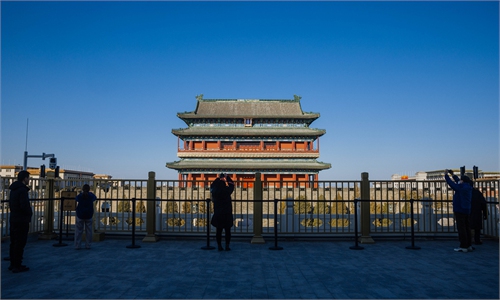
To date, only one hazardous situation was discovered - water seepage at the eaves-roof junction on the third floor of the Zhengyangmen Archery Tower, while everything else remained normal.
"Flood prevention supplies are sufficiently stocked, and emergency teams are ready to be deployed at any time to ensure safe passage through the flood season," he stated.
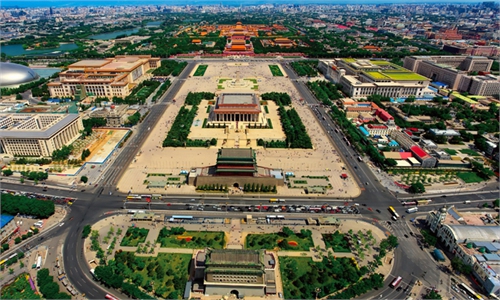
For the Beijing Central Axis, a UNESCO World Heritage, a dedicated monitoring network has been operational for nearly two years.
Zhou emphasized the network's role in "preventive conservation."
"Our focus is on Beijing's stable geology and the long-term preservation of these ancient structures," he explained, adding that the Palace Museum, with over a decade of monitoring experience, sets the benchmark.
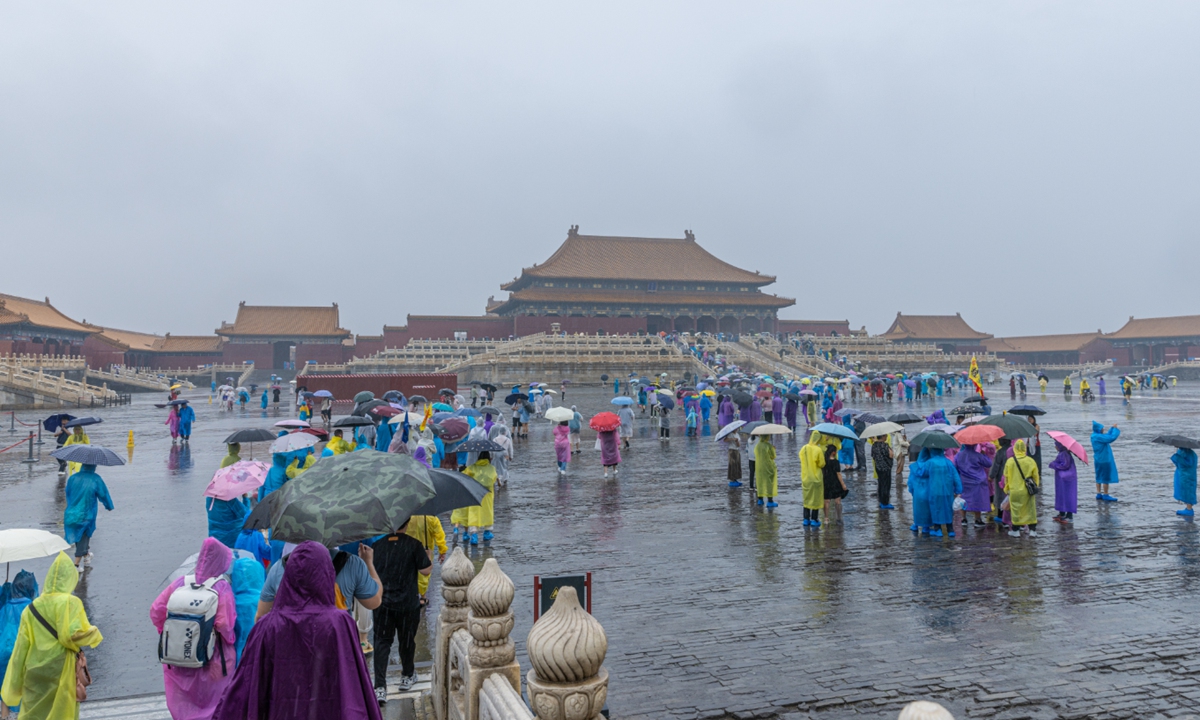
"Flood prevention has always been paramount," said Di Yajing, head of the Palace Museum world heritage monitoring department, according to a report from China Meteorological News.
Beyond its renowned ancient drainage system, the museum conducts rigorous seasonal maintenance. Systematic inspection and cleaning of drainage ditches are carried out every spring, summer and autumn to ensure accumulated water after heavy rain can be quickly discharged through the drainage system.
"It's not that the 600-year-old palace has never seen water accumulation; rather, its systems ensure any water is rapidly drained away through diligent maintenance," Di clarified.
While monitoring at sites like the Zhengyangmen Archery Tower, built during the Ming Dynasty (1368-1644), has only been taking place around two years, Zhou reported that no significant issues have been detected along the Beijing Central Axis so far.
He highlighted regional weather differences.
For example, during the heavy rain on Tuesday, the weather station at the Altar of the God of Agriculture, also known as Xiannongtan Temple, recorded rainfall of 101.6 millimeters, while the Zhengyangmen Archery Tower station recorded only 26 millimeters.
The significant differences in humidity and wind speed between the two locations necessitate targeted deployment of emergency measures such as drainage and electrical circuit checks.
Authorities described a comprehensive emergency framework, such as pre-rain drain clearance and equipment preparation, real-time closures, tech monitoring, and patrols during storms, and post-rain electrical safety checks before reopening sites.
The current efforts there remain focused on rescue and relief.
The latest round of heavy rainstorms left 30 people dead in Beijing as of midnight Monday, the Beijing municipal flood control headquarters said Tuesday. The deaths occurred in Beijing's northern mountainous districts, with 28 in the Miyun district and two in the Yanqing district, the Xinhua News Agency reported.
The Global Times contacted the cultural and tourism bureau in Beijing's Miyun district on Wednesday. One staff member stated that most personnel were still on the front lines and more detailed information would be revealed later.
After Beijing lifted the rainstorm warning on Tuesday afternoon, major tourist attractions in the city have gradually reopened, signaling a return to normalcy.
RELATED ARTICLES