PHOTO / CHINA
Vine tea industry boosts rural incomes in Laifeng County, China's Hubei
Published: Aug 03, 2025 09:21 AM
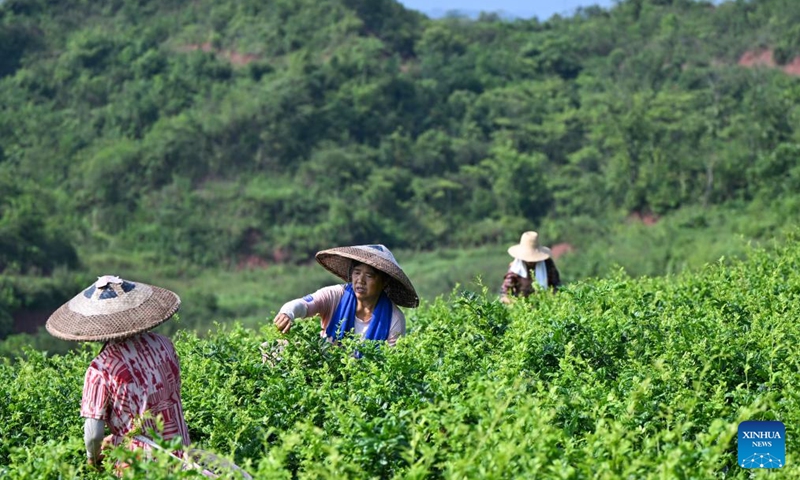
Villagers harvest vine tea at a vine tea plantation in Laifeng County of Enshi Tujia and Miao Autonomous Prefecture, central China's Hubei Province, Aug. 2, 2025. Laifeng County has leveraged comprehensive industrial chain development to optimize the business ecosystem for vine tea cultivation. The county has expanded its vine tea plantations to 102,000 mu (about 6,800 hectares), generating an annual output value of 2.253 billion yuan (about 321.4 million U.S. dollars). The industry has lifted household incomes for over 20,000 rural families. Photo: Xinhua
Villagers harvest vine tea at a vine tea plantation in Laifeng County of Enshi Tujia and Miao Autonomous Prefecture, central China's Hubei Province, Aug. 2, 2025. Laifeng County has leveraged comprehensive industrial chain development to optimize the business ecosystem for vine tea cultivation. The county has expanded its vine tea plantations to 102,000 mu (about 6,800 hectares), generating an annual output value of 2.253 billion yuan (about 321.4 million U.S. dollars). The industry has lifted household incomes for over 20,000 rural families. Photo: Xinhua

 
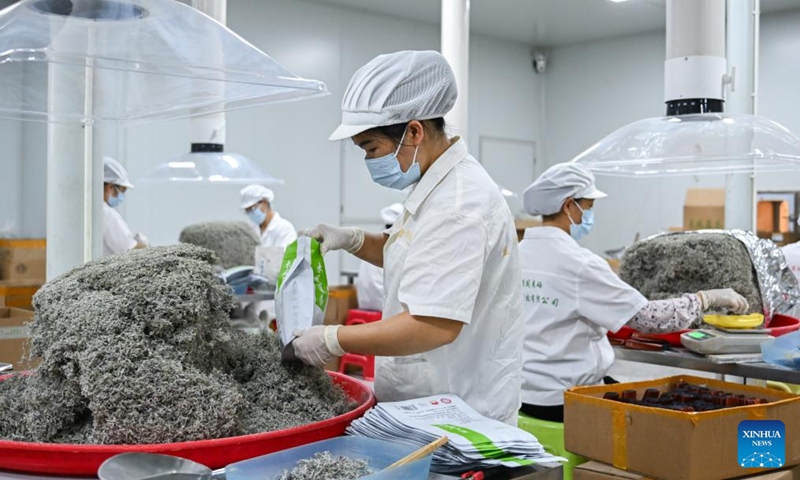
Workers pack vine tea at a workshop in Laifeng County of Enshi Tujia and Miao Autonomous Prefecture, central China's Hubei Province, Aug. 1, 2025. Laifeng County has leveraged comprehensive industrial chain development to optimize the business ecosystem for vine tea cultivation. The county has expanded its vine tea plantations to 102,000 mu (about 6,800 hectares), generating an annual output value of 2.253 billion yuan (about 321.4 million U.S. dollars). The industry has lifted household incomes for over 20,000 rural families. Photo: Xinhua
Workers pack vine tea at a workshop in Laifeng County of Enshi Tujia and Miao Autonomous Prefecture, central China's Hubei Province, Aug. 1, 2025. Laifeng County has leveraged comprehensive industrial chain development to optimize the business ecosystem for vine tea cultivation. The county has expanded its vine tea plantations to 102,000 mu (about 6,800 hectares), generating an annual output value of 2.253 billion yuan (about 321.4 million U.S. dollars). The industry has lifted household incomes for over 20,000 rural families. Photo: Xinhua


 
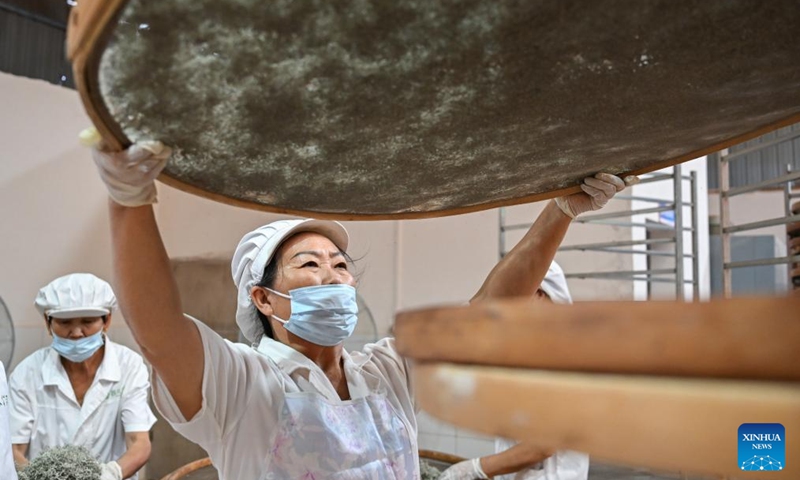
Workers prepare to dry vine tea at a workshop in Laifeng County of Enshi Tujia and Miao Autonomous Prefecture, central China's Hubei Province, Aug. 1, 2025. Laifeng County has leveraged comprehensive industrial chain development to optimize the business ecosystem for vine tea cultivation. The county has expanded its vine tea plantations to 102,000 mu (about 6,800 hectares), generating an annual output value of 2.253 billion yuan (about 321.4 million U.S. dollars). The industry has lifted household incomes for over 20,000 rural families. Photo: Xinhua
Workers prepare to dry vine tea at a workshop in Laifeng County of Enshi Tujia and Miao Autonomous Prefecture, central China's Hubei Province, Aug. 1, 2025. Laifeng County has leveraged comprehensive industrial chain development to optimize the business ecosystem for vine tea cultivation. The county has expanded its vine tea plantations to 102,000 mu (about 6,800 hectares), generating an annual output value of 2.253 billion yuan (about 321.4 million U.S. dollars). The industry has lifted household incomes for over 20,000 rural families. Photo: Xinhua

 
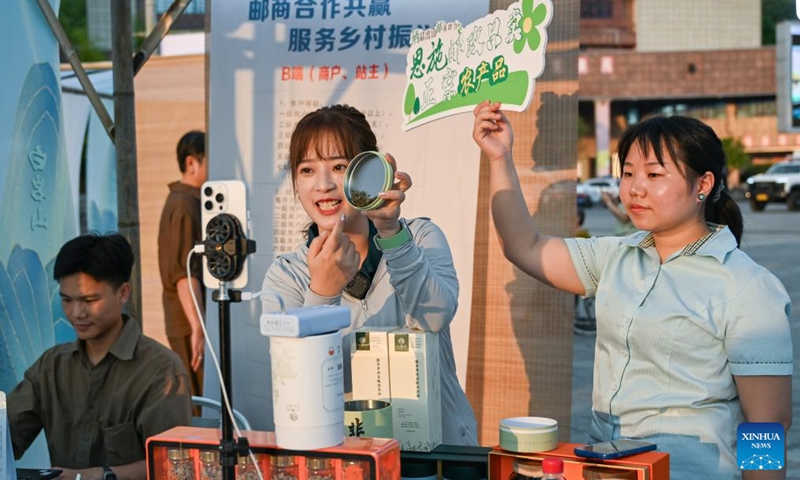
People promote vine tea products via livestreaming in Laifeng County of Enshi Tujia and Miao Autonomous Prefecture, central China's Hubei Province, Aug. 1, 2025. Laifeng County has leveraged comprehensive industrial chain development to optimize the business ecosystem for vine tea cultivation. The county has expanded its vine tea plantations to 102,000 mu (about 6,800 hectares), generating an annual output value of 2.253 billion yuan (about 321.4 million U.S. dollars). The industry has lifted household incomes for over 20,000 rural families. Photo: Xinhua
People promote vine tea products via livestreaming in Laifeng County of Enshi Tujia and Miao Autonomous Prefecture, central China's Hubei Province, Aug. 1, 2025. Laifeng County has leveraged comprehensive industrial chain development to optimize the business ecosystem for vine tea cultivation. The county has expanded its vine tea plantations to 102,000 mu (about 6,800 hectares), generating an annual output value of 2.253 billion yuan (about 321.4 million U.S. dollars). The industry has lifted household incomes for over 20,000 rural families. Photo: Xinhua


 
A villager harvests vine tea at a vine tea plantation in Laifeng County of Enshi Tujia and Miao Autonomous Prefecture, central China's Hubei Province, Aug. 2, 2025. Laifeng County has leveraged comprehensive industrial chain development to optimize the business ecosystem for vine tea cultivation. The county has expanded its vine tea plantations to 102,000 mu (about 6,800 hectares), generating an annual output value of 2.253 billion yuan (about 321.4 million U.S. dollars). The industry has lifted household incomes for over 20,000 rural families. Photo: Xinhua

A villager harvests vine tea at a vine tea plantation in Laifeng County of Enshi Tujia and Miao Autonomous Prefecture, central China's Hubei Province, Aug. 2, 2025. Laifeng County has leveraged comprehensive industrial chain development to optimize the business ecosystem for vine tea cultivation. The county has expanded its vine tea plantations to 102,000 mu (about 6,800 hectares), generating an annual output value of 2.253 billion yuan (about 321.4 million U.S. dollars). The industry has lifted household incomes for over 20,000 rural families. Photo: Xinhua


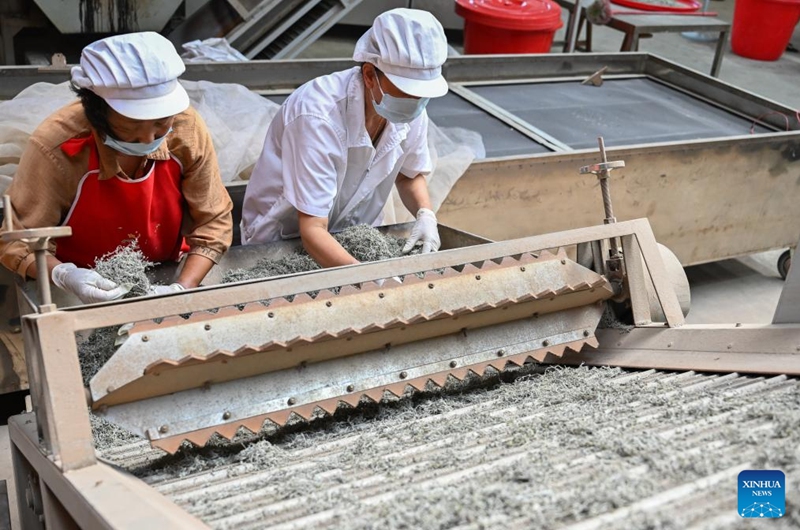
Workers sort vine tea at a workshop in Laifeng County of Enshi Tujia and Miao Autonomous Prefecture, central China's Hubei Province, Aug. 1, 2025. Laifeng County has leveraged comprehensive industrial chain development to optimize the business ecosystem for vine tea cultivation. The county has expanded its vine tea plantations to 102,000 mu (about 6,800 hectares), generating an annual output value of 2.253 billion yuan (about 321.4 million U.S. dollars). The industry has lifted household incomes for over 20,000 rural families. Photo: Xinhua

Workers sort vine tea at a workshop in Laifeng County of Enshi Tujia and Miao Autonomous Prefecture, central China's Hubei Province, Aug. 1, 2025. Laifeng County has leveraged comprehensive industrial chain development to optimize the business ecosystem for vine tea cultivation. The county has expanded its vine tea plantations to 102,000 mu (about 6,800 hectares), generating an annual output value of 2.253 billion yuan (about 321.4 million U.S. dollars). The industry has lifted household incomes for over 20,000 rural families. Photo: Xinhua


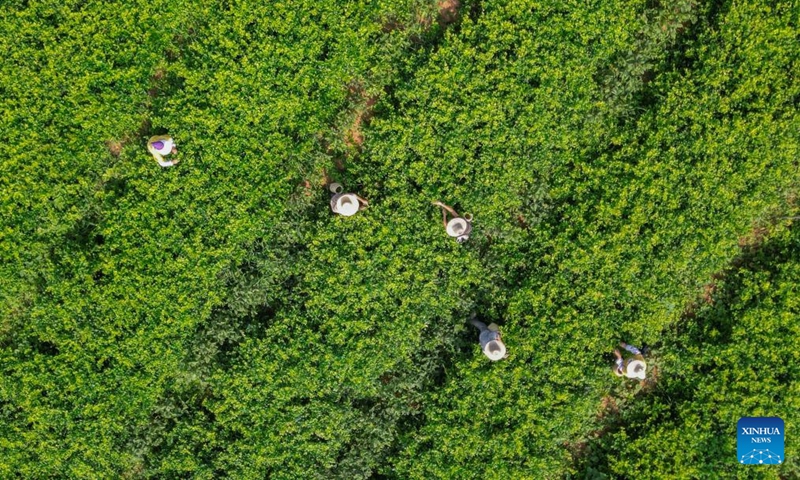
An aerial drone photo taken on Aug. 2, 2025 shows a vine tea plantation in Laifeng County of Enshi Tujia and Miao Autonomous Prefecture, central China's Hubei Province. Laifeng County has leveraged comprehensive industrial chain development to optimize the business ecosystem for vine tea cultivation. The county has expanded its vine tea plantations to 102,000 mu (about 6,800 hectares), generating an annual output value of 2.253 billion yuan (about 321.4 million U.S. dollars). The industry has lifted household incomes for over 20,000 rural families. Photo: Xinhua

An aerial drone photo taken on Aug. 2, 2025 shows a vine tea plantation in Laifeng County of Enshi Tujia and Miao Autonomous Prefecture, central China's Hubei Province. Laifeng County has leveraged comprehensive industrial chain development to optimize the business ecosystem for vine tea cultivation. The county has expanded its vine tea plantations to 102,000 mu (about 6,800 hectares), generating an annual output value of 2.253 billion yuan (about 321.4 million U.S. dollars). The industry has lifted household incomes for over 20,000 rural families. Photo: Xinhua


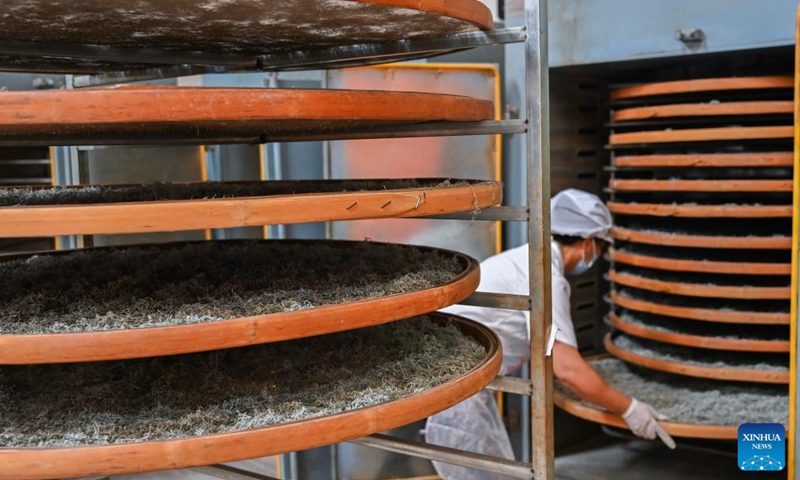
A worker puts vine tea into a drying machine at a workshop in Laifeng County of Enshi Tujia and Miao Autonomous Prefecture, central China's Hubei Province, Aug. 1, 2025. Laifeng County has leveraged comprehensive industrial chain development to optimize the business ecosystem for vine tea cultivation. The county has expanded its vine tea plantations to 102,000 mu (about 6,800 hectares), generating an annual output value of 2.253 billion yuan (about 321.4 million U.S. dollars). The industry has lifted household incomes for over 20,000 rural families. Photo: Xinhua

A worker puts vine tea into a drying machine at a workshop in Laifeng County of Enshi Tujia and Miao Autonomous Prefecture, central China's Hubei Province, Aug. 1, 2025. Laifeng County has leveraged comprehensive industrial chain development to optimize the business ecosystem for vine tea cultivation. The county has expanded its vine tea plantations to 102,000 mu (about 6,800 hectares), generating an annual output value of 2.253 billion yuan (about 321.4 million U.S. dollars). The industry has lifted household incomes for over 20,000 rural families. Photo: Xinhua


A child reaches for vine tea products served by a robot in Laifeng County of Enshi Tujia and Miao Autonomous Prefecture, central China's Hubei Province, Aug. 1, 2025. Laifeng County has leveraged comprehensive industrial chain development to optimize the business ecosystem for vine tea cultivation. The county has expanded its vine tea plantations to 102,000 mu (about 6,800 hectares), generating an annual output value of 2.253 billion yuan (about 321.4 million U.S. dollars). The industry has lifted household incomes for over 20,000 rural families. Photo: Xinhua

A child reaches for vine tea products served by a robot in Laifeng County of Enshi Tujia and Miao Autonomous Prefecture, central China's Hubei Province, Aug. 1, 2025. Laifeng County has leveraged comprehensive industrial chain development to optimize the business ecosystem for vine tea cultivation. The county has expanded its vine tea plantations to 102,000 mu (about 6,800 hectares), generating an annual output value of 2.253 billion yuan (about 321.4 million U.S. dollars). The industry has lifted household incomes for over 20,000 rural families. Photo: Xinhua