ARTS / CULTURE & LEISURE
Defining dance creation in era of generative AI
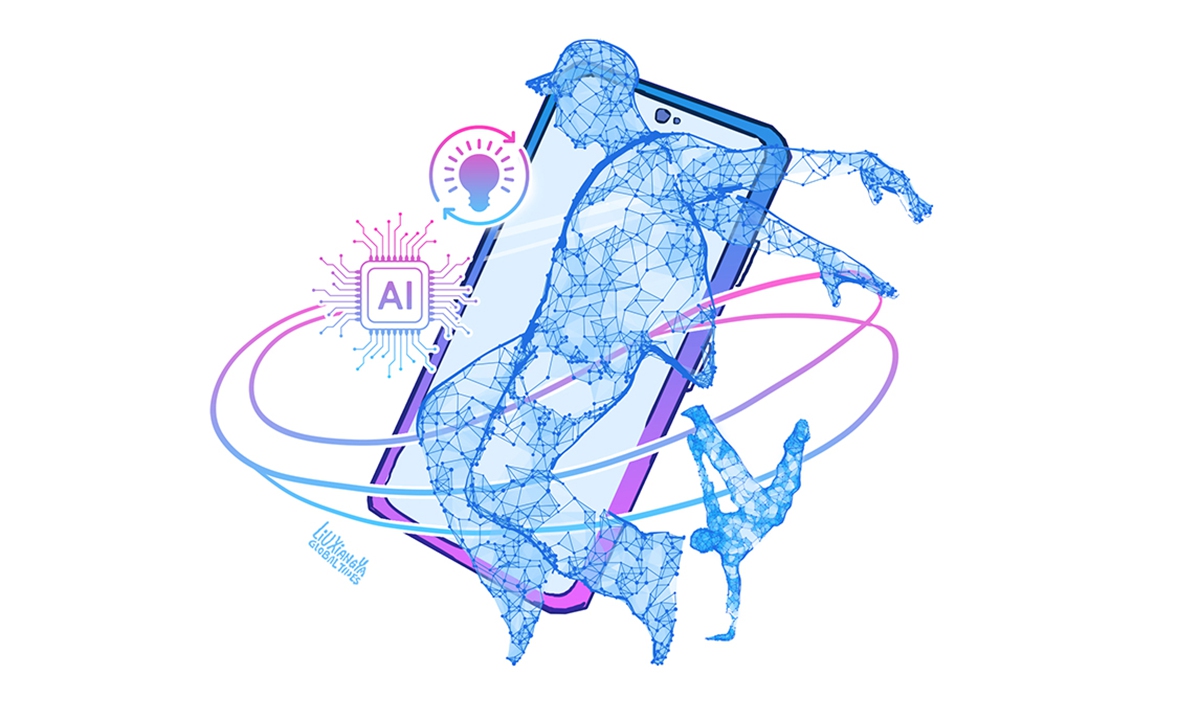
Illustration: Liu Xiangya/GT
Editor's Note:Does dance need artificial intelligence (AI)? This seems to be a reboot of the age-old question concerning technological innovation and artistic expression. Finding the answer to this question has been an ongoing process and the current "AI revolution" is merely another exploration of the boundaries of this topic. In an era when digital technology is profoundly reshaping the form of human civilization, generative AI, as a cutting-edge technological revolution, is impacting the field of traditional artistic creation with disruptive force. Liu Chun, deputy director of the Dance Research Institute at the Chinese National Academy of Arts, argues in this article that dance, an art of time and space that uses the body as its medium, is ushering in unprecedented opportunities for transformation and theoretical challenges amid the infiltration of algorithms and data into the art form.
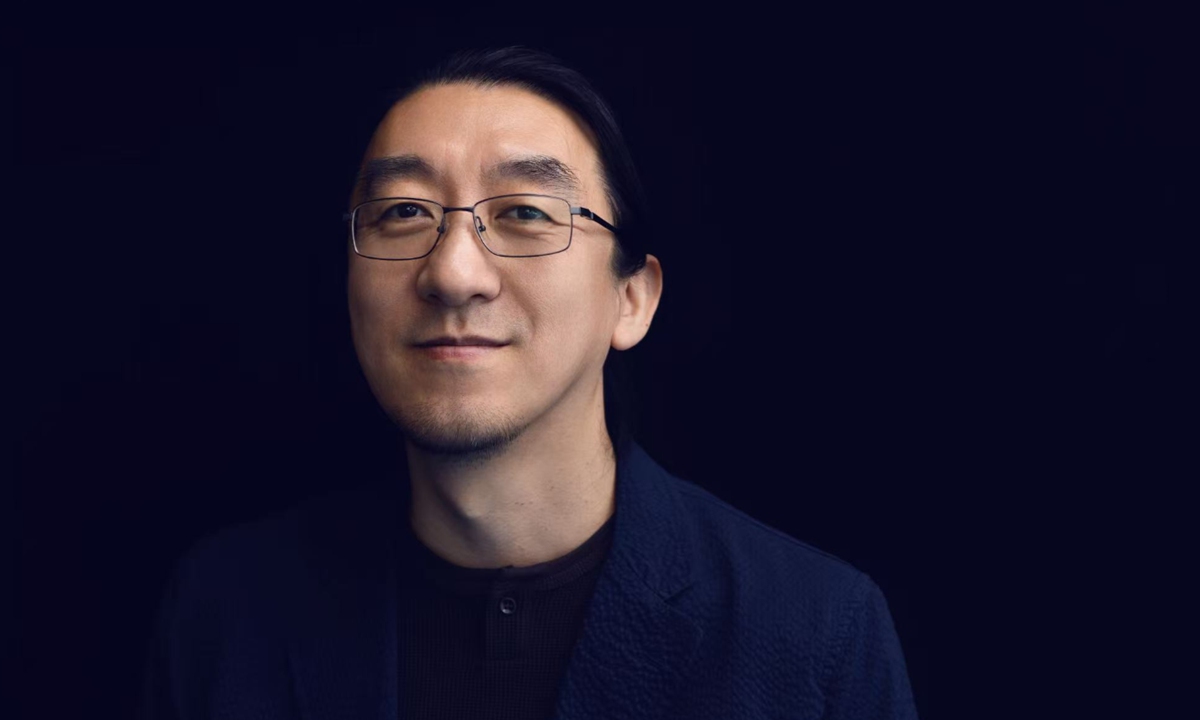
Liu Chun
The attempt to introduce AI into the field of dance is not an isolated "technological revolution," but rather a continuation of the ongoing dialogue between technological innovation and artistic expression. This conversation has never ceased. Looking back at history, one can see how dance artists have continuously used emerging technologies to expand the boundaries of bodily expression.From Loïe Fuller's experiments with light and shadow and Oskar Schlemmer's mechanical aesthetics to the medium reshaping by film and Merce Cunningham's computer choreography, it is evident that the relationship between technology and dance is a deepening process of human-machine symbiosis. Technology is not only an external aid, but increasingly a participant in shaping the internal texture of dance.
The role of generative AI in dance creation should be regarded as a "multifunctional and complex auxiliary partner." This partnership demonstrates unique value and potential at various levels of creation. In terms of creative conception and inspiration, AI can become a powerful brainstorming collaborator. AI can provide creators with cross-style movement combinations or novel thematic associations, breaking the fixed patterns of traditional creative thinking. For example, based on inputted keywords, emotional descriptions, or music clips, AI can generate preliminary text concepts, visual mood boards, and even musical drafts, providing choreographers with multidimensional starting points for inspiration.
At the level of choreography assistance and co-creation, AI's role is evolving from providing traditional digital improvements to engaging in deeper modes of collaboration. It can not only help choreographers translate abstract concepts into concrete dance vocabulary - for example, visualizing creativity through motion capture and generative technology - but also generate specific movement sequences or variations for choreographers to select, modify, and develop.
When AI collects, processes, and generates dance movements, it poses significant challenges to personal privacy. Dance movements themselves are highly personal and biological in nature. In the process of applying generative AI to dance movement generation, key technologies such as pose estimation, diffusion models, and motion transfer are brought into play. First, pose estimation is used to extract key points of the human body from video, achieving precise capture of dancers' dynamics. Second, movement generation systems based on diffusion models generate natural and coherent movement sequences. Finally, with the help of motion transfer technology, these movements can be mapped onto different target characters or virtual bodies, completing the synthesis of personalized dance animations. The core issue we face is, when AI can recognize and analyze the characteristics of dancers' unique movements, how can we ensure that personal privacy is not violated and that ethical norms for data use are followed?
How to identify and protect dance copyright is a real and serious issue, especially since dancers' movements themselves are fluid and instantaneous. When AI learns from a dancer's motion data to replicate their style or generate variants, does the dancer have certain rights over their unique dynamics, and are these rights protected under relevant laws? This goes beyond the traditional scope of copyright and touches upon the issue of "body copyright" or the rights regarding unique body movements. This is not only a matter of data privacy, but also concerns the attribution of identity and artistic expression.
Although the chaotic, variable, and algorithmically irreducible qualities of human experience, as well as the genuine interpersonal connection in art, are important components of the "soul" of dance, with the proliferation of AI, especially the trend of providing entertainment on social media, the value of the "physicality" of dance may be diminished. Our understanding and experience of dance may also change. The public is increasingly choosing to express and experience dance through virtual avatars rather than in person, which involves the construction of individual identity and self-expression, and also affects the patterns of social interaction and art appreciation.
When AI becomes a co-creator, the traditional concept of authorship is challenged. For a dance generated by AI based on human prompts, or a performance in which AI dynamically interacts with human dancers, who is the "author" of this art? When using powerful generative tools, how to maintain the integrity of art and "human warmth" is a question that artists must constantly consider. The challenge we face is how to innovate with AI while protecting the "spiritual core" and cultural heritage of various forms of dance, rather than diluting their essence.
Looking back at the intersection of generative AI and dance, its duality is increasingly prominent. On the one hand, AI, as a powerful catalyst, injects unprecedented innovative vitality into the creation, analysis, education, and dissemination of dance, providing new tools and methodologies; on the other hand, AI also brings profound artistic, ethical, and philosophical challenges, requiring us to proceed with caution. The dance world, and indeed all of society, urgently needs to carry out continuous and critical reflection on the intervention of AI. This includes re-examining creativity, authorship, physicality, and the core values of human art in the AI era, and being especially vigilant about algorithmic control, technological utopianism, and the dissolution of bodily agency.
The author is the deputy director of the Dance Research Institute at the Chinese National Academy of Arts
RELATED ARTICLES