BUSINESS / PRESS RELEASE
Beijing United Family Hospital, Alibaba’s DAMO Academy launch multi-disease screening AI
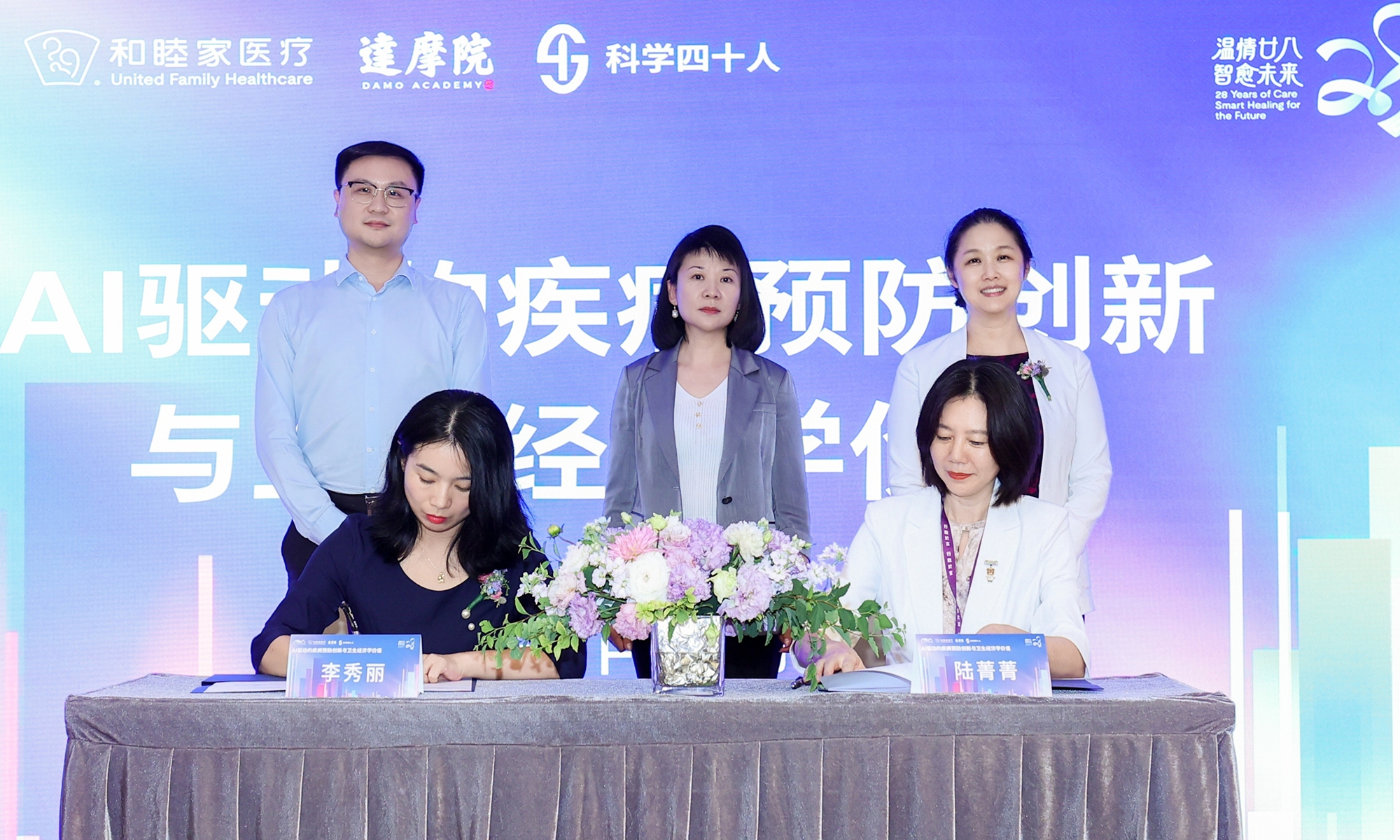
Beijing United Family Hospital and Alibaba DAMO Academy forge strategic partnership. Photo: Beijing United Family Hospital
Beijing United Family Hospital and Chinese tech giant Alibaba's DAMO Academy announced a strategic partnership on Sunday. The two sides will work together to explore multi-disease AI screening services.
The announcement was made at a forum held on Sunday at the Beijing United Family Hospital. The forum's theme was "AI-driven innovation in disease prevention and its value in health economics" and it was hosted by the Medical AI Committee of the China Artificial Intelligence Industry Development Alliance (AIIA), gathering experts from fields such as public health, political studies, and AI technology.
Sylvia Pan, CEO of the Beijing United Family Hospital, noted that tech experts often pursue the most cutting-edge or complex innovations, whereas doctors require practical tools to address common and chronic diseases. Such interdisciplinary discussions and collaborations will help the two sides understand each other's needs, benefiting patients and contributing to the "Healthy China 2030" initiative.
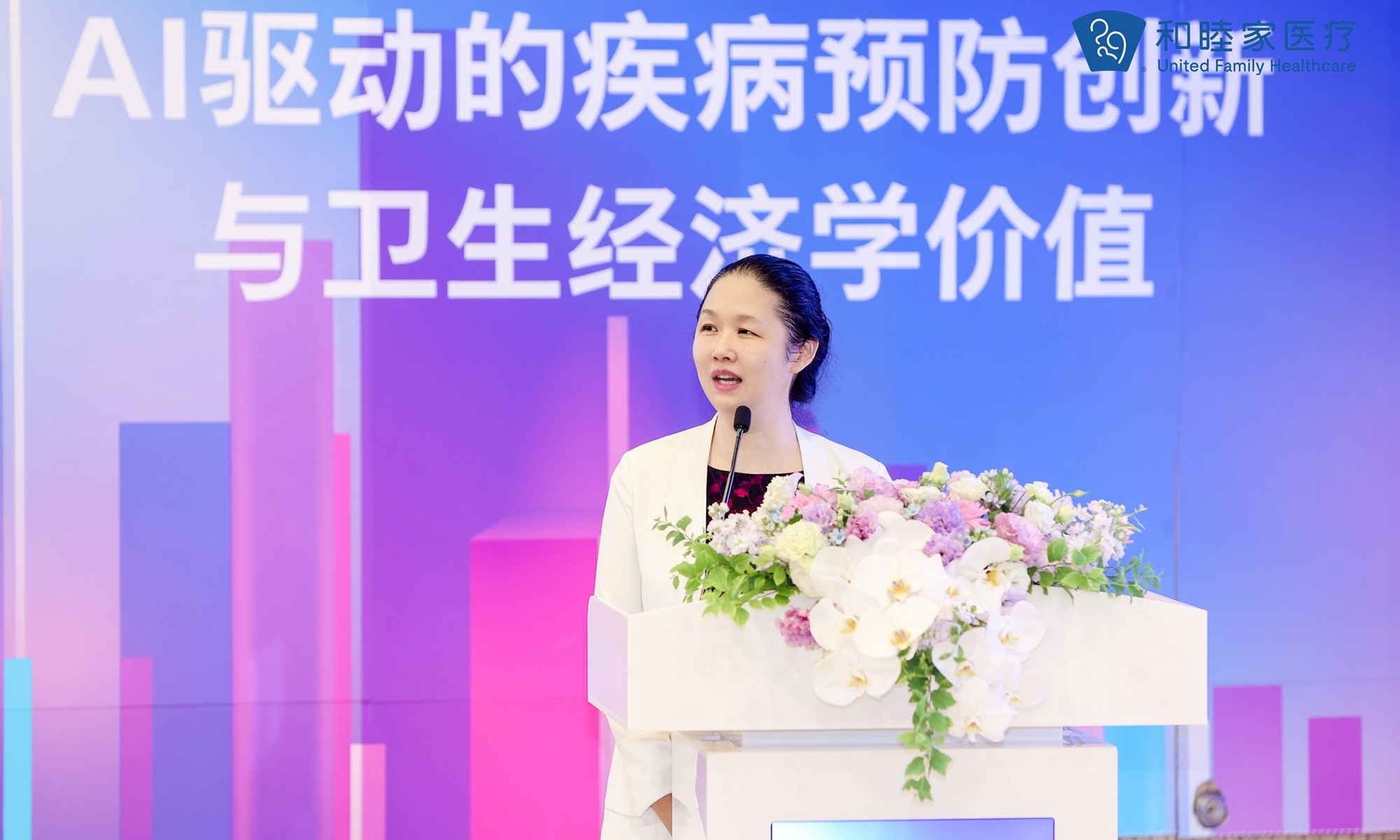
Sylvia Pan, regional general manager of Beijing-Tianjin & Shenzhen, and CEO of Beijing United Family Hospital Photo: Beijing United Family Hospital
Building alliances
On July 3, 2025, China's National Medical Products Administration (NMPA) issued an announcement on optimizing whole-life-cycle regulation to support the innovative development of high-end medical devices. The policy introduced 10 key regulatory measures designed to speed up the development and approval process for advanced medical technologies, particularly those developed domestically and capable of competing globally, such as AI-based medical devices and surgical robots.
The collaboration between Beijing United Family Hospital and DAMO Academy is a good case in point.
The "one-scan, multi-diagnosis" system by DAMO Academy uses a single low-dose CT scan to detect multiple types of diseases, many of which are difficult to identify through traditional methods. The new AI screening services to be adopted by Beijing United Family Hospital can help doctors spot signs of several types of cancer, like pancreatic, stomach, liver, and colon cancer, as well as chronic illnesses like osteoporosis and fatty liver, and even serious emergencies such as aortic tears.
Founded in 1997, Beijing United Family Hospital was the first expert medical institution in China funded by foreign investment. It has long been at the forefront of China's private healthcare sector, striving to deliver internationally aligned, patient-centered care to both domestic and global patients. Its services have expanded to numerous cities, now operating a nationwide healthcare network.
Beijing United Family Hospital has continually explored the field of smart healthcare. "This collaboration with the DAMO Academy shows patients that United Family is a hospital keeping pace with the times," Pan said.
"Such collaboration also shows how embracing AI technology can empower doctors. In the AI era, a doctor's influence may no longer be limited to treating individual patients, but can extend to impacting larger populations, a shift that carries deeper meaning," Pan added.
Setting the bar
"Over the last two decades, China has adopted numerous healthcare innovations. In areas such as diagnostics, robotics and AI, it may now outpace Western systems," noted Dr. Derek O'Reilly, Chair of Surgery at Beijing United Family Hospital.
Beijing United Family Hospital acquired the latest version of the da Vinci surgical robot last year. Still, O'Reilly said they are also actively looking into adopting innovative Chinese surgical robots, "which are just as good as the da Vinci," in the near future.
In 2024, Beijing became the first Chinese city to surpass 1.06 trillion yuan ($146.9 billion) in healthcare industry output, according to the city's science and technology authorities. The capital led the country to approve innovative pharmaceutical products and AI-powered medical devices. Notably, the same year also saw a growing concentration of global pharmaceutical giants like Pfizer and Merck Sharp & Dohme establishing innovation centers locally. Beyond these changes, new initiatives such as China's first AI data training base for the pharma sector and pilot programs supporting cross-border data flows have further cemented Beijing's position as a rising global hub for pharmaceutical and healthcare innovation.
Against such a backdrop, the Beijing United Family Hospital has grown beyond the role of recipient of international practices. It has become a creator of new, localized models of care that could inspire healthcare systems worldwide.
In June, a delegation from Rede D'Or, one of Brazil's largest private healthcare groups, visited the Beijing United Family Hospital. "During the visit, we shared our experience in developing international medical standards, innovating high-end healthcare services, and leveraging AI to empower medical care," recalled Pan.
Rodrigo Gavina, CEO of Rede D'Or, found the visit to be highly rewarding. "The systematic AI-powered medical solutions developed by United Family are exactly what we hoped to learn more about during our visit to China. The innovations on both the clinical and operational fronts offer valuable insights for Brazil's healthcare industry," said Gavina.
