China issues brain-computer interface development guidelines, aspiring to be a global leader by 2030
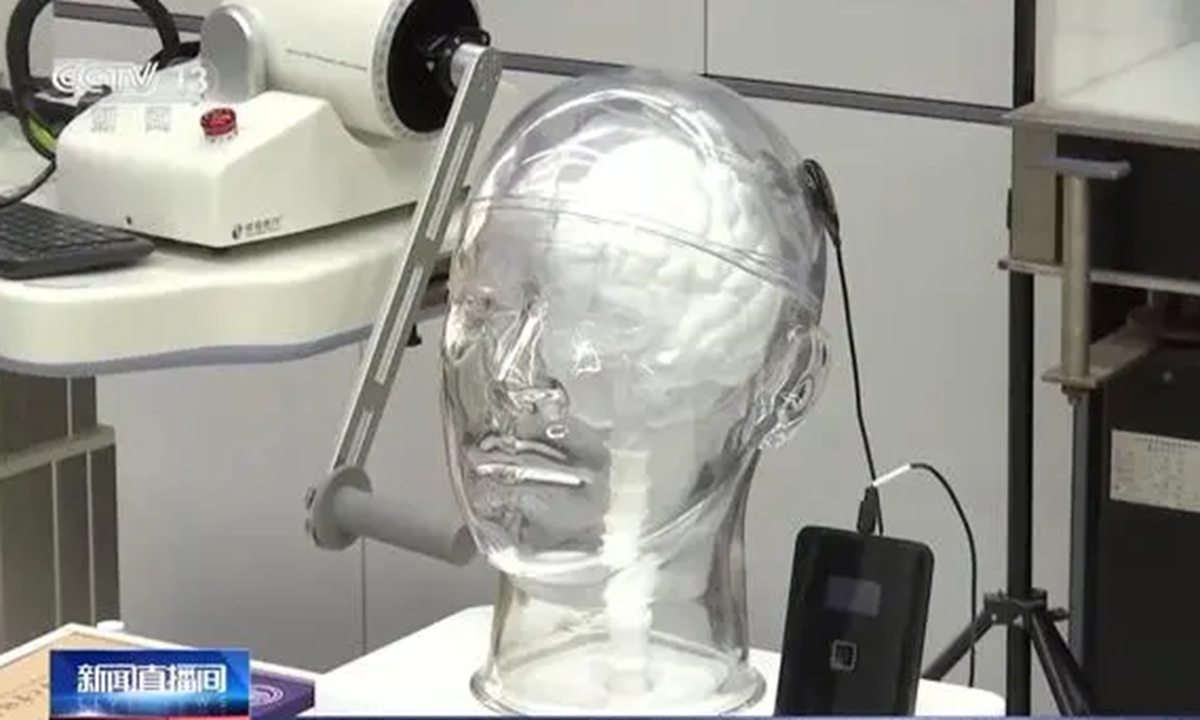
BCI technology Photo: CCTV
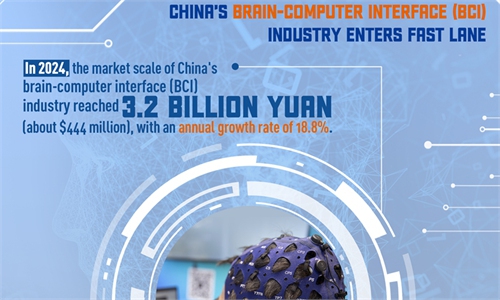
In a major push to accelerate new tech innovation, seven Chinese government agencies, including the Ministry of Industry and Information Technology (MIIT) released a comprehensive implementation plan to advance the development of the brain-computer interface (BCI) industry and position China as a global leader in this cutting-edge field by 2030.
By 2027, China aims to achieve a breakthrough in core BCI innovation and establish advanced technological standards frameworks. Critical components such as electrodes, chips, and integrated devices are expected to reach international leading standards, with applications expanding across industrial manufacturing, healthcare, and more. The plan also targets the formation of 2–3 industrial clusters and the development of new business models and applications.
By 2030, China aims to foster 2–3 globally influential enterprises alongside a group of specialized small and medium-sized firms, to strengthen its competitive position in the BCI market.
A key focus will be the development of advanced BCI chips that can detect more detailed brain activity with greater accuracy, operating at higher speeds with lower power consumption, and ensuring stable, interference-free data transfer between brain and devices.
The guidelines also highlight the need to develop high-performance BCI products. For implantable devices, researchers aim to improve the accuracy of brain signal detection and responsiveness to user intent. Existing medical technologies, such as deep brain stimulators and cochlear implants, will be upgraded for greater precision and control.
Meanwhile, non-implantable BCI devices - including wearable headbands, earpieces, and smart glasses - will be developed to become lighter, faster, and more energy -efficient, allowing them to integrate more seamlessly into daily life.
High-precision surgical robots will be developed to assist with implant procedures, improving safety and operational efficiency.
Following the announcement, Hong Kong-listed BCI-related stocks surged on Thursday. Nanjing Panda Electronics jumped by over 16 percent, MicroPort NeuroScientific rose 9.5 percent, and Brainhole Technology gained 6.7 percent.
Global Times
RELATED ARTICLES