ARTS / ART
Take in a fresh breath of rural life by the Great Wall
Where history whispers
By Published: Aug 07, 2025 08:16 PM

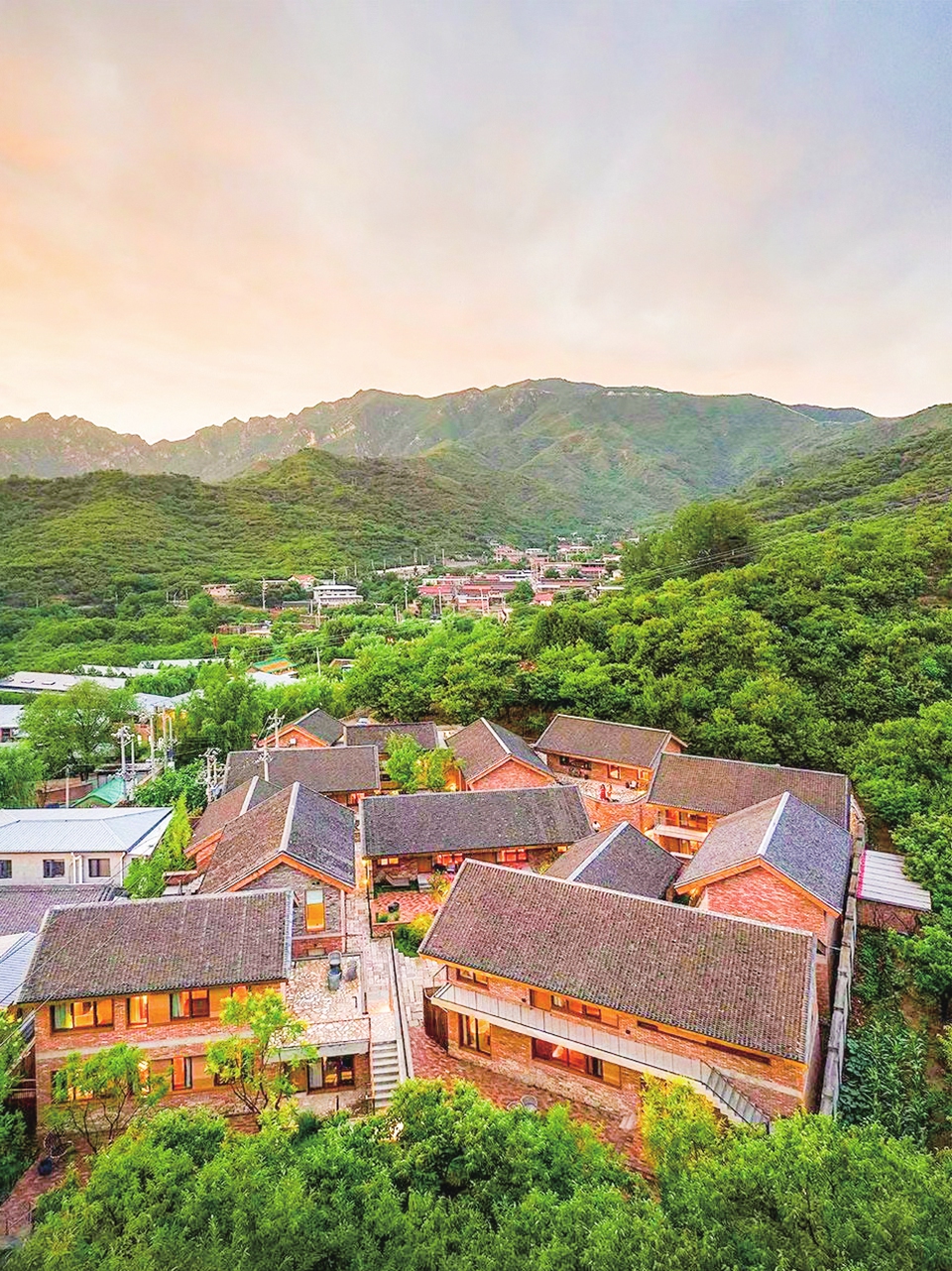
A view overlooking Beigou Village Photo: Courtesy of the culture and tourism bureau of Huairou district
Nestled among the rugged mountains north of Beijing lies a small village, home to more than 100 households, where the ancient stones of the Great Wall seem to rise from the very earth itself. This is Beigou Village in Beijing's Huairou district, a place where the pulse of rural life beats in harmony with the enduring legacy of the Great Wall. Here, the Great Wall's spirit is not a distant relic but the very marrow of the land, shaping the rhythm of daily existence and infusing the village with a unique vitality.Surrounded by the undulating silhouette of the Mutianyu Great Wall and the remnants of ancient ramparts, Beigou Village stands as a living testament to centuries of history.
A narrow mountain path, less than two kilometers in length, threads through the heart of the village. The main road remains clean and smooth, preserving the village's time-honored charm.
Groups of visitors can freely turn into any of the yards on both sides of the road, where different views await them.
Some yards are characterized by traditional residences, while others feature buildings positioned in the center of the yard or perched on terraces, with the winding Mutianyu section of the Great Wall in Beijing visible overhead. Still others feature gravel-paved paths and modern buildings with distinctive architectural styles.
A visit to the Beigou village shows how the countryside, enriched by the presence of the Great Wall, shines with charm.
Here, tourists can explore centuries of history through relics and ruins, while also observing the vibrancy of present-day rural life in the villages. Renovated homesteads, thriving art spaces, and the laughter of children echoing along ancient lanes welcome visitors, with the Great Wall, once a symbol of defense and endurance, now serving as a cultural bridge, connecting generations and inspiring new forms of creativity.
Tradition and innovation
The tranquility of rural life in the villages is matched by an undercurrent of creative energy. The red walls of a local modern art museum echo the austere strength of the distant Great Wall, creating a dialogue between past and present.
In this tapestry of ancient stone and modern artistry, some visitors found inspiration, using their cameras to capture moments where tradition and innovation meet, each photograph becoming a tribute to the village's evolving story.
When I visited, the village happened to be hosting its summer Great Wall cultural festival. After visiting the art museum, guests could follow the main road that winds through the village, leading directly down to an open lawn. There, tents had been set up for camping, and the grounds were filled with food stalls offering treats themed around the Great Wall and the joys of summer.
Among them, a pastry shaped like the Great Wall proved especially popular, and some visitors even confessed that, after buying it, they couldn't bear to eat it, choosing instead to take it home as a souvenir.
Adding to the lively atmosphere, a robot stationed at one of the stalls interacted with visitors, mimicking their movements and even dancing along. Against the distant backdrop of the Great Wall, this playful encounter between human and machine created a delightful and unexpected visual dialogue.
The village's charm does not end with the visual echoes of its history. Old farmhouses have been thoughtfully renovated into guesthouses, art studios, and cafés, drawing creative minds from Beijing and beyond. Art festivals and residency programs have brought contemporary art into daily dialogue with the village's ancient surroundings, attracting both artists and travelers.
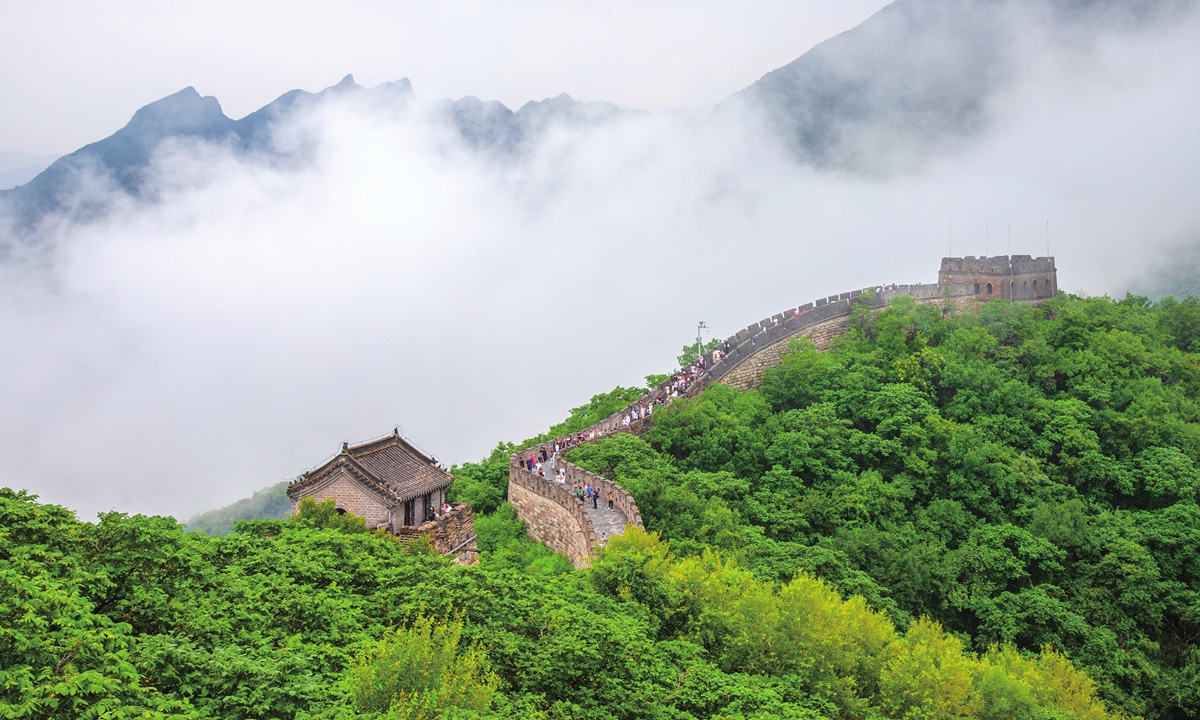
A bird's eye view of the Mutianyu section of the Great Wall in Beijing, on July 10, 2025 Photo: VCG
Another angleFollowing the valley path that runs south along the foot of the Great Wall, one comes across the Shixia Village of Yanqing district, nestled amid grassy hills.
Looking up, the sinuous silhouette of the Wall traces the distant ridge, meanwhile all around the countryside, motifs and decorations inspired by the Great Wall underscore the village's deep connection with this ancient monument.
The village once served as a strategic outpost north of the Juyong Pass, also known as the Juyongguan Great Wall.
Throughout the village, relics such as old fortresses, ancient wells, and former military training grounds are scattered, each bearing silent witness to its storied past.
The fortress walls still stand tall and formidable; the ancient wells remain deep and mysterious.
These remnants, scattered across the village, offer a faint but evocative outline of what this frontier stronghold might have looked like centuries ago.
Inside the village's history museum, over 400 artifacts, including stone rammers, threshold stones, and gate plaques, tell the story of the village's past as a Great Wall outpost, along with its agricultural heritage and culinary traditions.
For visitors, these exhibits offer a fresh perspective on the significance of the Great Wall and the lives shaped by it.
Yet, the village is not defined by its ancient heritage alone. It has become a crossroads of old and new.
Modern establishments (breweries, cafés, and bookstores) now dot the village, seamlessly integrating with the historic landscape and enriching the visitor experience with a blend of tradition and contemporary culture.
Strolling through these villages, one can experience the cultural enrichment the Great Wall and the communities beneath it derive from each other.
Locals are eager to share how their lives have been enriched by the Great Wall's presence, while the landscape itself has quietly gained new allure through the addition of modern village architecture.
At the same time, new amenities, such as the forest trail beside the Great Wall on the outskirts of Shixia Village, are being constantly developed, promising even more opportunities to appreciate the beauty of the Wall and these unique villages from different angles.
RELATED ARTICLES