ARTS / CULTURE & LEISURE
Chinese animation flourishes with Eastern aesthetics and universal emotional narratives
By Published: Aug 07, 2025 10:10 PM

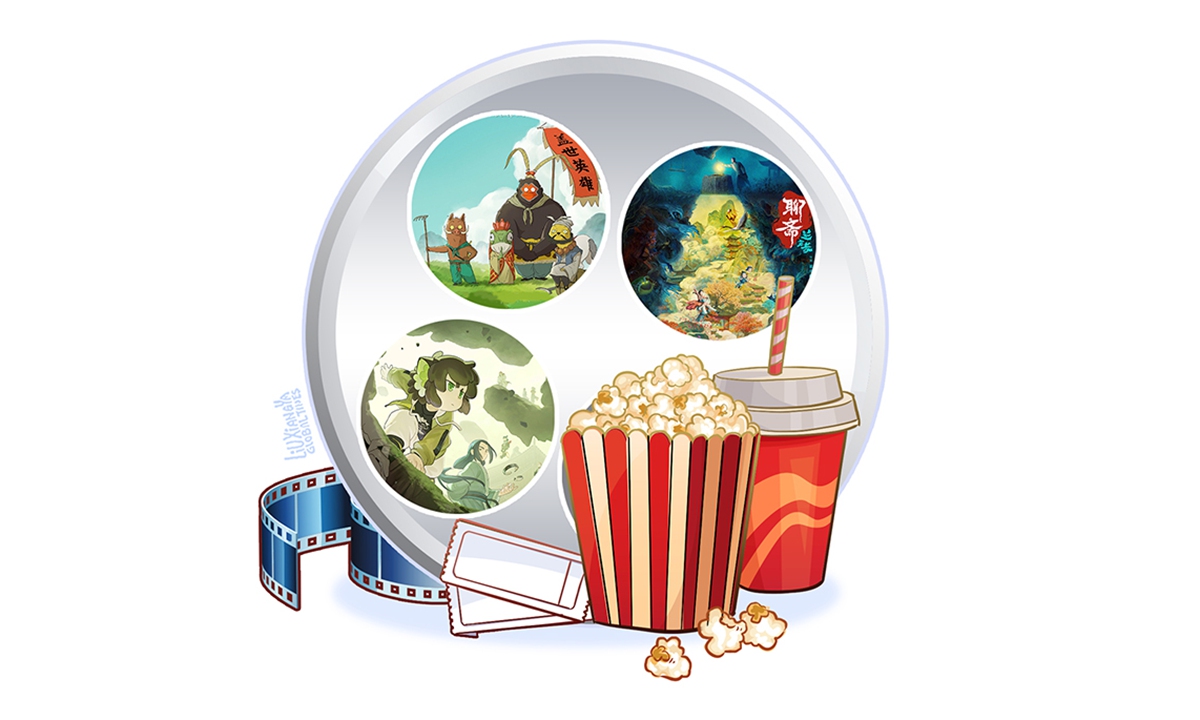
Illustration: Liu Xiangya/GT
When Ne Zha 2 stormed the global box office by earning $2.193 billion, many wondered if Chinese animation could sustain such success. This summer has provided a resounding answer, not with a single successor, but with a trio of films that demonstrate that Chinese animation has matured into a diverse ecosystem where Eastern aesthetics and universal emotional narratives reign supreme.Chinese ticketing platform Maoyan shows that as of Thursday, Curious Tales of a Temple and The Legend of Hei 2 had grossed 239 million yuan ($33.27 million) and 377 million yuan since they respectively premiered on July 12 and July 18.
Nobody has dominated second place at the daily box office by grossing 278 million yuan since it was released on Saturday while also earning an impressive opening score of 8.6/10 on review platform Douban.
This success shows that Chinese animation has broken the "single hit" model and proves that China's animation industry is undergoing healthy development by producing films with great empathetic narratives and unique Eastern artistic vision.
The newly released film Nobody reframes Journey to the West, one of the four great classical novels of Chinese literature, through four minor monsters impersonating the pilgrimage-seeking heroes. It's a workplace parable disguised as fantasy, where these background characters, voiceless in the original tale, struggle for purpose in their ordinary life.
Different from the chosen-one narratives that many animated works depict, these underdogs achieve their goals through sheer grit, not destiny. The film's genius lies in translating the unremitting efforts of modern striving into mythical language.
"Aren't we all these little monsters?" many Chinese moviegoers commented.
Visually, the film pioneers "brushstrokes in motion," merging traditional ink-wash landscapes with cinematic lighting.
"Adhering to the national style in creation is an inheritance of the tradition of Chinese animation and the classics of our predecessors. Only by basing ourselves on local culture can we have our own real innovation," the film's producer Chen Liaoyu said during a pre-screening ceremony in Beijing on July 30.
The Legend of Hei 2 builds on its predecessor's success with soothing visuals and masterful storytelling that has captivated audiences.
The film continues the character setting and world outlook of the previous film, telling the story of a "new mission" from the Monster Hall. Faced with a series of mysteries, Xiaohei and his senior sister Luye embark on a new adventure to find the truth.
What makes The Legend of Hei 2 special is its counterculture commitment to painstaking 2D artistry in a 3D-dominated landscape. With over 200,000 hand-drawn frames for a 120-minute runtime, it achieves a tactile warmth that CGI rarely captures.
The Legend of Hei 2's hand-painted forests and creatures prioritize emotional texture, earning it a stellar 8.7/10 on Douban, even surpassing Ne Zha 2's 8.5/10.
With a web series and two feature films, the animated franchise The Legend of Hei, debuting in 2011, has accumulated many fans at home and abroad over the past decade. After the sequel's release in China, the film's official account announced that The Legend of Hei 2 would be released in Japan on November 7, with both Japanese dubbed and subtitle versions.
The third animated film, Curious Tales of a Temple, is the second installment in the Chang' An film franchise, the first of which dominated the summer box office in 2023 with an impressive 1.824 billion yuan and an 8.3/10 score on Douban.
Adapted from Qing Dynasty (1644-1911) writer Pu Songling's 17th-century classic Strange Tales from a Chinese Studio, which comprises close to 500 stories or "marvel tales," the film stitches six eerie, tonally distinct stories into one night in a crumbling temple.
Producer Song Yiyi once revealed that they chose Pu's stories precisely because they are "treasure chests of suspense and Eastern imagination, tailor-made for animation."
Structurally, the team approached the material as a single feature: the first two vignettes probe human nature, greed versus sincerity, while the latter three spiral into relationships forged in chaos, between spouses, and across the threshold of death.
Beyond the thought-provoking humanity reflected in its stories, the film has also captivated audiences with its spectacular visuals.
Using painting styles from the Song Dynasty (960-1279), wool-felt textures and many other artistic means, Curious Tales of a Temple crafts an animated fantasy masterpiece for which artisans manually adjusted the colors frame-by-frame.
Curious Tales of a Temple's shifting aesthetics, from ink-wash mountains to embroidered spirits, immerse viewers in China's rich artistic heritage.
Producer Song Yiyi noted, "Industrial techniques couldn't capture classical beauty; we needed human hands to birth a living painting."
In conclusion, every breakout Chinese animated hit has followed the same formula: It mines the treasure trove of traditional myth, then reimagines it for contemporary audiences with vibrant, relatable characters that transcend their folkloric origins.
As buzz builds, stories' universal values, including identity, freedom, love, and leaping over cultural barriers, transform films into both box-office champions and word-of-mouth phenomena.
When a movie captivates children with pure adventure while resonating emotionally with adults, it achieves true excellence. Chinese animation is firmly on this promising path.
The author is a reporter with the Global Times. life@globaltimes.com.cn
RELATED ARTICLES