ARTS / CULTURE & LEISURE
Student exchanges, mobility testimony to expansion of diplomacy between Malaysia, China: Counselor
Malaysia-China cooperation set to grow
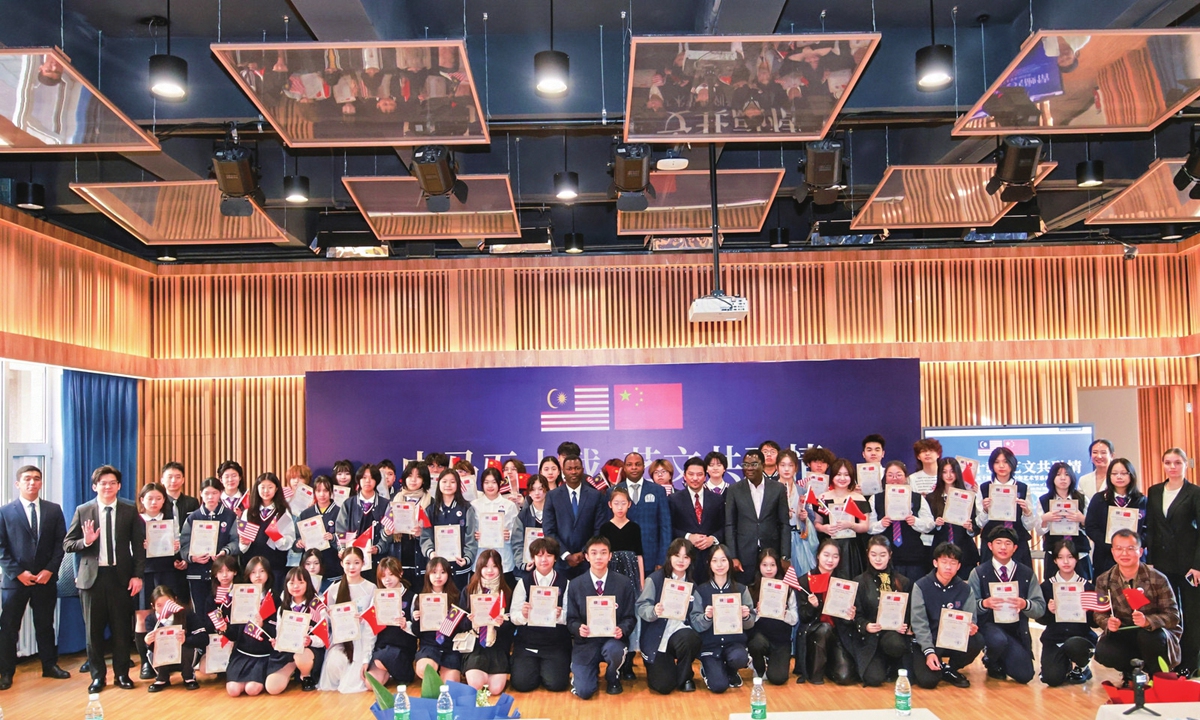
Youth activities marking the 50th anniversary of the establishment of diplomatic relations between China and Malaysia in Beijing, on November 5, 2024 Photo: Courtesy of the Embassy of Malaysia in China
In an exclusive written interview, the Education Counsellor of the Malaysian Embassy in China Muhammad Sallehuddin told the Global Times that the partnership between Malaysia and China in education and culture has significantly deepened over the past decade, driven by government agreements, institutional collaborations, and people-to-people exchanges.The growth of student exchanges and mobility could bear testimony to the expansion of educational diplomacy between Malaysia and China. More than 6,000 Malaysian students are currently studying in China, with top destinations being Tsinghua University, Peking University, the Beijing Institute of Technology, and many more. Most of them have benefited from the Chinese scholarships offered by the China Scholarships Council.
A seminar on edu-tourism and study in Malaysia was recently held in Beijing. The event focused on in-depth discussions on key topics such as youth cultural exchanges, educational cooperation, and project exploration.
Counsellor Sallehuddin introduced Malaysia's historical and cultural background, and diverse social structure to delegates from the Chinese and Malaysian educational sectors. He emphasized the key role played by education in China-Malaysia cooperation.
The counselor said that Malaysia highly values exchanges and cooperation with China in the youth sector, and particularly welcomes the development of substantive programs in language learning, short-term exchange programs, paths to higher education, and vocational education.
Youth exchanges are a crucial pillar for the continued deepening of friendship between China and Malaysia.
The delegates at the seminar unanimously agreed that efforts should be made to encourage more connections between Chinese and Malaysian youths in multiple fields including culture, science and technology, and languages so that the youth of the two countries can truly achieve mutual understanding.
In the written interview, Counsellor Sallehuddin told the Global Times that the Department of Higher Education Malaysia recorded more than 57,000 Chinese students are currently enrolled in Malaysian universities. Malaysia has become a preferred destination for Chinese students seeking world-class and affordable higher education.
To further expand bilateral cooperation in higher education, the Malaysian and Chinese governments inked an MOU on collaboration in higher education in June 2024, marking the 50th anniversary of the two countries' bilateral ties. The MOU is expected to foster technical cooperation in several areas, including new educational technologies in higher education, higher education policies, the joint establishment of institutes of advanced research by recognized higher education institutions in both countries, and efforts toward implementing credits transfer and joint degree programs.
Another MOU signed between the Chinese Service Centre for Scholarly Exchange and the Malaysian Qualification Agency in 2024 aimed to facilitate the exchange of information and expertise on national qualification frameworks and accreditation processes, and to promote international collaboration to recognize qualifications and skills acquired through higher education.
Malaysia-China educational and cultural cooperation is set to grow, driven by mutual economic and strategic interests. By fostering student mobility, language learning, and artistic exchanges, both countries can strengthen people-to-people bonds while advancing innovation and regional development, the counselor stated.
The growing partnership between Malaysia and China in educational and cultural exchanges provides significant opportunities for both nations.
"As bilateral ties strengthen, we can expect deeper collaboration that benefits students, researchers, and businesses in both countries," he said.
The joint degree programs between top Malaysian and Chinese universities are expected to expand to a win-win higher educational model to maximize complementary strengths.
"I can see the trend becoming popular, with many Chinese and Malaysian institutions seeking partners to establish dual degree programs in various fields," the counselor said while sharing his outlook on educational cooperation.
With China's rising global influence, mandarin proficiency is becoming increasingly valuable. An increasing number of Malaysian students are expected to study at Chinese universities to gain knowledge and expertise, especially in strategic areas like artificial intelligence, data management, and high-speed rail.
Several Malaysian scholarship agencies have expressed interest in sending their outstanding scholars to study in China, aligning with the Malaysian Look East Policy 2.0.
Moreover, the introduction of edu-tourism by the Ministry of Higher Education in Malaysia has become a promising platform in promoting the mobility of international students and travelers, especially from China, to enhance their intellectual acumen while immersing themselves in Malaysia's diverse cultural landscape, leveraging the tourism advantages.
In the counselor's view, there will be more innovative campus initiatives, where Chinese tech firms collaborate with Malaysian universities on digital education tools, and ASEAN-China tech incubators to support startups in both regions soon.
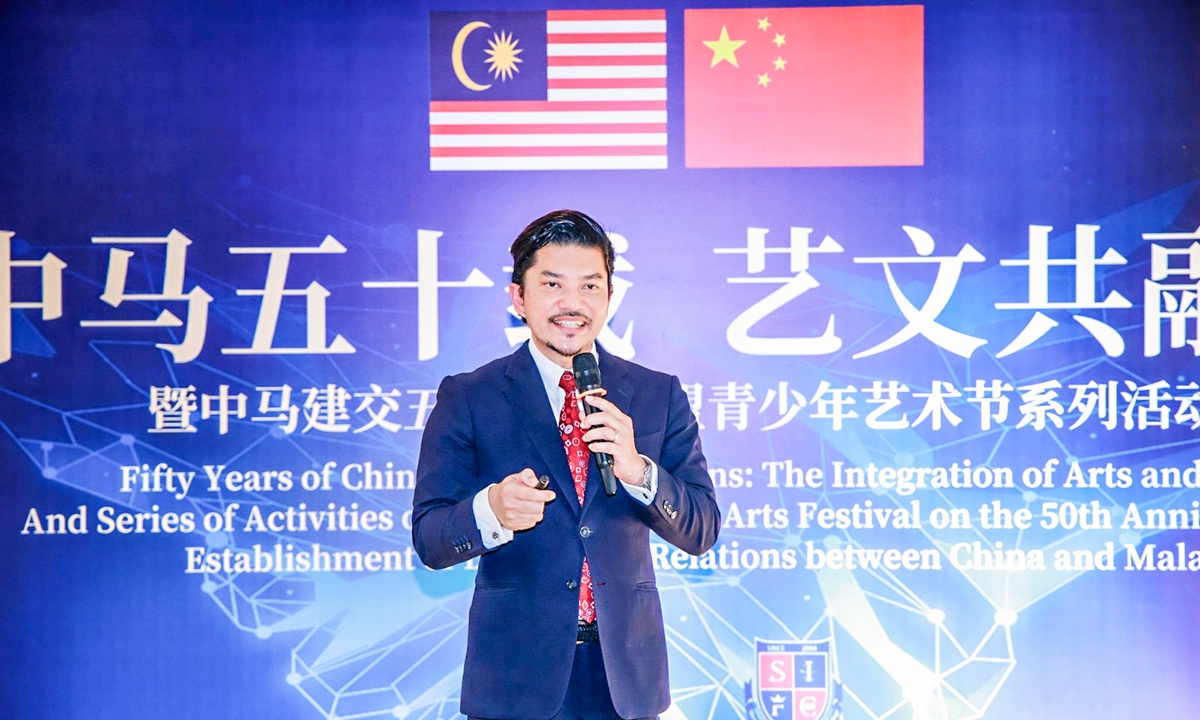
Education Counsellor of the Malaysian Embassy in China Muhammad Sallehuddin Photo: Courtesy of the Embassy of Malaysia in China
Counsellor Sallehuddin assumes his role in China in March 2023.Talking about his impressions of Chinese culture, he said that it is a unique and lasting culture in the world that has consistently been passed down through generations.
"I am amazed by the Great Wall; it is not just a monument, but it is a symbol of perseverance and ambition. Other than that, the Chinese art forms are exquisite and symbolic, from calligraphy and ink paintings to Peking Opera and classical dance. The attention to detail in porcelain, silk embroidery, and paper cutting reflects a culture that prizes precision and beauty."
Malaysia and China exemplify how historical ties and adaptive traditions can foster enduring partnerships. The common ground is not just about nostalgia, but it is a dynamic foundation for future collaboration in education, trade, and creativity, the counselor stressed.
RELATED ARTICLES