BRASIL 247 / MORE
Competition model in China's delivery sector under debate
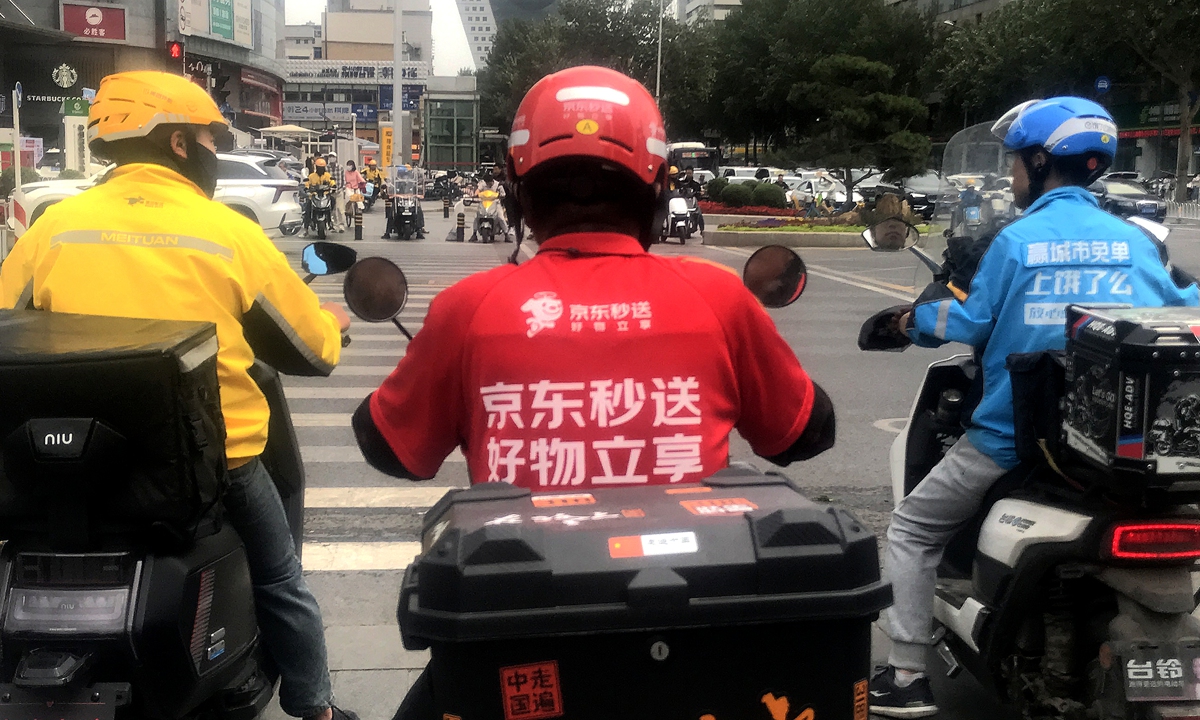
Delivery workers from JD.com, Meituan, and Ele.me meet on a street in Shenyang, Liaoning Province. Photo: CFP
247 - In China's burgeoning digital market, a business war worries companies. According to The Economist, it all started in February, when JD.com announced its entry into the food delivery market.
The announcement was received as a direct threat to Meituan, the dominant super-app in the industry, and also to Alibaba, its own delivery service.
The companies' strategy was based on a combination of aggressive discounts, expanded offers and increasingly shorter delivery times. Alibaba has moved to offer "instant purchases" of electronics with promises of ultra-fast deliveries, while Meituan responded with similar offers aimed at high-tech products, Bloomberg reported in a recent report.
In the midst of this escalation, beverages such as tea and coffee were sold for symbolic values, reaching 1 yuan—or even free.
But as the discounts intensified, retailers and small suppliers began to suffer the consequences, with corroded margins and increased operating losses.
Faced with the negative impact on the business ecosystem and workers in the sector, the Chinese government intervened firmly.
Companies made a public commitment last week to curb disorderly competition. The move came after a statement issued by the State Administration for Market Regulation on July 18, in which the administration demanded platforms to further standardize promotional activities and participate in competition rationally.
According to the China Daily website, the move is in line with broader policy goals set at the Central Economic Work Conference held in December, which called for greater oversight over monopolistic behaviors and disorderly competition in the digital environment.
The 2025 Government Work Report reinforced these priorities, advocating the elimination of market entry and exit barriers and the construction of a unified national market, according to China Daily.
In addition to the economic impact, pressure on workers has also come under warning. According to the independent think tank ANBOUND, the situation in the sector can lead to a shortage of labor.
Li Mingtao, chief e-commerce analyst at the China International Electronic Commerce Center, told the China Daily that the commitments made by the companies represent a "proactive" attempt by platforms to address early signs of violations and unfair competition in the food delivery sector.
(Reported by Brasil 247 on August 4, 2025)
