Where Nero d’Avola finds its best expression, among rural memory, biodiversity, historical architecture and culture
Vines and tourism in Southeastern Sicily

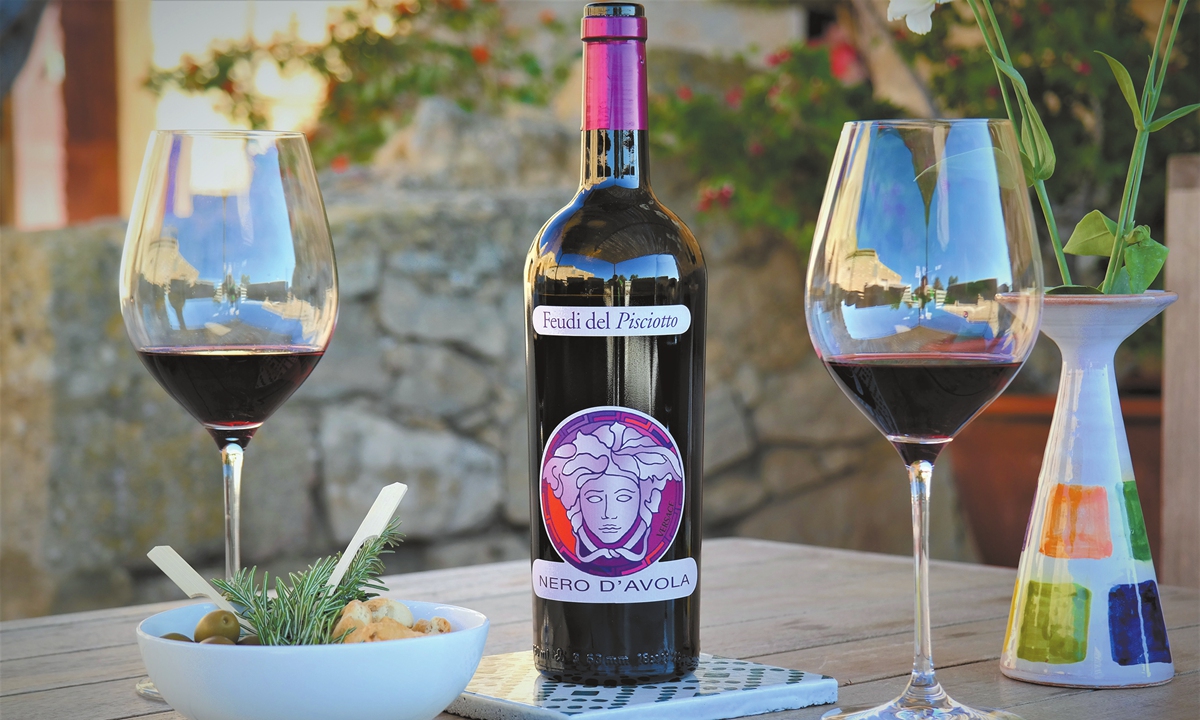
Feudi del Pisciotto Versace Nero d'Avola Photos: Courtesy of Domini Castellare di Castellina
If Sicily has a unique and unmistakable identity in the world of wine, it is thanks to its native grape varieties, which tell millennia-old stories of enriching cultural heritage. Among them stands Nero d'Avola, the island's flagship grape. From its precious clusters come red wines that embody the power and elegance of this Mediterranean gem, where, as the first astronomer and scientist Galileo Galilei (1564-1642) once said, "Wine is [the] light [of the sun] and mood [of the Earth]."The most suitable area for the cultivation of Nero d'Avola is Sicily's southeastern region, particularly the region between the cities of Noto and Pachino. It is right in the Val di Noto where a wine estate has been established that this grape variety expresses its full potential, producing wines that have repeatedly reached the top of global wine critics' rankings. Feudi del Pisciotto is a winery that is part of the Domini Castellare di Castellina group, located on the edge of the Sughereta di Niscemi Nature Reserve: 49 hectares of vineyards just a few kilometers from the sea, characterized by a microclimate ideal for sustainable viticulture that respects nature and biodiversity. Here, Galileo Galilei's famous quote finds its perfect embodiment.
The intense Sicilian sunlight gives the Nero d'Avola from Feudi del Pisciotto energy, warmth, and depth. The mood lies in the wine's ability to evoke emotions, tell stories, and create connections between people. This is precisely what Nero d'Avola Versace, the estate's grand cru, achieves.
The 2017 vintage was included in Wine Spectator's TOP 100 list, the most important evaluation system in the world. Made from a selection of the finest grapes, it expresses the extraordinary elegance of Nero d'Avola in absolute purity and its ability to evolve over time. Its intense ruby red color is typical of the variety, as are the delicate yet persistent notes of currant, blueberry, and cherry. Full-bodied and velvety, it reveals a refined, harmonious balance in the glass. The label featuring the Medusa, concieved by Donatella Versace, pays tribute to the strength of the land and the ever-vibrant, intense colors found in Sicilian wines. It is also one of the most - if not the most - appreciated Italian wines in China.
Nero d'Avola, sip by sip, reveals the most authentic Sicily. Just as authentic is Feudi del Pisciotto, an 18th-century Baglio (a traditional Sicilian farmhouse) that houses the largest Palmento (ancient winemaking structure) in Eastern Sicily, where farmers once stomped grapes with their bare feet, while today wine is produced using modern technologies, in a perfect blend of the past and future.
Within the walls of this ancient Feudo, skillfully restored while preserving its original structure, an elegant Wine Relais with 15 rooms and suites has been created. Private and exclusive spaces where the furnishings harmonize perfectly with the rural charm of the building and the large outdoor areas where different moments of the day can be shared, immersed in the view of generous nature. Artifacts commissioned from local artists, colorful ceramics, contemporary design pieces, and furnishings made by masters of Italian craftsmanship lend a touch of elegant modernity to the Wine Relais in a historically fascinating context. An outdoor relaxation area with a swimming pool, solarium, and pool bar by the pine forest offers the opportunity to fully enjoy a 360-degree view of the vineyards, while inside, an intimate wellness area proposes vitality paths inspired by vinotherapy: Treatments and massages that exploit the antioxidant, anti-aging, and detoxifying properties of grape polyphenols and precious elements that hydrate, restructure skin tissues, and tone the skin with a decongesting and balancing effect.
What makes a stay at Feudi del Pisciotto even more special is the cuisine of Il Palmento di Feudi, the estate's restaurant, which selects the best local raw materials to transform them into dishes inspired by traditional Sicilian recipes, reinterpreted in a contemporary way.
In Sicily, food is not just nourishment; it is a ritual. Here, every meal is an invitation to slow down and enjoy the moment. The menus at restaurant Il Palmento di Feudi are inspired by this philosophy: Savoring the best that the land and sea can offer through dishes crafted with creativity and imagination, to maximize the quality of the ingredients. All culinary masterpieces are enhanced by Feudi del Pisciotto wine pairings. For those who wish to discover how wine is made, from vineyard to bottle, it is possible to participate in wine tours with tastings conducted by expert sommeliers at Feudi del Pisciotto. Meanwhile, those who love exploration should not miss the trekking on foot or by bike in nearby Sughereta di Niscemi Nature Reserve, with its centuries-old cork trees, or excursions to the most beautiful beaches in the area and the splendid Sicilian villages.
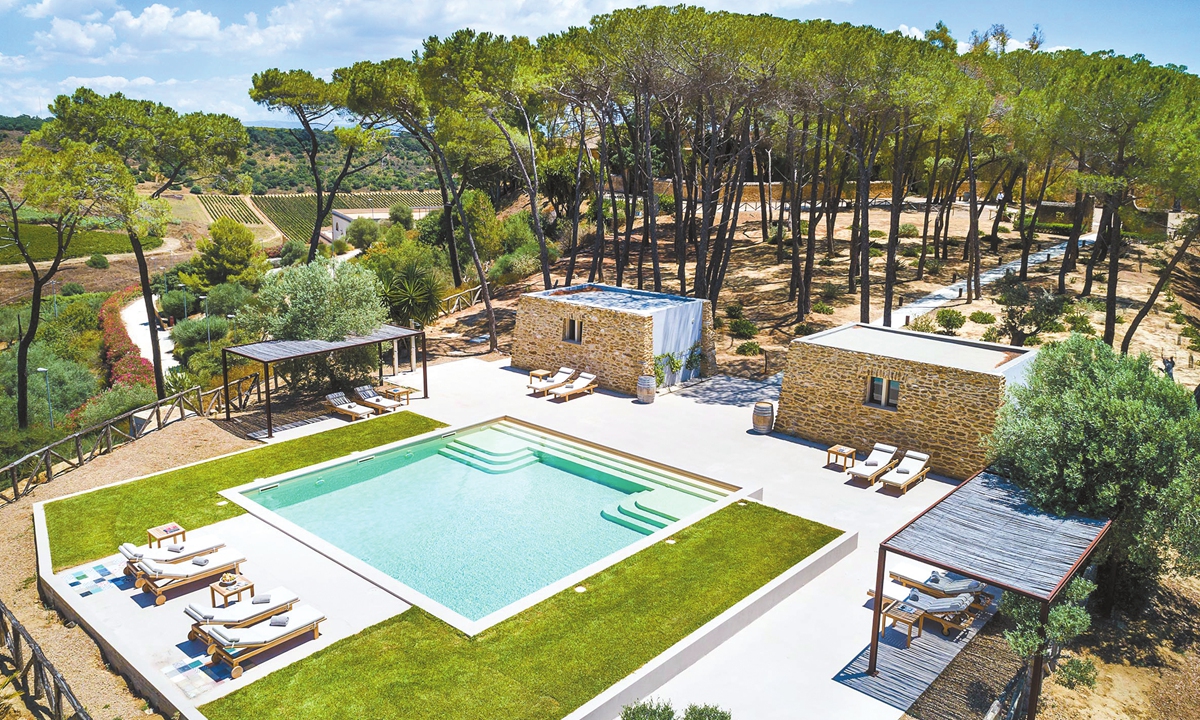
A bird's eye view of Feudi pool
Caltagirone, located just a few minutes' drive from the Wine Relais, is one such example. Considered the capital of Sicilian ceramics since ancient times, this town is rich in artisan workshops where unique objects can be admired and purchased: Vases, plates, colorful majolica, as well as the famous heads of Moor, and decorative pine cones, all of which are symbols of good fortune and hospitality.Attracting tourists from all over the world is the monumental Staircase of Santa Maria del Monte. With its 142 steps, each decorated with hand-painted tiles, it conveys centuries of history through Arab, Norman, Baroque, and contemporary motifs.
Caltagirone is a true gem to be explored, step by step. Also just a few minutes from Feudi del Pisciotto is another unmissable treasure: Villa Romana del Casale in Piazza Armerina. Declared a UNESCO World Heritage Site, this sumptuous imperial residence from the 4th century AD astonishes with its floor mosaics, and is considered among the most extensive, complex, and best preserved in the ancient world.
They cover over 3,500 square meters and depict scenes of daily life, mythology, hunting, sports, and religious rituals with surprising realism and vibrancy. The famous mosaic of the "Girls in bikinis," for example, anticipates by centuries the idea of female physical activity, demonstrating how refined and modern Roman culture was.
Art, archaeology, breathtaking landscapes, and the crystal-clear sea: Eastern Sicily combines the beauty of unspoiled nature with the richness of its immense cultural and gastronomic heritage, offering an ideal mix for those who are seeking a complete and rejuvenating vacation.
RELATED ARTICLES