BRASIL 247 / MORE
GWM to open factory in Brazil, expanding Chinese presence in the country's automotive sector
Local production of the Haval H6 hybrid SUV marks the automaker's debut in Brazil and underscores the growing dominance of Chinese brands in the electric vehicle market
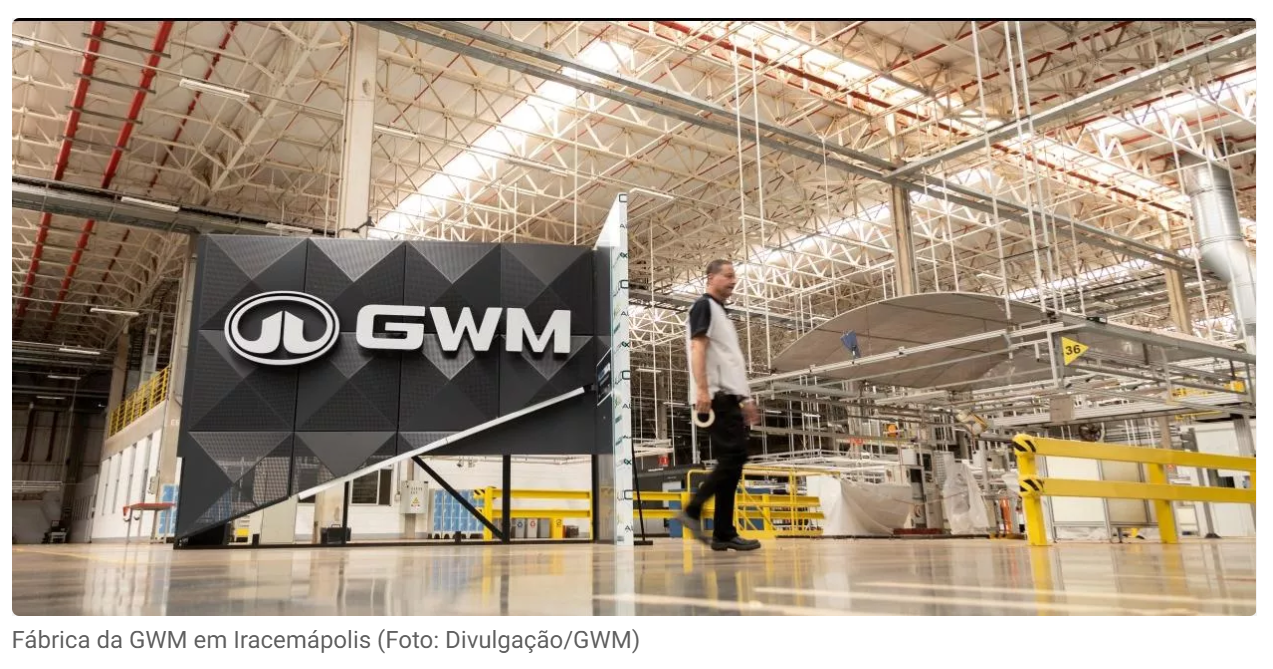
Photo: screengrab from the official website of Brasil 247
By Brasil 247 - Chinese automaker Great Wall Motor (GWM) will open its factory in Iracemápolis, São Paulo state, on Friday. The facility, which previously belonged to Mercedes-Benz, will now produce the Haval H6 hybrid SUV, marking GWM's first manufacturing operation in Brazil and signaling a new chapter in China's presence in the country's automotive industry.
According to data from the National Federation of Vehicle Distribution (Fenabrave), sales of hybrid and electric vehicles in Brazil surged 46.83% between January and July this year, while the overall market grew only 4.1%. Figures from the Brazilian Electric Vehicle Association (ABVE) show that Chinese brands accounted for 63.5% of electric vehicle sales in the country, led by BYD, which holds 28.10% of the hybrid segment and a dominant 76.78% share among fully electric cars. With local production, GWM is aiming to strengthen its foothold and compete more aggressively in this rapidly expanding market.
Market strategy and production ramp-up
Operations in Iracemápolis are starting with around 700 employees and initial assembly using components imported from China. GWM plans to accelerate the localization of parts, expand production shifts, and begin exports in the coming years.
Alongside GWM and BYD—which is building a major industrial complex in Brazil's Bahia state—other Chinese firms such as GAC have signaled interest in entering the Brazilian market, including developing hybrid technologies adapted for ethanol fuel.
Partnerships and a shifting tax landscape
The expansion of Chinese automakers in Brazil also includes strategic alliances with Western manufacturers. Renault has partnered with Geely, while Stellantis has teamed up with Lepmotor to accelerate electric vehicle development.
GWM's decision to produce vehicles in Brazil comes as the country phases out import tax exemptions for electric cars. The tariff will rise gradually, reaching 35% by July 2026. By manufacturing locally, GWM can maintain price competitiveness and strengthen its position in Brazil's fastest-growing automotive segment.
(Reported by Brasil 247 on August 14, 2025)
