SPORT / MISCELLANY
World Games conclude in Chengdu with grand ceremony
IWGA to build sports research center in China
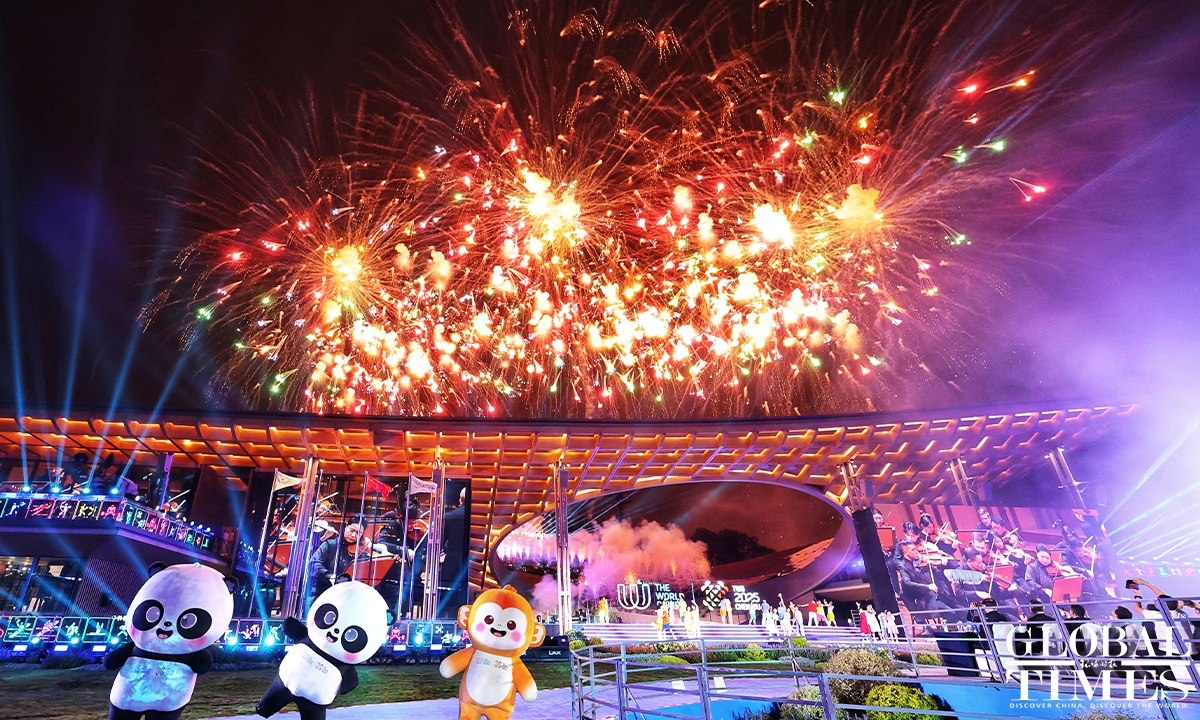
Photo: Cui Meng/GT
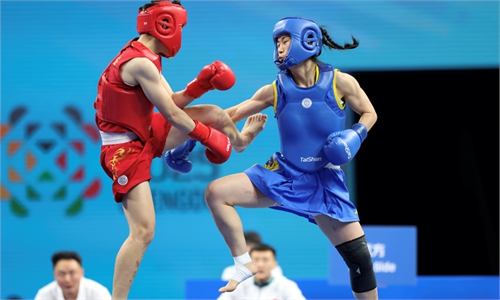
The 12th World Games concluded on Sunday in Chengdu, Southwest China's Sichuan Province with a grand ceremony. The Chinese delegation topped both the gold medal and overall medal standings. A total of 18 world records were broken during this event, with athletes from 52 countries and regions winning gold medals and competitors from 81 countries and regions reaching the podium as of Saturday night, setting a new record for the number of medal-winning nations and regions in World Games history, according to a Sunday press conference by the organizers.The World Games in Chengdu introduced new sports such as drone racing, wakesurfing, parkour, and ultimate frisbee, while dragon boat racing and wushu made their official debut as competition events.
Jose Perurena, president of the International World Games Association (IWGA), said at a Sunday press conference that traditional sports such as dragon boat racing and wushu will continue to be part of the World Games program.
"This experiment represents a significant achievement for this edition," he said. "Future World Games will remain open, incorporating more traditional and emerging sports."
Some Olympic events also made their debut at this edition of the World Games. Trampoline, sport climbing, flag football, softball, lacrosse, and squash are all scheduled to be official competitions at the 2028 Los Angeles Olympics.
These previously niche sports are now gaining new urban attention through the Games, exploring paths for broader development. The growth of niche sports often requires opportunities, and the World Games provide a broad platform to bring them into the public eye, increasing their chances of transitioning from a "small circle" to a mainstream trend, according to the Xinhua News Agency.
Take flag football as an example. This "non-contact" sport, derived from the US National Football League (NFL), has been gradually gaining popularity in China in recent years. Xinhua statistics show that the number of rugby enthusiasts in Chengdu continues to rise, with more than 20 clubs established and nearly 10,000 local residents participating regularly.
"We have also made significant progress in integrating para-sports into our program," Perurena told the Global Times.
"We did not hold separate competitions, but fully integrated two para-sports - para freediving and para jiu-jitsu into the World Games," he said. "These athletes will receive the same medals as other competitors, emphasizing that they are full members of the World Games family."
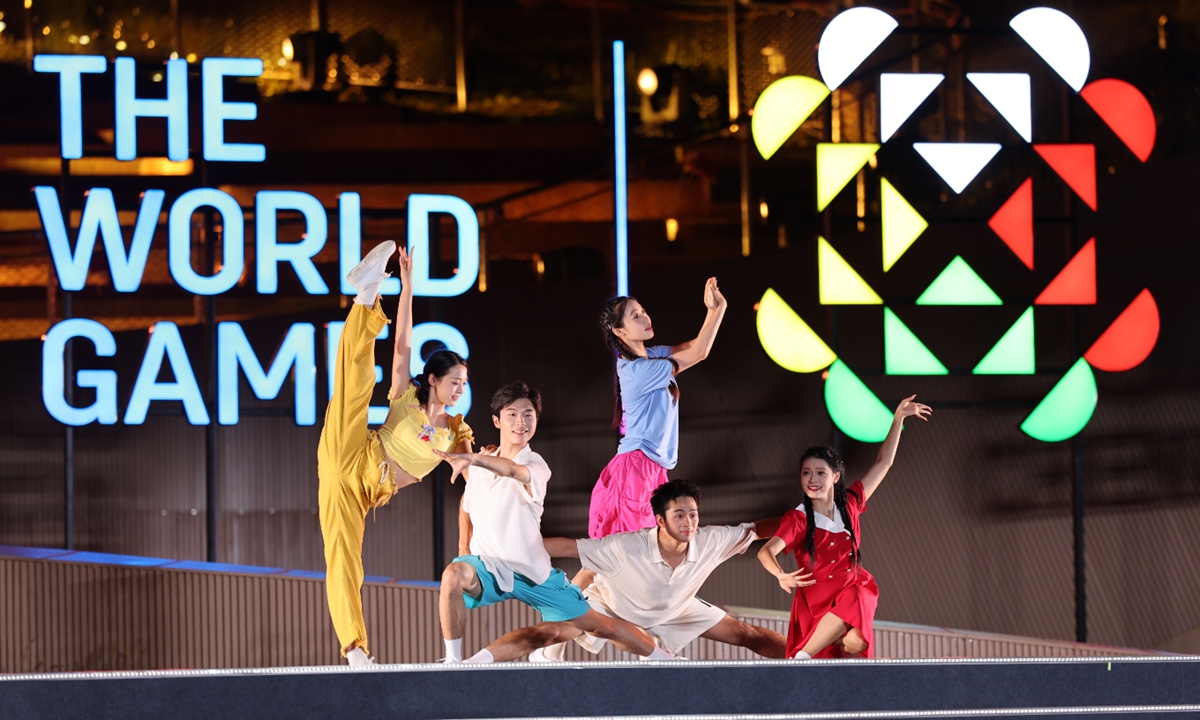
Dancers perform at the closing ceremony for the 12th World Games in Chengdu, Southwest China's Sichuan Province, on August 17, 2025. Photo: Cui Meng/GT
Tom Dillon, CEO of the IWGA, said on Sunday that the association has signed a memorandum of understanding with Chengdu Sport University to establish a sports research and promotion center aimed at advancing non-Olympic sports in China and worldwide.The 12th World Games assembled a competition management team of 4,600 people. A total of 1,133 domestic and international technical officials participated in refereeing and technical services, while 13,000 venue operations staff ensured smooth event execution. Twenty-seven specialized teams maintained more than 20,000 pieces of competition equipment across 579 categories, and 150 staff operated timing, scoring, and results systems with precision, providing strong technical support. Over 6,000 professional event volunteers contributed to competition operations and support.
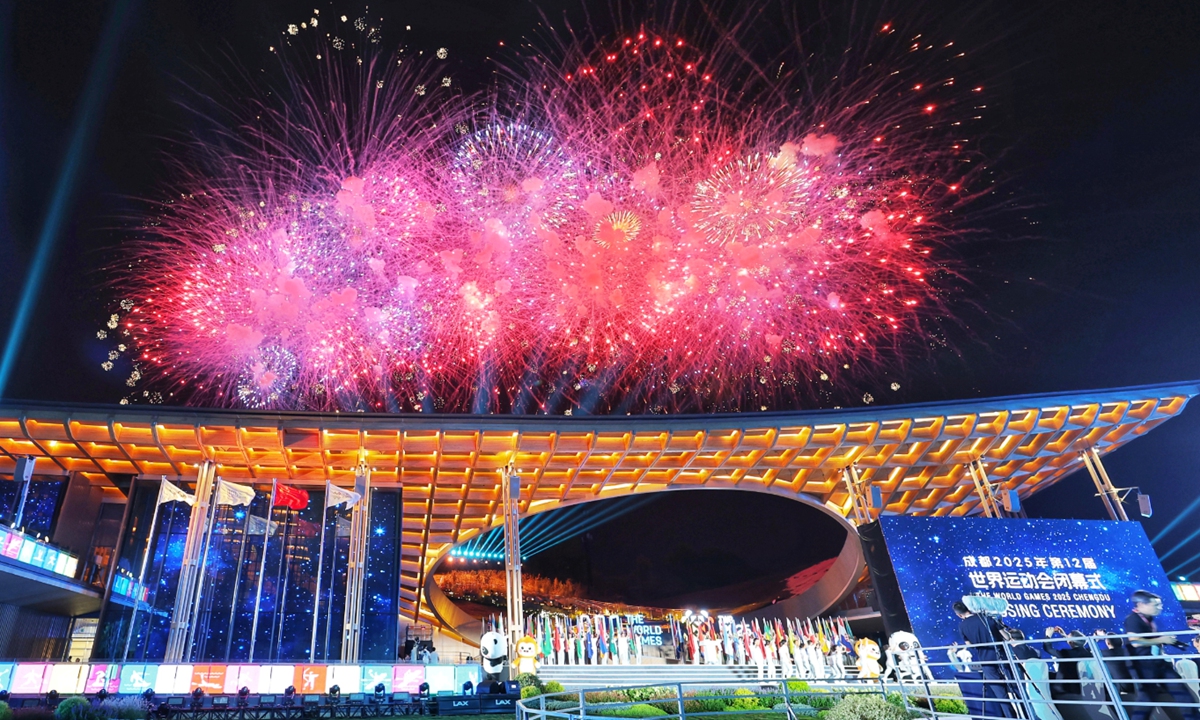
The closing ceremony for the 12th World Games is held in Chengdu, Southwest China's Sichuan Province, on August 17, 2025. Photo: Cui Meng/GT
"Through hosting the World Games, Chengdu has achieved improvements in urban functionality, economic development momentum, and public fitness services," said Xu Xingguo, vice mayor of Chengdu.He added that seven temporary venues will continue to serve citizens' fitness activities, and equipment from the Games will be allocated for sports talent development.
As the Games concluded, Sunday saw the closing ceremony take place. Zhang Qing, executive deputy director of the closing ceremony, told the Global Times that the planning focused not only on-stage design and event flow but also on integrating the venue with its natural environment.
"The closing ceremony venue is built along the hillside and features characteristics of western Sichuan dwellings. We hope to use the natural landscape to highlight the concept of harmony between people and nature," she said.
Unlike the opening ceremony, where athletes entered by country, the closing ceremony featured "mixed" athlete entrances from both sides of the audience stands, creating a lively atmosphere. The ceremony also included a tribute to volunteers and incorporated elements reflecting Chengdu's local culture and hospitality.
"The closing ceremony is not only the conclusion of a ritual but also a continuation of feelings," she said. "Through music, lighting, friendship, and farewell elements, athletes from around the world can leave with lasting memories of the World Games in China beyond the competition itself."
RELATED ARTICLES