ARTS / FILM
Chinese animation breaks through cultural curiosity to achieve deeper resonance
From local roots to global appeal
By Published: Aug 17, 2025 10:23 PM

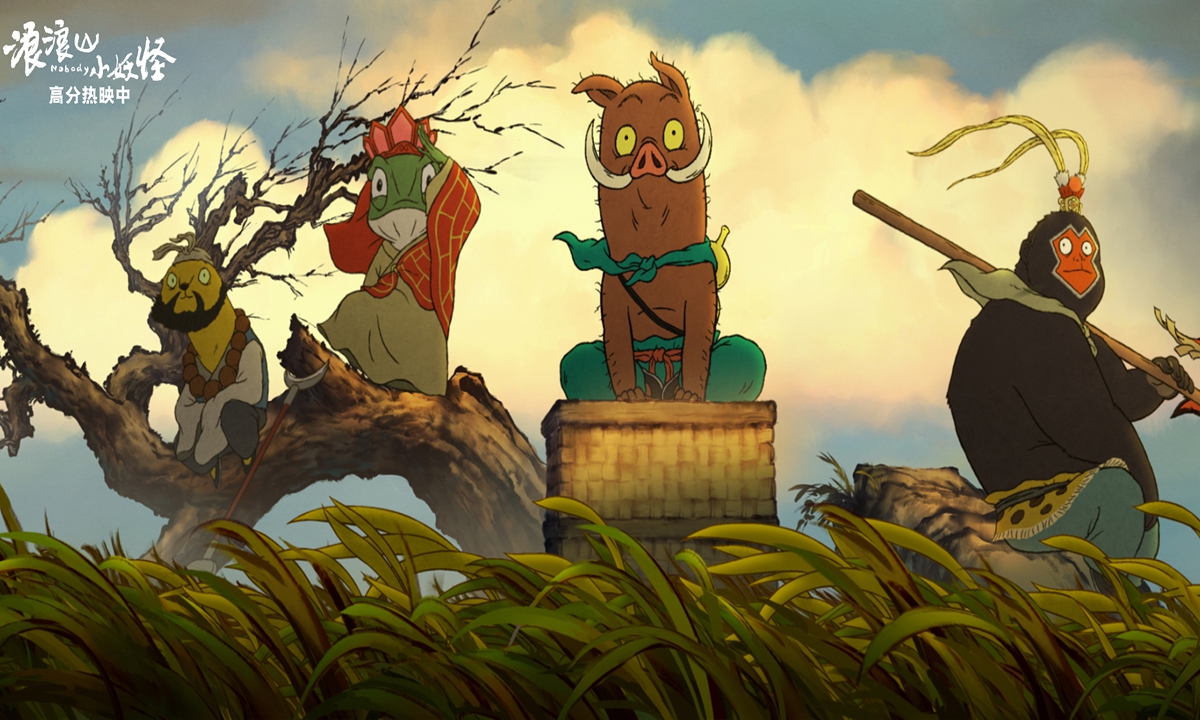
A still from the film Nobody Photos: Courtesy of the production team of the film
This summer, Chinese animated films have emerged as a powerful force, igniting a box office boom. Among them, The Legend of Hei 2 continues its warm and healing fantasy journey, Curious Tales of a Temple reimagines an Eastern classic with stunning visuals, and Nobody, a 2D animated film focusing on "small characters," has topped the box office for domestic 2D animations, solidifying its status as a phenomenal work.
Data from Chinese ticketing platform Maoyan shows that as of Sunday afternoon, Curious Tales of a Temple (released July 12) and The Legend of Hei 2 (released July 18) have grossed 242 million yuan ($ 33.70 million) and 443 million yuan, respectively.
Meanwhile, Nobody has raked in more than 990 million yuan in just 16 days, alongside its impressive 8.6/10 rating on Chinese review website Douban and a craze for its merchandise.
In a recent exclusive interview with Global Times, Yu Shui, the film's director and screenwriter, attributed the success to emotional authenticity and artistic heritage.
"Our film tapped into shared emotions, and we revived the classic art style of the Shanghai Animation Film Studio, elements that resonated. But there's much more room to grow," Yu told Global Times.
Industry insiders echo the optimism. "Animation is definitely one of the future mainstays of the film market, and this summer's strong performance is a clear sign of that trend," Dong Wenxin, a cinema manager and film industry observer, told Global Times. She noted that from the domestic and international box office miracle of Ne Zha 2 to the summer hit Nobody, there is a big space for the market potential of Chinese animated film.
Storytelling is the key
Nobody tells the story of a little pig monster who gathers three other nameless little demons to form a grassroots pilgrimage group. They pretend to be the famous monk Tang Sanzang and his three disciples from Journey to the West to break out of Langlang Mountain, and embark on a hilarious "pilgrimage" that leads to self-growth.
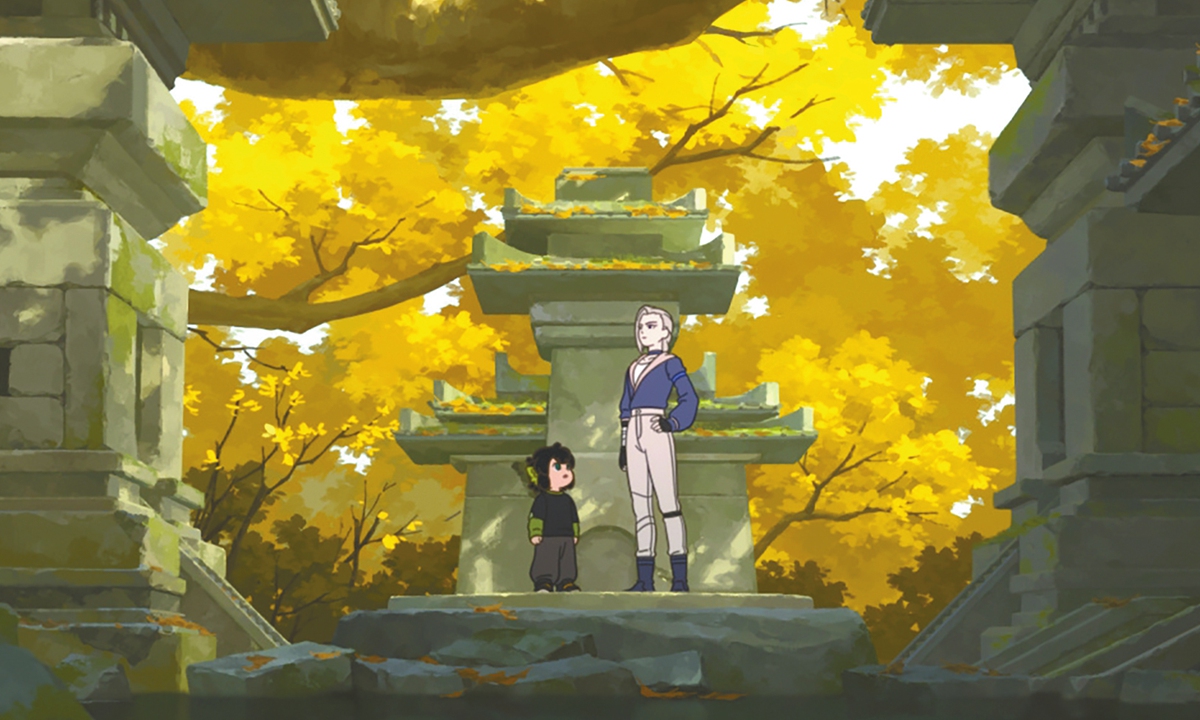
A still from the movie The Legend of Hei 2 Photos: Courtesy of Douban
Focusing on four nameless little monsters without family backgrounds or connections to powerful figures like Buddha, Yu defined the film as a work of "mythic realism." It uses a mythical shell to tell real-life stories, breaking through the "office worker" limitation of the short film it is derived from, and exploring the predicaments people encounter in the face of obstacles.
Yu described the film as "an ode to idealists in a realistic world." Most people are ordinary individuals facing their own difficulties. The film shows the characters bravely confronting challenges and pursuing their ideals.
Film critic Liu Nandou pointed out that over-reliance on traditional myths can lead to aesthetic fatigue, but Nobody's breakthrough lies in "stepping away from the protagonist's perspective, allowing audiences to see themselves in the 'background characters.'"
Cultural resonance
In recent years, works like Ne Zha and White Snake series have made inroads overseas, but breaking through "cultural curiosity" to achieve deeper emotional resonance remains a key challenge for the industry.
Film critic Liu pointed out that IP is not a one-size-fits-all solution. While Nobody's "bit-player revolution" and Chang'an's modern history retellings proved IP innovation's potential, Pleasant Goat and Big Big Wolf: Bright New Dawn's latest film flop failed to meet expectations.
Dong echoed that while relying on Chinese traditional culture has helped nurture the industry in its early stages, maturity requires a "weaning process," over-dependence hinders works from becoming world-class IPs.
"Japanese and Hollywood animations, by contrast, tell stories that resonate globally. Even with cultural symbols, they avoid setting cultural barriers, focusing on universal emotional connections," said Dong.
Director Yu believes what truly resonates with Chinese audiences goes far beyond the visual elements of traditional culture, including superficial symbols like pandas or lanterns, or aesthetic techniques in Chinese painting such as leaving blank spaces and ink wash. ''It's more about our national spirit and character,'' he said.
He cited the example of director Ang Lee who has made many films in Hollywood with foreign actors, but "you can still feel a deep Eastern and Chinese essence in his works; that sense of gentleness, kindness, respect, frugality and humility. That quality is impossible to ignore."
Looking ahead, the director is optimistic about Chinese animation's global potential.
"Films like Crouching Tiger, Hidden Dragon and Ne Zha succeeded abroad not just for their 'Chineseness,' but because they spoke to universal truths," he notes, pointing to Inside Out 2 which depicts modern anxiety, resonates worldwide because "everyone struggles with similar restlessness and internal friction."
To gain wider global acceptance, Yu emphasized focusing on such universal themes, telling compelling stories, and showcasing unique artistic styles.
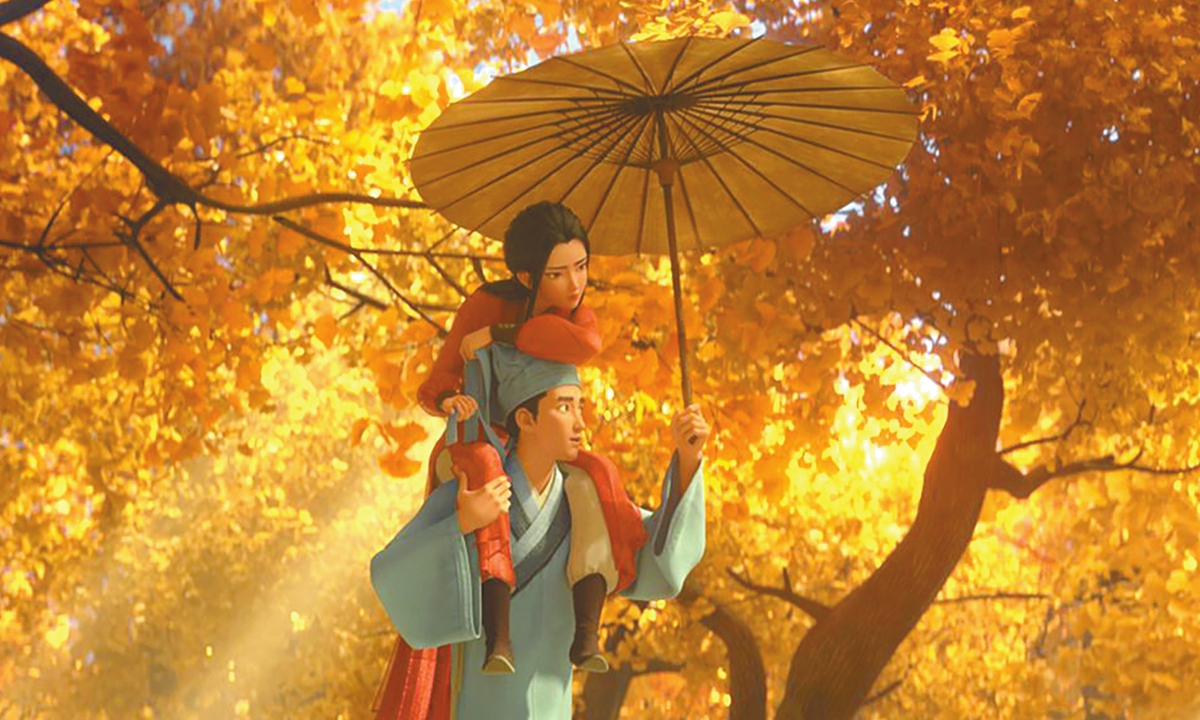
A still from the film Curious Tales of a Temple
For Dong, practical support is also crucial. She noted that improved industrialization and AI application have transformed Chinese animation from a "labor-intensive industry" to one capable of large-scale creation.
However, a shortage of screenwriters remains a bottleneck. She suggested strengthening screenwriter training through industry-academia collaboration to make "good storytelling" a core global competitive edge.
Expanding to all-age audiences is another prerequisite for international success. While Chinese animation still carries a "childish" label, the global market has long embraced "all-age" content. Liu believes that as Millennials and Generation Z become the main consumers, "demand for adult-oriented animation will keep growing," offering vast opportunities.
"We are moving on the right track, and more internationally renowned Chinese animated films will emerge in the near future," Yu said with confidence.
RELATED ARTICLES