SOURCE / PRESS RELEASE
LONGi Launches Lightweight Module, Officially Entering Low-Load Market
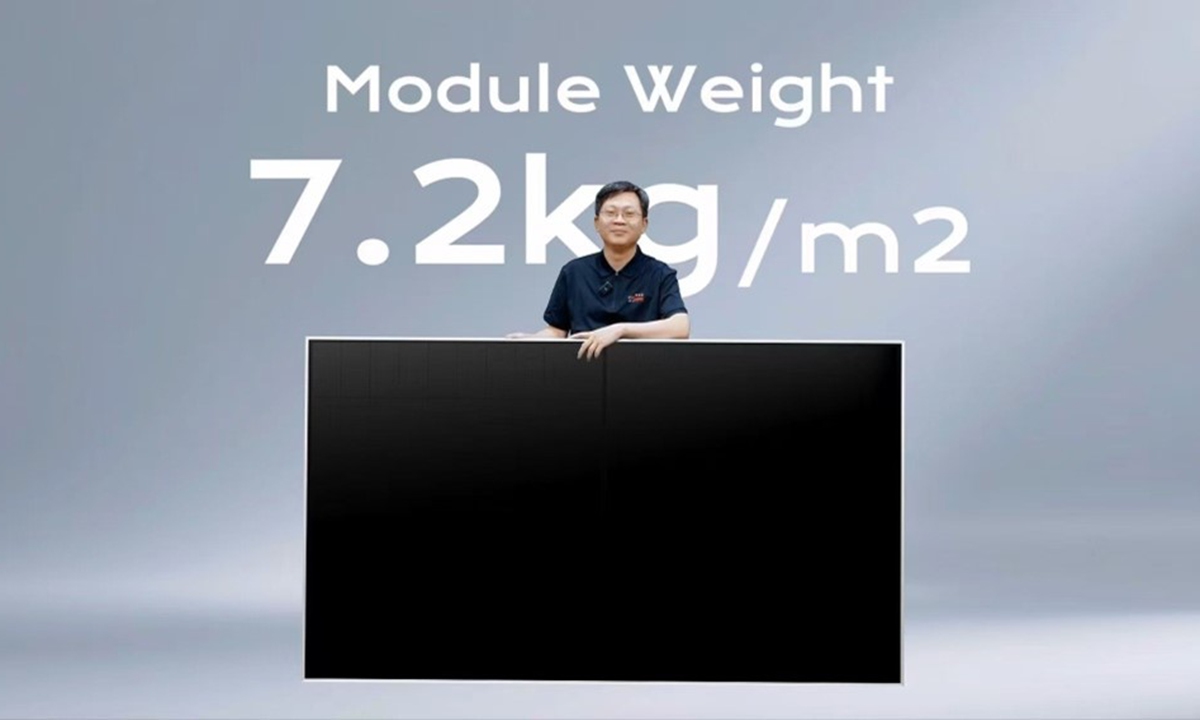
Photo: LONGi
As solar power becomes increasingly popular worldwide, over 30% of rooftops are still unsuitable for solar panel installation due to load-bearing issues. Although many owners are eager to embrace green transformation, most are forced to give up because of the high reinforcement costs. On August 15, 2025, LONGi launched the Hi-MO X10 light design module, officially targeting the low-load C&I market.The Hi-MO X10 light design module is built on HPBC 2.0 cells, delivering outstanding safety, reliability, and high-efficiency, with a maximum efficiency of 24.8% and a maximum power of 560W. Weighing just 7.2KG/㎡, it is over 30% lighter than conventional modules.
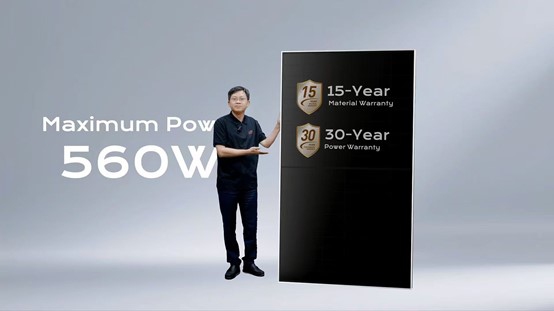
Photo: LONGi
Lighter, More cost saving, and Safer
On May 25, LONGi first launched this module in the Chinese market, leading the industry in lightweight design, convenient installation, and reliability.
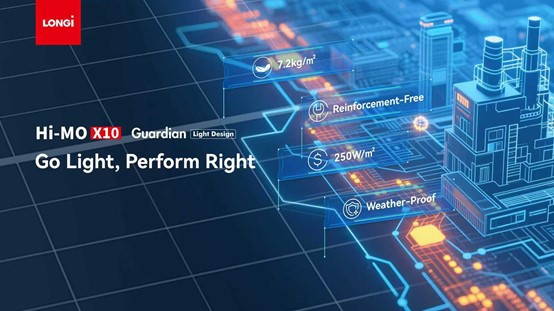
Photo: LONGi
Lighter: The Hi-MO X10 light design module features multiple weight-reduction processes, weighing only 7.2KG/㎡, a 42% reduction from conventional Dual glass TOPCon modules. A 10,000㎡ rooftop can reduce the load by 34 tons. Preliminary estimates show this module could enable 1 billion square meters of factory rooftops worldwide to access green energy.
Photo: LONGi
More cost saving: The Hi-MO X10 light design module achieves a conversion efficiency of 24.8%, far exceeding the 21.6% efficiency of other products. The power of a single module is 140W higher than conventional lightweight modules, and the overall BOS cost is reduced by 33%.In the past, old factories never calculated for solar loads, so it is necessary to reinforce rooftops to install solar systems. Take Chinese buildings as an example, the cost of reinforcing the "main structure+purlins" can be as high as 0.5 yuan/W. For a 10,000㎡ rooftop, the reinforcement cost is approximately 500,000 yuan .
On the other hand, many such factories cannot carry out internal reinforcement work due to production continuity issues. For a 10,000㎡ rooftop, the entire process of roof reinforcement (surveying, designing, constructing, inspecting) and solar system installation takes about 42 days, while lightweight modules only take 8-10 days for the whole process, saving both time and costs.
Safer: Although the weight of the Hi-MO X10 light design module is reduced, its quality remains uncompromised. The module adds a one-line welding ribbon on the back to form an efficient mechanical distribution, increasing the maximum bearing capacity by over 50% and reducing the deformation at the center of the module by 50%, effectively improving the module's compression and bending resistance. Meanwhile, the thickness of the module frame is increased by 5%. Thanks to a special frame structure design, the overall mechanical strength is increased by 20%, which can inhibit frame distortion and deformation in case of strong winds or snow.
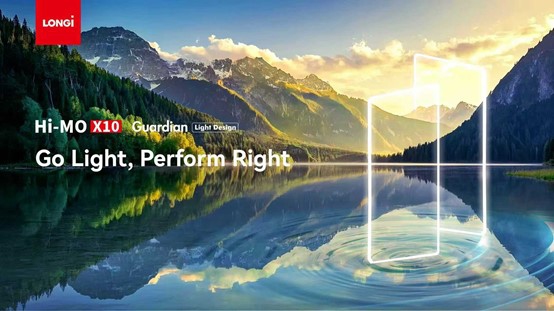
Photo: LONGi
Dual-Protection Function: Anti-Fire and Anti-ShadingThe Hi-MO X10 light design module continues the anti-shading function of the Hi-MO X10 series.
Anti-Fire: In case of local shading due to bird droppings or leaves, this module can significantly reduce the hot-spot temperature under shadow, preventing overheating and fires. Laboratory and field tests show that under the same leaf shading, the local temperature of the Hi-MO X10 light design module is only 80°C, greatly reducing the risk of fire.
Anti-Shading: According to the two-month empirical test by CGC Certification, under different shading conditions (full light without shading, simulated bird droppings, simulated shading in wind and solar hybrid fields), the average backplane temperature of HPBC 2.0 modules is 7.43°C lower than that of TOPCon modules. The lower operating temperature effectively prevents safety risks caused by local shading.

Photo: LONGi
Leading PerformanceSo far, there are more than 10 types of lightweight or flexible modules on the market, but they are prone to be unreliable during long-term outdoor use, showing concerning signs such as yellowing that leads to reduced light transmittance and power degradation, deformations that increases the safety risks of electric leakage or short circuits and fires that produce toxic gases such as hydrogen fluoride releasing.
Most lightweight modules based on PERC, TOPCon, and other technologies feature a conversion efficiency of only about 21%, and in terms of structure most flexible modules have no frames, making them more prone to micro cracks. The adhesive installation method not only poses a risk of debonding during long-term use but also increases the difficulty of later maintenance.
The market has long awaited a lightweight module which is "lighter, more cost saving, and safer."
Regarding the launch of this product, Jiang Dongyu, President of LONGi's Distributed Business Group, said that LONGi has always adhered to a development philosophy based on the principles of stability, reliability, and technological leadership even when facing the trend of "cost reduction" in the solar industry. “When cost reduction conflicts with the "reliability" of products, LONGi will firmly prioritizes the latter," said Jiang Dongyu.
The launch of the Hi-MO X10 light design module not only addresses the pain points of the low-load rooftop market, but also represents another implementation of LONGi's " scenario-based+differentiated" product strategy. In the future, LONGi will continue to drive "dual innovation" in solar technology and product R&D to create more scenario-based products and solutions.
