SOURCE / PRESS RELEASE
Bring a new view of care to China and the world: interview with the president of Kenvue China
Recently, Kenvue, the world-leading consumer health company, unveiled its first consumer trends report, A New View of Care: The Power of Personal Care Routines.
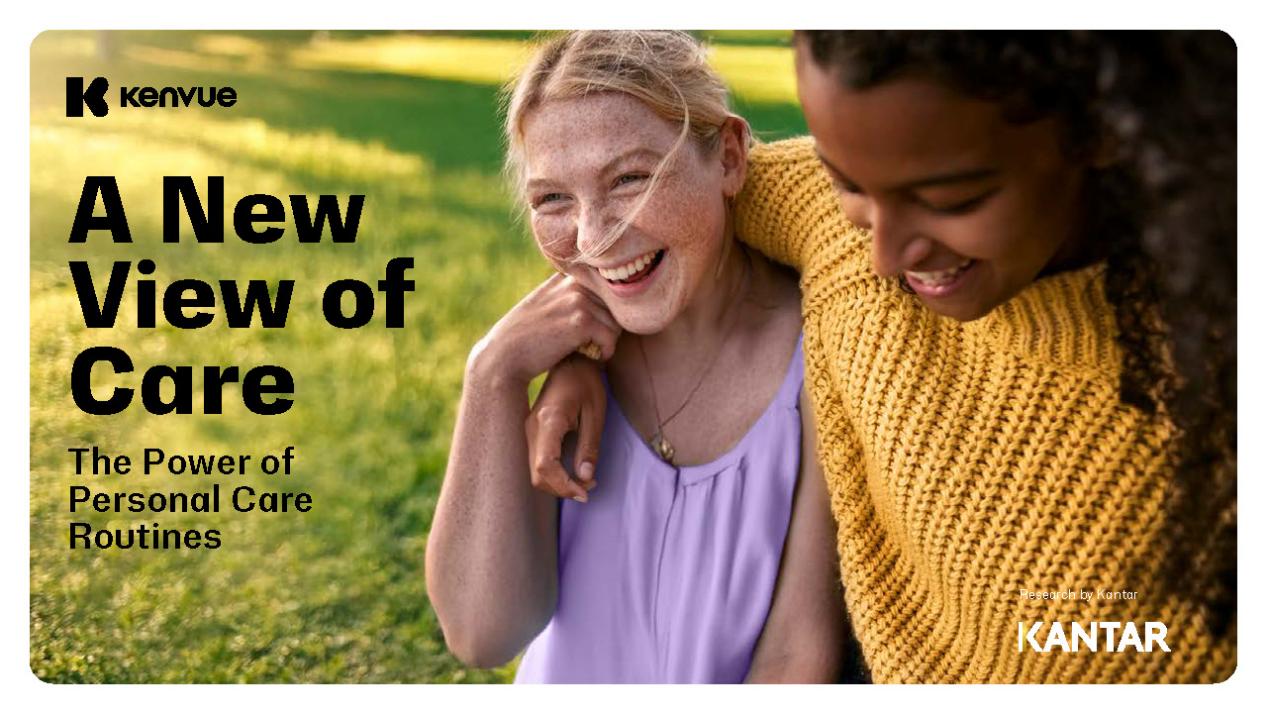
With experiences in consumer health for over 135 years, Kenvue is the maker of the trusted brands like Motrin®, Tylenol®, Rhinocort®, Xisimin®, Daktarin®, Motilium®, Dabao®, Listerine®, Aveeno®, Johnson's Baby® and Band-Aid®. The report delves into the drivers of personal care routines, their impact on health and emotional well-being, and the sources of influence shaping care today. Over 10,000 consumers around the world participated in the survey.
"At Kenvue, we believe in the extraordinary power of everyday care. The report shows us again that small, consistent personal care actions in daily life can lead to meaningful, measurable benefits," Gift Arpaporn Samabhandhu, president of Kenvue China shared with media the key findings of the report, and elaborated on some highlighted points.

Gift said, "In China, we are focusing on empowering consumers to cope with minor ailments like fever, allergy, pain and oral health issues through insights-led innovations and strategic partnerships. We offer solutions that are simple to stick with, and solve real needs. The findings of this report offer a more solidified perspective to foster minor ailment management in consumers' daily rituals and make us more confident in putting the power of everyday care into the hands of Chinese consumers."
Generate long-term health benefits through simple daily rituals
Three-quarters of consumers spend less than 30 minutes on their personal care routine daily, and 39% spend less than 15 minutes. Consumers who spend over 15 minutes daily on their routine are significantly more likely to report their overall health as "good" (45%), compared to only 31% of those who spend less time. Those who invest more time in their personal care routines may perceive greater health benefits.
Despite a modest amount of time invested in personal care, for 88% of consumers globally, personal care is seen as positively contributing to their health. Half of consumers (50%) believe their personal care routine has a "very high" or "high" effect on their overall health, and another third (38%) believe these routines offer at least "some" impact.
In China, 59% of consumers agree that daily personal care routines have a high impact on their overall health and well-being, and 26% agree on some impact. And being short on time is the No.1 reason Chinese consumers take on an abbreviated daily routine.
Gift said, "As consumers become more conscious of their health, we need to help them stick to healthy behaviors through solutions with simplicity. Therefore, we are driving insights-led innovation to bring Chinese consumers customized products that address their specific health needs. For example, our Listerine® Total Care Zero responds to the needs of holistic oral care among Chinese consumers and can address 10 major health needs via one simple rinse. Our Dabao® Vitamin A, B, C portfolio can also bring holistic skincare solutions offering anti-aging, repairing and brightening functions to Chinese consumers."
Shift to prevention through personal care
Consumers globally say the No.1 benefit to having a personal care routine is simple yet powerful: to improve their overall well-being. 19% agree that their routines have changed over the past five years by focusing more on long-term wellness and prevention.
When asked how they define their personal care practices, Chinese consumers most strongly relate to routines centered around "staying ahead of health issues (27%)," "aging well and long-term health (17%)," and routines to "look good and feel good (15%)."
The top two reasons Chinese consumers initially adopted personal care routines were to prevent future health issues and because they became concerned about their health. And over the past five years, the most prominent way Chinese consumers' routines have changed is that they shifted their focus to prevention and longevity.
Gift said, "The concept of personal care is becoming expansive as more Chinese consumers shift their focus from reactively treating diseases to proactively preventing health issues, which is highly aligned with the direction of Healthy China Initiative. Kenvue offers a wide range of solutions against nearly 20 minor ailments, including prevention of allergy, oral and skin health issues, treatment of small illnesses and improvement of overall health. We are equipping consumers with rigorous science to boost healthy lifestyle and improve their life quality."
Improve the accessibility of scientific information
Healthcare providers are the No.1 trusted source of information. Nearly two-thirds of consumers (62%) "completely" or "mostly" trust their primary care or other healthcare providers because of their connection to science.
However, the trust does not always guide where consumers go first for information. In fact, only one in five consumers say they seek out personal care information from personal HCPs (20%). Instead, consumers more often turn to online sources as their initial stop when searching for personal care information, but they continue to question the credibility of the advice they receive on social media.
And among those without a routine, not knowing where to start is a big reason why. A top barrier to starting a routine is not knowing what products or tools to use (19%), followed by too much conflicting information (14%) and difficulty of finding information (9%).
In China, consumers' partner or spouse, primary care or other healthcare provider, and family are the top 3 most trusted sources of information, while health and well-being influencers, social media influencers, and a doctor or healthcare expert on social media are the most used information sources. Too much conflicting information is the top barrier to making a change to consumers' personal care routines
Gift said, "The gap between people's trusted and frequently used information sources indicates that accessibility of scientific information is critical to improve health literacy and healthy lifestyle. That is why we forge a broad network with the government, associations, professionals, media, retail pharmacies, O2O, e-commerce partners and internet platforms to disseminate credible and practical health guidelines in allergy, fever, oral health and skin health to consumers, aiming to help them address their minor ailments in daily life."
Build up health solutions around legacy brands
Consumers view large, established brands as the most trustworthy among personal care brands. In fact, consumers are nearly twice as likely to trust large brands that have been around for decades than up and coming brands. In China, having long-lasting results and trusted or familiar brand names are consumers' top two motivators when shopping for personal care products.
Gift said, "Consumers' trust is fundamental for us to drive growth. In China we take great pride on offering a wide portfolio of iconic brands to consumers including Motrin®, Tylenol®, Rhinocort®, Xisimin®, Daktarin®, Dabao®, Johnson's Baby®, Aveeno®, Listerine® and others. These household brands have been part of Chinese consumers' daily rituals for minor ailment management and personal care for decades. In the future, we will continue to advance science and innovation to foster everyday care for Chinese consumers."
Photo: Courtesy of Kenvue
With experiences in consumer health for over 135 years, Kenvue is the maker of the trusted brands like Motrin®, Tylenol®, Rhinocort®, Xisimin®, Daktarin®, Motilium®, Dabao®, Listerine®, Aveeno®, Johnson's Baby® and Band-Aid®. The report delves into the drivers of personal care routines, their impact on health and emotional well-being, and the sources of influence shaping care today. Over 10,000 consumers around the world participated in the survey.
"At Kenvue, we believe in the extraordinary power of everyday care. The report shows us again that small, consistent personal care actions in daily life can lead to meaningful, measurable benefits," Gift Arpaporn Samabhandhu, president of Kenvue China shared with media the key findings of the report, and elaborated on some highlighted points.
Photo: Courtesy of Kenvue
Gift said, "In China, we are focusing on empowering consumers to cope with minor ailments like fever, allergy, pain and oral health issues through insights-led innovations and strategic partnerships. We offer solutions that are simple to stick with, and solve real needs. The findings of this report offer a more solidified perspective to foster minor ailment management in consumers' daily rituals and make us more confident in putting the power of everyday care into the hands of Chinese consumers."
Generate long-term health benefits through simple daily rituals
Three-quarters of consumers spend less than 30 minutes on their personal care routine daily, and 39% spend less than 15 minutes. Consumers who spend over 15 minutes daily on their routine are significantly more likely to report their overall health as "good" (45%), compared to only 31% of those who spend less time. Those who invest more time in their personal care routines may perceive greater health benefits.
Despite a modest amount of time invested in personal care, for 88% of consumers globally, personal care is seen as positively contributing to their health. Half of consumers (50%) believe their personal care routine has a "very high" or "high" effect on their overall health, and another third (38%) believe these routines offer at least "some" impact.
In China, 59% of consumers agree that daily personal care routines have a high impact on their overall health and well-being, and 26% agree on some impact. And being short on time is the No.1 reason Chinese consumers take on an abbreviated daily routine.
Gift said, "As consumers become more conscious of their health, we need to help them stick to healthy behaviors through solutions with simplicity. Therefore, we are driving insights-led innovation to bring Chinese consumers customized products that address their specific health needs. For example, our Listerine® Total Care Zero responds to the needs of holistic oral care among Chinese consumers and can address 10 major health needs via one simple rinse. Our Dabao® Vitamin A, B, C portfolio can also bring holistic skincare solutions offering anti-aging, repairing and brightening functions to Chinese consumers."
Shift to prevention through personal care
Consumers globally say the No.1 benefit to having a personal care routine is simple yet powerful: to improve their overall well-being. 19% agree that their routines have changed over the past five years by focusing more on long-term wellness and prevention.
When asked how they define their personal care practices, Chinese consumers most strongly relate to routines centered around "staying ahead of health issues (27%)," "aging well and long-term health (17%)," and routines to "look good and feel good (15%)."
The top two reasons Chinese consumers initially adopted personal care routines were to prevent future health issues and because they became concerned about their health. And over the past five years, the most prominent way Chinese consumers' routines have changed is that they shifted their focus to prevention and longevity.
Gift said, "The concept of personal care is becoming expansive as more Chinese consumers shift their focus from reactively treating diseases to proactively preventing health issues, which is highly aligned with the direction of Healthy China Initiative. Kenvue offers a wide range of solutions against nearly 20 minor ailments, including prevention of allergy, oral and skin health issues, treatment of small illnesses and improvement of overall health. We are equipping consumers with rigorous science to boost healthy lifestyle and improve their life quality."
Improve the accessibility of scientific information
Healthcare providers are the No.1 trusted source of information. Nearly two-thirds of consumers (62%) "completely" or "mostly" trust their primary care or other healthcare providers because of their connection to science.
However, the trust does not always guide where consumers go first for information. In fact, only one in five consumers say they seek out personal care information from personal HCPs (20%). Instead, consumers more often turn to online sources as their initial stop when searching for personal care information, but they continue to question the credibility of the advice they receive on social media.
And among those without a routine, not knowing where to start is a big reason why. A top barrier to starting a routine is not knowing what products or tools to use (19%), followed by too much conflicting information (14%) and difficulty of finding information (9%).
In China, consumers' partner or spouse, primary care or other healthcare provider, and family are the top 3 most trusted sources of information, while health and well-being influencers, social media influencers, and a doctor or healthcare expert on social media are the most used information sources. Too much conflicting information is the top barrier to making a change to consumers' personal care routines
Gift said, "The gap between people's trusted and frequently used information sources indicates that accessibility of scientific information is critical to improve health literacy and healthy lifestyle. That is why we forge a broad network with the government, associations, professionals, media, retail pharmacies, O2O, e-commerce partners and internet platforms to disseminate credible and practical health guidelines in allergy, fever, oral health and skin health to consumers, aiming to help them address their minor ailments in daily life."
Build up health solutions around legacy brands
Consumers view large, established brands as the most trustworthy among personal care brands. In fact, consumers are nearly twice as likely to trust large brands that have been around for decades than up and coming brands. In China, having long-lasting results and trusted or familiar brand names are consumers' top two motivators when shopping for personal care products.
Gift said, "Consumers' trust is fundamental for us to drive growth. In China we take great pride on offering a wide portfolio of iconic brands to consumers including Motrin®, Tylenol®, Rhinocort®, Xisimin®, Daktarin®, Dabao®, Johnson's Baby®, Aveeno®, Listerine® and others. These household brands have been part of Chinese consumers' daily rituals for minor ailment management and personal care for decades. In the future, we will continue to advance science and innovation to foster everyday care for Chinese consumers."
