SPORT / MISCELLANY
China’s women’s and men’s U21 volleyball teams both secure last-16 spots
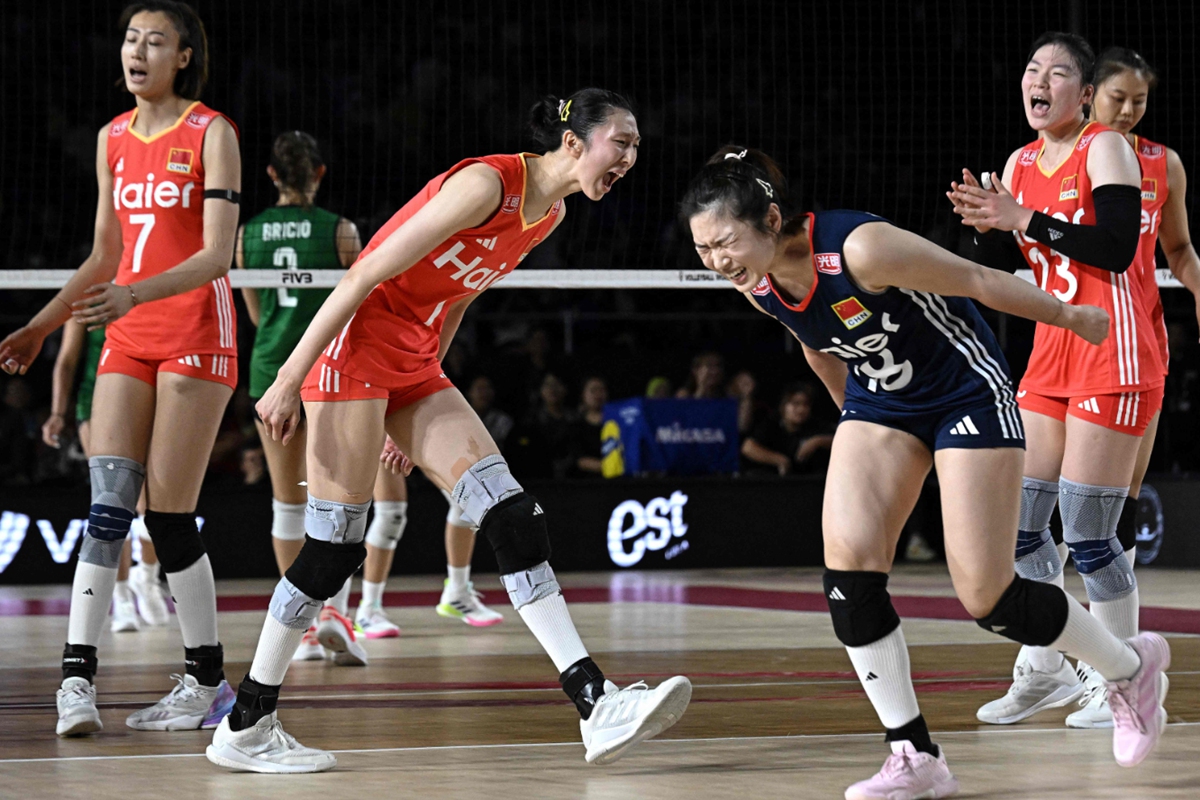
Photo: VCG
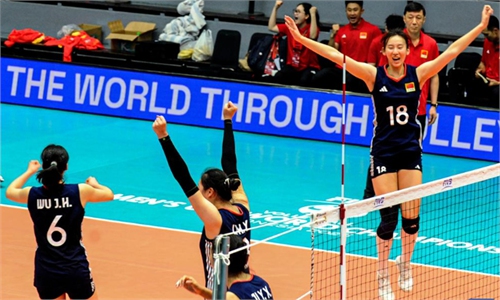
China's volleyball squads experienced a roller-coaster on Monday, with the women's national team booking a spot in the round of 16 at the FIVB Volleyball Women's World Championship after defeating Colombia 25-16, 23-25, 25-14, 25-16, while the U21 men's side fell 1-3 to the US team to record their first loss of the tournament, having already secured a spot in the round of 16 by relying on the first three straight wins.The women's team, playing their second group match, entered the court with a more experienced starting lineup than in their opener against Mexico, where head coach Zhao Yong admitted the squad had been "a little packed." Determined to avoid any repeats, Zhao turned to senior players to stabilize the side and guarantee qualification for the knockout stage.
The coaching staff also made adjustments to ease the workload on star outside hitter Li Yingying, who is still managing an injury. Several tactical rotations were designed to relieve pressure on her while maintaining China's offensive output.
"With a relatively young setter running the plays, the importance of continuity stands out for this Chinese team. We've been using this lineup since the Nations League. Making sudden changes to the attackers would place additional strain on our setter," Hu Li, a volleyball commentator, told the Global Times on Monday.
Hu noted that the competition is fiercer than previous editions, with fewer clear divides between stronger and weaker teams. That reality makes consistency all the more vital once the knockout stage begins. "This group is young and not yet fully stable, but their intensity and aggressiveness can disrupt opponents," Hu said. "The key will be for the coaching team to anticipate swings in momentum and prepare multiple solutions."
Earlier in the day, the Chinese U21 men's national team encountered a different challenge against the US. Entering the match with three straight victories, the young squad aimed to extend their winning run, but the contest lived up to its billing as one of the most demanding of the group stage.
China took the first set with a strong start, riding early momentum to surge ahead. Yet over the next three sets, flaws in both attack and defense began to surface. Although rising stars Li Hai gave out 16 points and Wang Bohan sparked a late third-set rally with three consecutive points, China ultimately struggled with spiking efficiency and cohesion in transition, allowing the US to close out the match.
"This is the first time this team has competed at this level, and every match is difficult," head coach Pawel Woicki said during an interview. "We didn't set high expectations in terms of results, but I'm proud of the first three wins and how the players are fighting."
Wang Dazhao, a Beijing-based sports commentator, highlighted how the squad's development has benefited from expanded opportunities in domestic youth competitions in recent years, leading to noticeable improvements in technique.
"The small-ball skills of this generation are more refined compared with previous teams, which is why they achieved three straight wins to start the tournament," Wang told the Global Times. But he cautioned that physical differences remain significant. "At the youth level, where technique is still maturing, height and power make an even bigger impact, and that is where we are still behind international teams, and as of today, the US team."
Injuries have also hampered the men's side, with key attacker Zhang Zhiqiang yet to fully recover from a shoulder problem. Limited rotation options mean the coaching staff face a constant balancing act between resting players and fielding their strongest lineup.
Both results underscore the dual focus of Chinese volleyball today: nurturing emerging talent while maintaining competitiveness on the world stage.
But it's worth noting that while players born between 2005 and 2008 are rapidly rising through the system, athletes in the 2000-2005 cohort have yet to receive enough opportunities.
"Strengthening youth teams has expanded the base, which is positive," Wang said. "But the next step is to expand the domestic league, so that more players in their prime years can prove themselves."
RELATED ARTICLES