BRASIL 247 / MORE
Lula administration issues decree waiving bidding rules for goods hit by US Tariffs
Interministerial order allows exceptional government purchases of products that lost access to the American market under the "Brazil Soberano" program
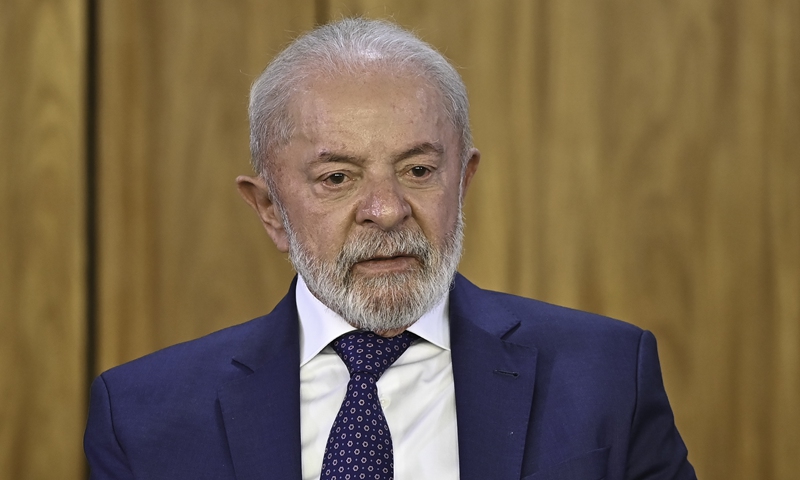
Brazilian President Lula da Silva announces the Provisional Measure ''Sovereign Brazil'' at a ceremony at the Planalto Palace on August 13, 2025, in Brazil. Photo: CFP
Brazil's federal government has issued an interministerial decree authorizing public agencies to purchase food products from domestic companies and producers affected by new US tariffs without going through the usual bidding process. The measure was published in the government's official gazette on Friday.
The order is part of the Brazil Soberano program, launched by President Luiz Inácio Lula da Silva, and aims to create an outlet for goods that lost access to the American market under the so-called "tarifaço," or tariff hike. The decree sets eligibility and documentation criteria but leaves responsibility for fraud prevention and oversight to the contracting agency.
Under the rules, companies must prove they halted exports because of the tariffs and provide export records through Siscomex, Brazil's foreign trade system, dating back to January 2023. Suppliers to exporters may qualify through self-declarations of loss. Purchases must comply with the Brazil Soberano provisional measure and Brazil's public procurement law.
Eligible goods include açaí, coconut water, cashew nuts, Brazil nuts, mangoes, honey, fresh grapes, and fish such as croaker, snapper, and tilapia. The order specifies that purchases outside the normal procurement process will be "the sole responsibility of the contracting public entity," whether federal, state, or municipal.
Agriculture Minister Carlos Fávaro said the decree creates "an immediate route to absorb production" displaced by trade barriers. "This decree sets the rules for purchasing products from agriculture and family farming that were hit by US tariffs," he said. "Several products can now be marketed with federal, state, and local governments, minimizing the impact of the tarifaço."
Beyond procurement, the Brazil Soberano plan includes about 30 billion reais (roughly $5.5 billion) from Brazil's Export Guarantee Fund to expand credit lines at favorable rates, extend tax suspensions, increase reimbursements under the Reintegra export incentive program, and facilitate public-sector food purchases. The government says the framework is designed to cushion production chains, preserve jobs, and prevent income losses in export-dependent regions.
By tying the waiver of bidding requirements to Siscomex documentation and eligibility criteria, officials say the decree seeks to balance speed with accountability. Still, oversight and responsibility for potential irregularities remain with the contracting entities, reinforcing the need for internal administrative and compliance controls.
(Reported by Brasil 247 on August 23, 2025)
