ARTS / BOOKS
Octogenarian Nanjing writer’s narrative of nation’s resistance against aggression
Spark in the darkness
By Published: Aug 26, 2025 10:47 PM
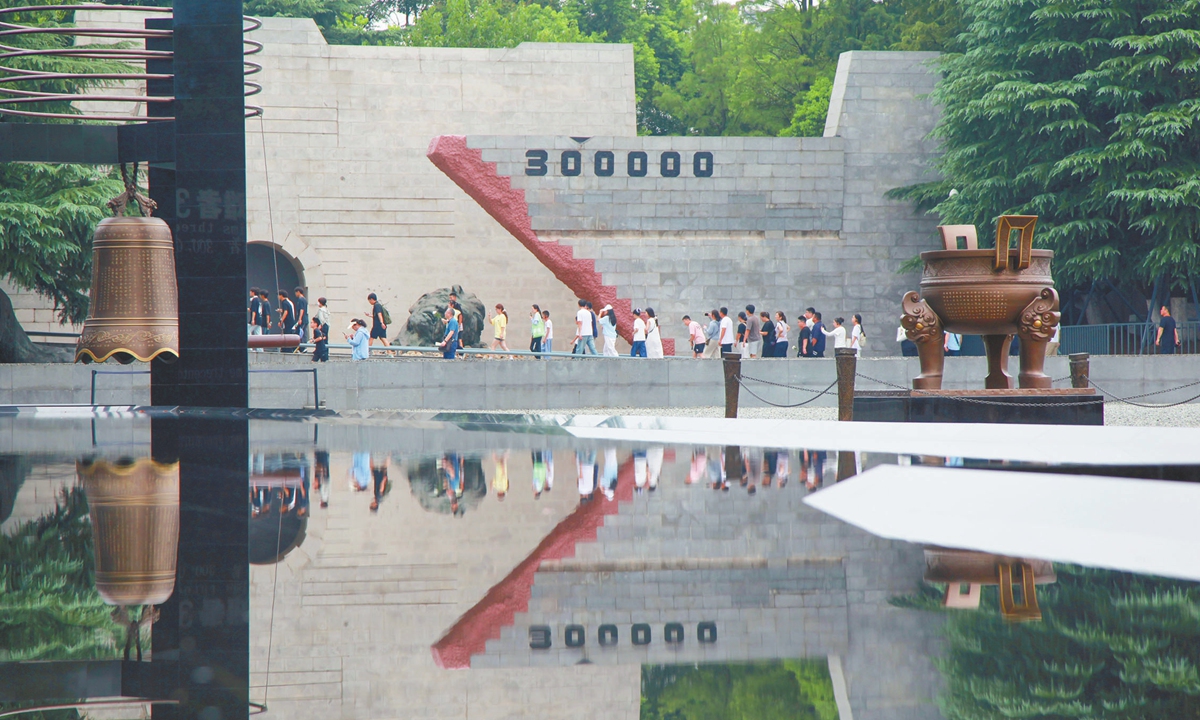
A scene of the Memorial Hall of the Victims of the Nanjing Massacre by Japanese Invaders in Nanjing, Jiangsu Province Photo: VCG
The 370,000-character novel Bu Tian Lie (lit: Mending the Heavens' Rift) was entirely handwritten. At the age of 86, Pang Ruiyin wrote over 2,000 characters a day, slowly and meticulously crafting a sweeping epic about Nanjing's collective resistance during the Chinese People's War of Resistance Against Japanese Aggression. The novel is the fulfillment of a lifelong wish: To answer what constitutes the "soul of Nanjing," and, in those years of darkness, what ignited the city's enduring spark.As a native of Nanjing, Pang found memories flooding back with every stroke of his pen. The people he had seen, the stories he had heard, and the sacrifices of those around him became the living prototypes for the characters on his pages: the guerrilla fighters laid side by side at the village's eastern edge, his eldest brother joining the ranks of civilian resistance, the neighbor who captured a Japanese soldier, and the ordinary citizens who held their ground in Nanjing's old Menxi district. Each of these real lives, marked by struggle and hope, found new breath in Pang's narrative.
Through careful research and interviews, Pang discovered that after Nanjing's fall in 1937, not only did the New Fourth Army, rural militias, and underground agents persist in their fight, but many residents also formed grassroots resistance groups, both large and small. While enduring the agony of war, these residents, like some of his own relatives, were not crushed by it; instead, they grew even more determined to pursue peace. They deserve to be remembered.
Writers like Pang, who lived through the war, are determined to record those years and immortalize those indomitable souls through their craft. Their lived experience provides the richest material. As the renowned 103-year-old writer Wang Huo once wrote in the preface to his masterpiece Zhanzheng he Ren (lit: War and Human): "Sometimes, the life of a single person or family can powerfully illuminate an entire era."
A flicker of flame
"Before I was born, mother fled with my 1-year-old elder sister, hunted by the Japanese invaders. My sister was struck by a bullet and killed. This was the tragedy for our family," Pang recalled in an interview with the Global Times.
When he was a little boy, Pang witnessed firsthand the bodies of seven fallen guerrilla fighters lying side by side at the eastern end of his village, covered with sheets, as villagers and weeping elders gathered in mourning. "These are heartbreaking memories, and they are the price we paid for victory."
Yet his recollections are not only of pain, but of resilience. The New Fourth Army established its headquarters at Maoshan Mountains near Nanjing, turning Pang's hometown into a base. His uncle joined the local peasant guerrilla forces, while his eldest brother became part of the civilian resistance, fighting fiercely against the Japanese army. One of Pang's neighbors, Pang Shengjin, was a member of a local short-gun squad. When the Japanese occupied Tangshan town and set up bunkers and sentries, Pang Shengjin and his squad, under the pretense of visiting the hot springs, scouted the area, launched a night raid, and managed to capture a Japanese sentry alive.
"The people of Nanjing in my writing are optimistic, straightforward, and tenacious, qualities nurtured by over 2,000 years of culture. Once awakened, they can withstand any storm," Pang said. "They are the sparks in the darkest of times, the unyielding Chinese in the War of Resistance. Through my work, I want the light of humanity to shine through the blood-soaked night, filling in the missing history of Nanjing's people."
What is the personality of a Nanjinger? What is the soul of Nanjing?
Across his seven previously published novels on Nanjing's modern history, Pang has continually searched for this essence. In his latest work, Bu Tian Lie, he comes closer than ever to finding it.
City of life and death
Bu Tian Lie chronicles the years of Nanjing's occupation, centering on the intertwined destinies and growth of two young protagonists while weaving together the stories of dozens of vividly drawn characters, including entrepreneurs, professors, dancers, villagers, and dockworkers, all of them ordinary people pushed to extraordinary means. In the face of national crisis, they united, forming a tapestry of resistance that reflects the collective will of the city.
Many characters are based closely on the people Pang knew growing up, such as the guerrilla soldier inspired by his cousin Pang Shenghu. For the author, the greatest challenge in writing historical fiction is not the plot but the recreation of the era's world: The sights, the language, the atmosphere of the 1930s and 40s Nanjing. He painstakingly included Nanjing dialect, famous landmarks, neighborhoods, and even beloved local dishes, striving for authenticity.
"To see such a beautiful city's streets trampled by invaders only intensifies the hatred against Japanese militarism and deepens readers' love for our homeland," Pang said.
He Ping, a professor at Nanjing Normal University, observed that Pang Ruiyin has "released the city's cultural temperament beyond its legacy as the six-dynasties capital." While Nanjing is often cast as a city of sorrow, He argued that emphasizing only one facet of the city risks overlooking its other side. "Both facets together make up the answer to 'Why Nanjing?'" he said, according to Yangtze Evening News.
In the persistence of Pang's daily writing, in the painstaking recreation of a vanished era, and in the living stories of ordinary heroes, the spark that once illuminated Nanjing's night continues to burn - lighting the way for those who must never forget.
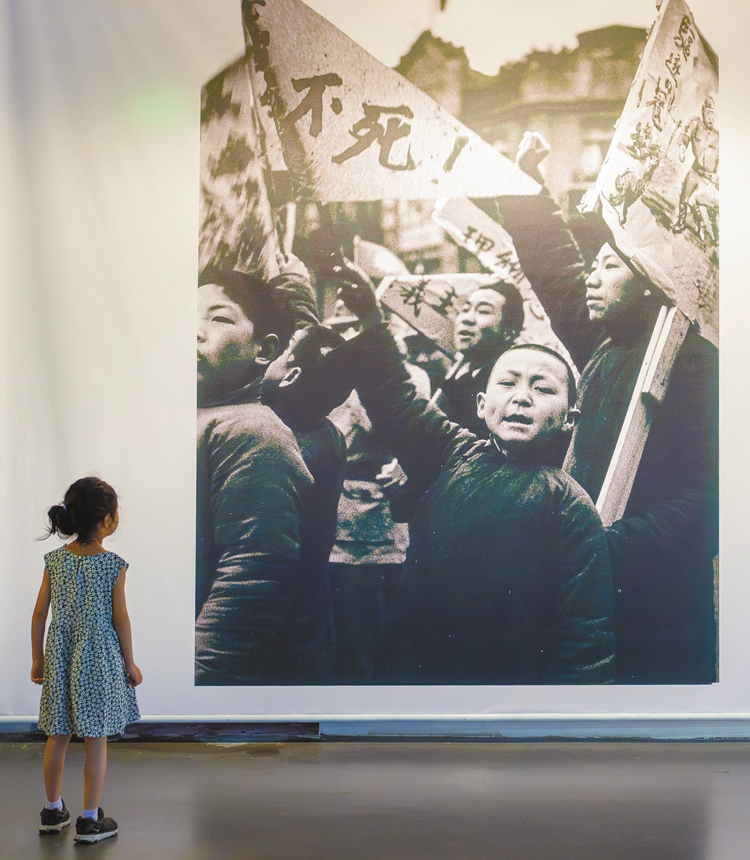
A little girl gazes at a photo at the Memorial Hall of the Victims of the Nanjing Massacre by Japanese Invaders in Nanjing, Jiangsu Province. Photo: VCG
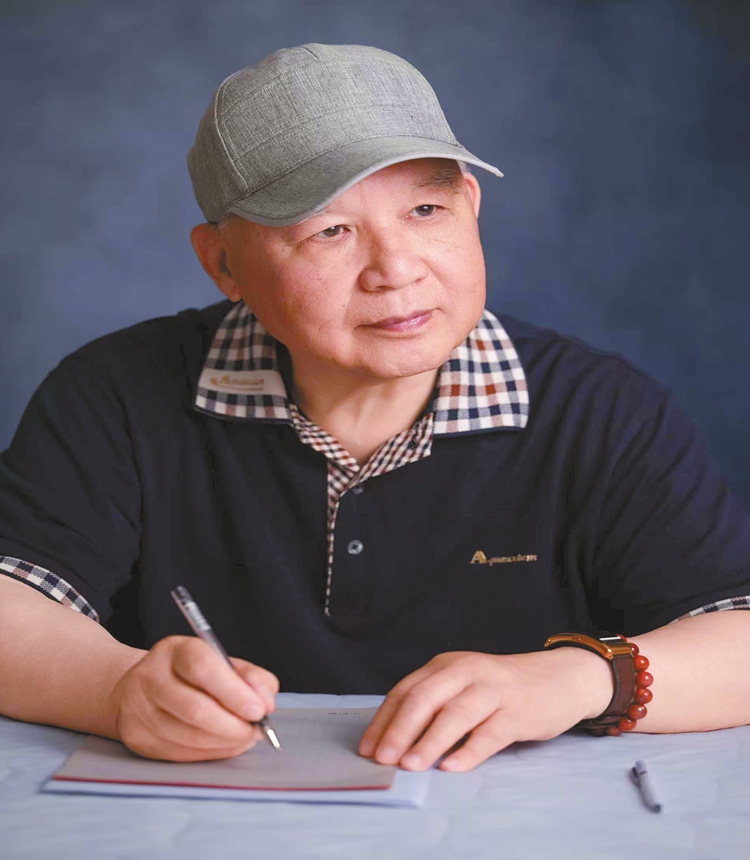
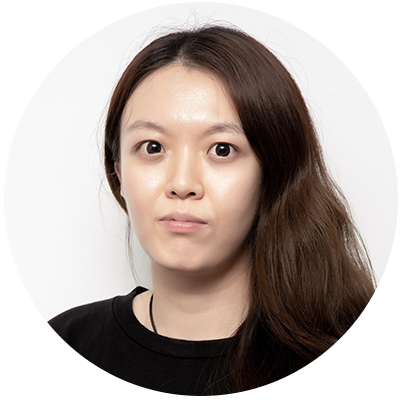
Pang Ruiyin Photo: Courtesy of Pang Ruiyin
RELATED ARTICLES