ARTS / CULTURE & LEISURE
Chinese WWII films reinterpret Eastern Theater history through humanistic storytelling
Universal longing for peace


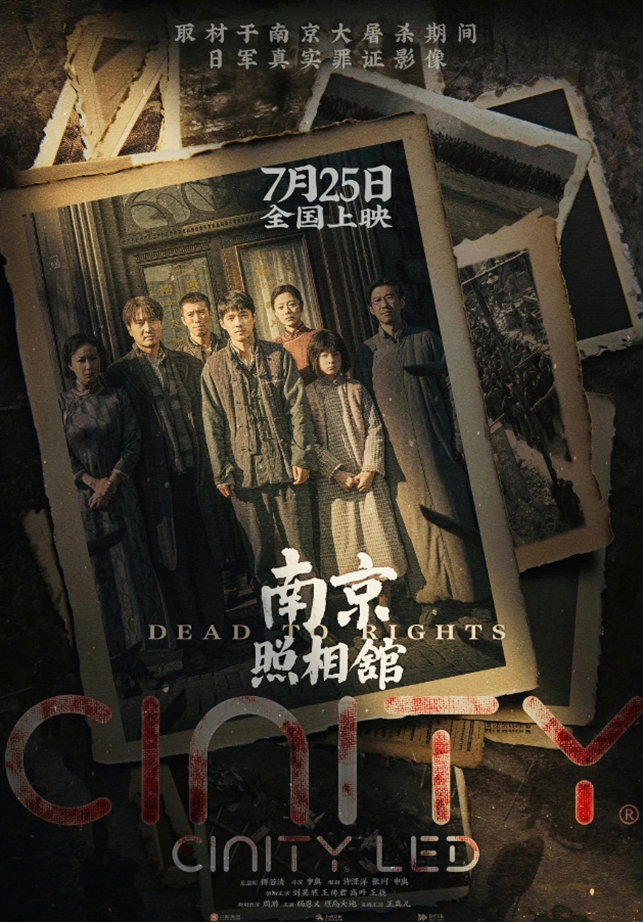
Promotional material for Dead to Rights Photo: Courtesy of Douban
As the world commemorates the 80th anniversary of victory over fascism, a wave of Chinese cinematic works has emerged to challenge long-dominant Western-centric WWII narratives. While Hollywood has long focused on D-Day, Stalingrad or Pearl Harbor, Chinese films like Dead to Rights, Dongji Rescue and the documentary Mountains and Rivers Bearing Witness are digging up memories buried by time from the Eastern Theater through intimate stories of sacrifice, courage and humanity.
Through exclusive interviews with Zhang Ke, screenwriter of Dead to Rights; Kevin Lee, a British actor in Dongji Rescue; and Yu Peng, director of Mountains and Rivers Bearing Witness, the Global Times found these works are not mere historical replicas; instead, they use "humanity" as a bridge, revealing the unique sacrifices, courage and cross-border kindness that defined China's WWII experience. All these narratives converge on universal human emotions: the value of life, the response to kindness, and the eternal longing for peace.
'First shot'
The September 18 Incident in 1931, staged by Japan to justify its invasion of Northeast China, marked the start of 14 years of brutal invasion. For the Chinese people, this was not just the beginning of their resistance against Japanese aggression, but also the first shot fired in the global fight against fascism. This is the core truth that documentary Mountains and Rivers Bearing Witness seeks to amplify.
"Japan was the first hotbed of fascist aggression in the world. Yet, this fact has long been overlooked in international narratives," Yu Peng, the documentary's chief director, told the Global Times.
The documentary paints a stark picture of the early resistance: Outgunned and outmatched, soldiers of the Northeast Anti-Japanese United Army fought Japanese warplanes and artillery with weapons including broadswords, spears and javelins.
"Their bravery was not just a fight for China, it was a fight for global freedom from fascism," Yu emphasized. "That is our duty to tell China's war-narrative from the Eastern Theater's perspective."
Zhang Ke, screenwriter of the Chinese WWII blockbuster Dead to Rights, echoed Yu's concerns about the current state of Western WWII narratives.
Zhang told the Global Times that there has been a deliberate tendency in Western discourse to avoid and downplay the contributions of Chinese soldiers and civilians during WWII.
"Japanese right-wing forces, in particular, have repeatedly undermined the legitimacy of the Eastern Theater in the global anti-fascist war: They even question the authenticity of the Nanjing Massacre, replace the term 'surrender' with 'cessation of war' to obscure Japan's history of aggression toward China, and wantonly distort the nature of the war," Zhang said.
In the face of such historical revisionism, Zhang emphasized that his creative team aims to amplify China's voice through films - the "most popular and accessible artistic medium that can reach the broadest audience."
"In China, we have always unequivocally declared that this victory was one against aggression, fascism and militarism," he said.
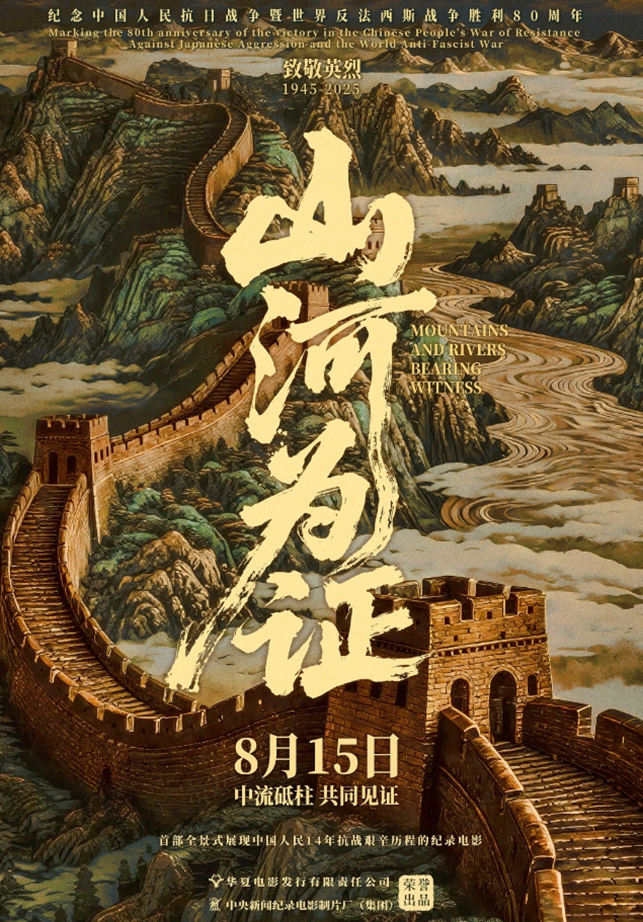
Promotional material for Mountains and Rivers Bearing Witness Photo: Courtesy of Douban
Small figures, grand historyDead to Rights, which has achieved both critical and commercial success in China and is now screening in North America, Australia, Malaysia and other countries, uses a photo studio as a microcosm of the Nanjing Massacre.
Zhang told the Global Times that he has closely tracked audience's feedback on social media platforms.
"Many said they'd never heard of the Nanjing Massacre before. Their shock was palpable and that's exactly why this film matters: It fills a gap in global historical knowledge," Zhang said.
For Zhang, the film's success lies in its "small but powerful" narrative approach, which is to use ordinary figures to reflect grand history.
The film's characters, which are ordinary people like a postman, an actress and a police officer, are fictional but rooted in reality. "They represent the collective spirit of Nanjing's people, from surviving to resisting, from fear to courage," Zhang said.
Many Chinese moviegoers commented that the success of the film also lies in its portrayal of nuanced evil Japanese characters, provoking people's thoughts on the significance of the inherent goodness of human beings.
Zhang told the Global Times that the Japanese characters drew heavily from Iris Chang's The Rape of Nanking: The Forgotten Holocaust of World War II.
A diary entry by a Japanese military photographer in the book left a profound mark: The photographer described the Yangtze River, dyed red with Chinese people's blood upon his arrival in Nanjing, as "breathtakingly beautiful" and regretted lacking color film to capture it.
Shocked by this disregard for human life, the team adapted the entry almost verbatim into the film. He added that as netizens pointed out many scenes and visuals in the movie align with real Nanjing Massacre records.
Even the film's villain, Ito (a Japanese military photographer), is a nuanced critique of fascism.
"His initial discomfort with violence doesn't stem from compassion, but from aristocratic arrogance," Zhang explained, adding that the character is a metaphor for how fascism uses "civilized" pretenses to justify barbarity, and a sharp critique of militarism's hypocrisy and cruelty.
For Zhang, the film's international comparisons to Schindler's List are a source of cultural confidence, adding that the overseas release of such films will take on greater significance around September 3, the victory day of the Chinese People's War of Resistance Against Japanese Aggression (1931-45).
"It is more than just the screening of a movie; it is a reaffirmation of historical truth," he added.
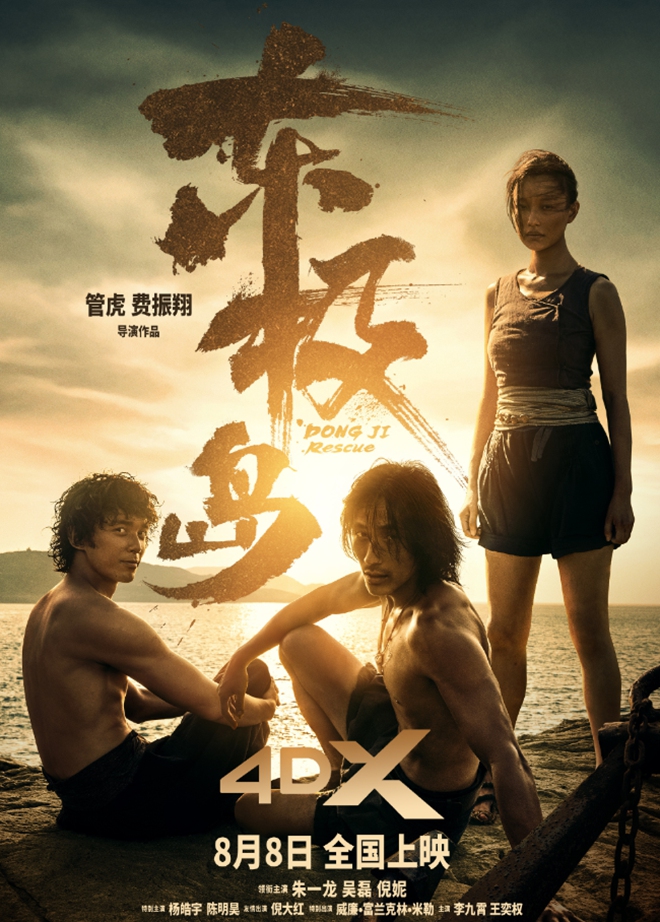
Promotional material for Dongji Rescue Photo: Courtesy of Douban
Cross-border kindnessSimilar to Dead to Rights, another Chinese blockbuster, Dongji Rescue which has also been released overseas in the UK, North America and other regions, brings to light another little-known piece of history.
Based on the true story of the 1942 sinking of the Japanese ship Lisbon Maru, a Japanese transport ship carrying British prisoners of war (POWs), Dongji Rescue tells how Chinese fishermen from Dongji Island risked their lives to rescue hundreds of POWs when the ship was torpedoed.
British actor Kevin Lee, who played the rescued Lt. Col. Stuart, admitted that he knew almost nothing about the incident beforehand.
"I was disappointed by how little I knew, but I'm so glad this film taught me about it. Most of my British friends and even foreign stuntmen on set had never heard of it either."
The weight of the role encouraged Lee to work harder than ever and give it his all. "Portraying a character linked to a hidden history felt like a responsibility," Lee told the Global Times.
Although he praised the film's overall quality, Lee expressed regret that some powerful scenes were cut, including a moving interaction with a local Chinese boy.
"He offered me his last piece of food. That moment highlighted a universal kindness beyond language and culture," Lee recalled.
Having lived in China for 16 years, Lee was aware of WWII history in Asia, but the film deepened his understanding. Watching the documentary The Sinking of the Lisbon Maru was particularly emotional.
"I didn't feel angry that it was Japanese soldiers killing British POW, but what made me deeply sad was that these were innocent people. How could the Japanese army torture people, leave them trapped in the hold of the ship, left to die?"
Lee also criticized Western media's biased portrayal of China. "People say 'China' as if it's another planet. But I've seen its kindness. This film is my thank you to China and a plea for peace."
He hopes global audiences will see Dongji Rescue and discover this hidden history. "Movies entertain, but word of mouth can lead people to learn the truth. This story proves that kindness is universal."
RELATED ARTICLES