ARTS / CULTURE & LEISURE
Explore Xuzhou’s ancient heritage from streets to pagodas
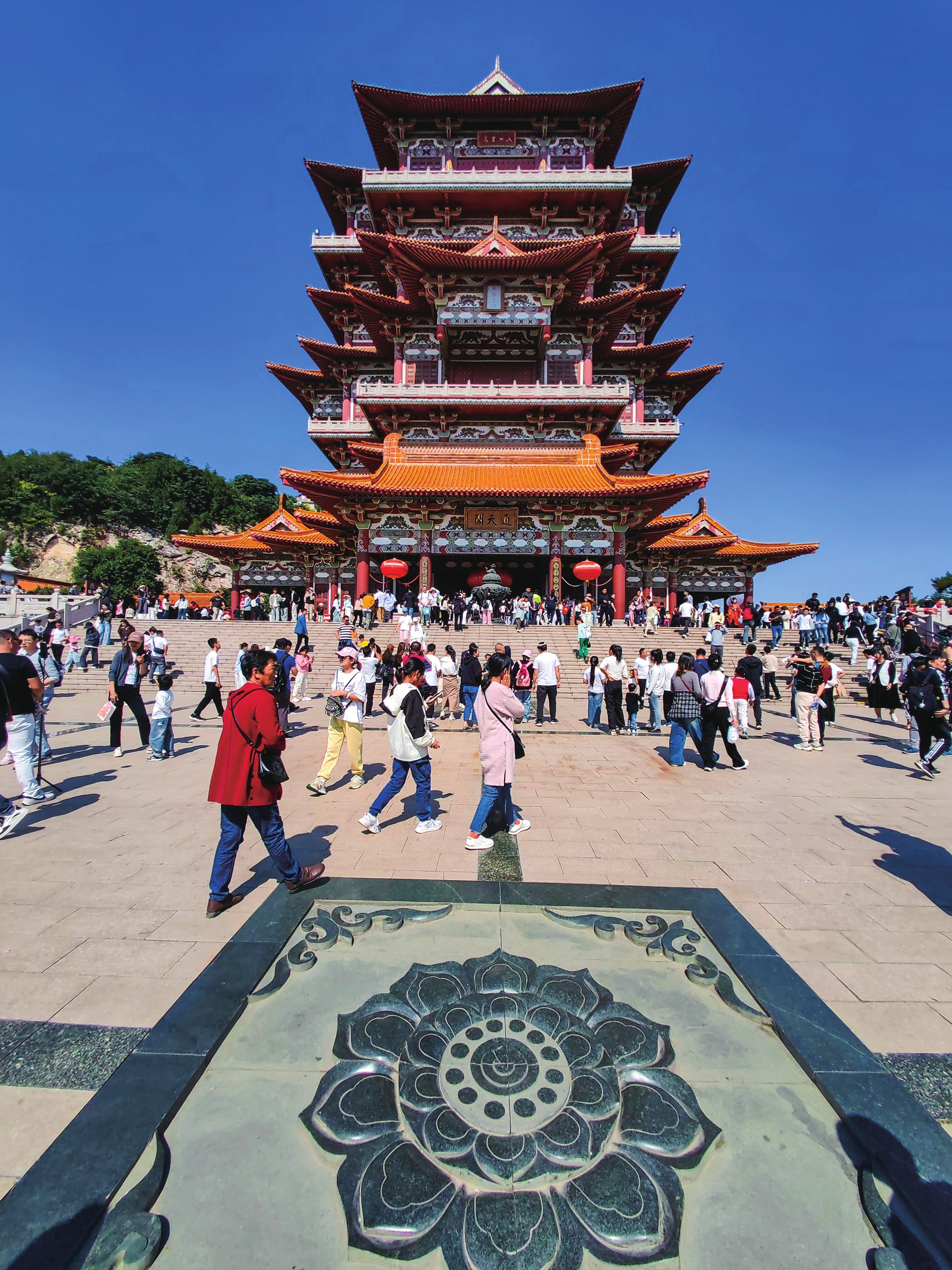
The Baolian Temple in Xuzhou, East China's Jiangsu Province Photo: VCG
In early autumn, Xuzhou, a historic city in East China's Jiangsu Province, is seeing an increasing number of weekend visitors. Huilongwo Historic Street buzzes with activity: Stone-paved lanes glimmer under the lights, steam rises from street pots, and the scents of flat breads and coffee fill the air. The street blends the city's everyday bustle with a calm, unhurried rhythm.Twenty-two-year-old university student Sun Qi tried on traditional Han costumes at Huilongwo. She told the Global Times that while the area is hot during the day, visiting at night truly reveals the charm of the old street.
"Between the gray-brick alleys, the lantern-lit teahouses, and people walking around in Hanfu, it feels like stepping back several centuries," she said.
"Nights used to be quiet, but in the past two years, nighttime tourism has grown. Coupled with the sports events frequently held in Xuzhou this year, a lot of young people have been coming to the city.
On weekends, teahouses and guesthouses often have to be booked a week in advance," stall owner Li, who has been selling local handicrafts here for seven or eight years, shared with the Global Times.
Under the glow of streetlights, Xuzhou's "slow pace" comes alive again. The lively street scenes blend with the new forms of entertainment embraced by young people, making it feel less like a tourist site and more like a living slice of history.
Ascending vista
Stepping from the lively streets of Huilongwo into Baolian Temple feels like entering another time and space.
Nearly sixty meters tall, the Tongtian Pagoda, the tallest Buddhist pagoda in China, seems to reach for the sky itself.
Inside, incense curls in the air, and low chants echo through the halls.
The 39.88-meter-high gilded Maitreya Buddha gazes down with a serene expression, the golden light making it appear as though the figure is gently meeting the eyes of every visitor.
"Tongtian Pavilion is more than just a Buddhist site; for many people in Xuzhou, it is a spiritual anchor," temple staff member Wang Youping told the Global Times.
"Families often climb the pavilion together during the Spring Festival or Buddha's birthday to offer prayers. Even on ordinary days, people make time to come here and find a moment of calm."
"Life today moves so fast; everyone is constantly rushing. But when you look up at Maitreya Buddha, your mind naturally settles. That sense of peace is itself a form of strength," he added.
Walking up the wooden steps, each footfall lightly echoing, the mountain wind grows clearer, and the scent of incense gradually fades, replaced by fresh air brushing against the skin.
Atop the pavilion, the temple and surrounding pines unfold in layered patterns, while the distant outline of the ancient city emerges faintly.
"From this height, the world feels wider, and the mind opens with it," Wang said.
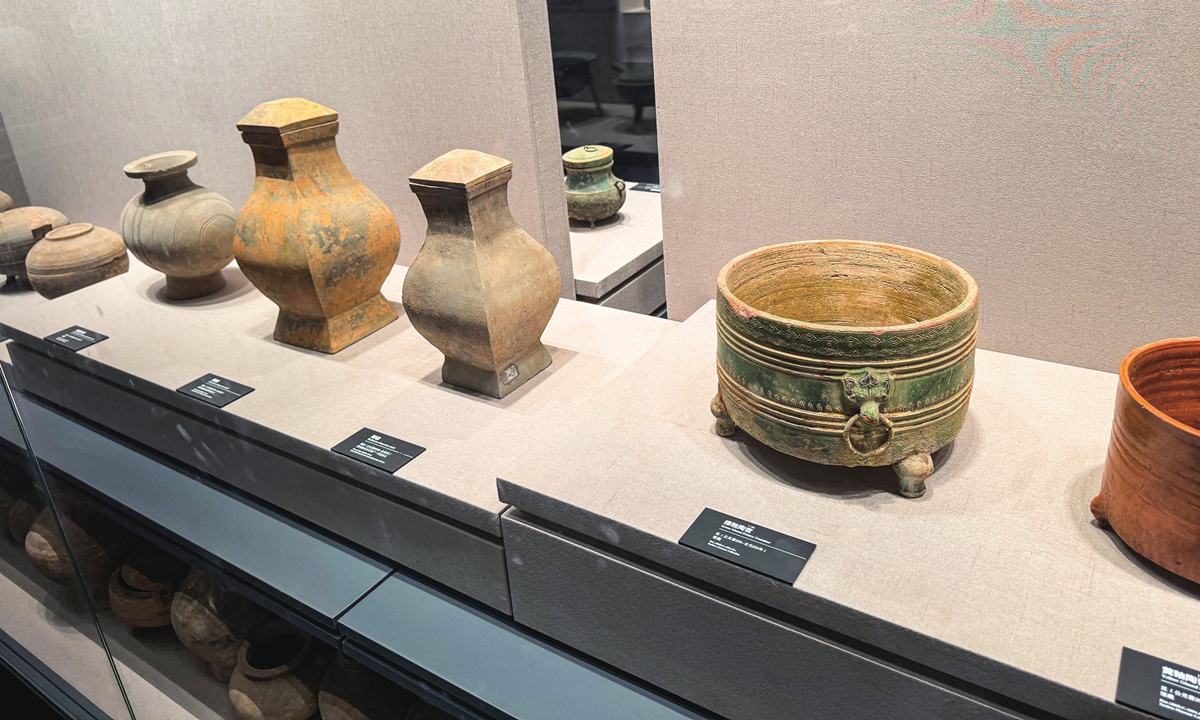
Ceramic artifacts displayed at a museum in Xuzhou Photo: Jiang Li/GT
Ancient echoesIf Huilongwo showcases the everyday life of Xuzhou, and Tongtian Pavilion conveys a sense of spiritual refuge, then the Guishan Han Tomb transports visitors more than two millennia into the past.
From August 2 to 3, the Guishan Scenic Area welcomed 35,700 visitors, including nearly 1,660 from Yangzhou who were admitted free of charge.
Precious cultural relics drew the attention of visitors, many of whom paused to admire the artifacts, according to the Xuzhou Municipal Bureau of Culture and Tourism.
Lush greenery blankets the western slopes of Guishan, concealing the joint tomb of Liu Zhu, the sixth king of Chu during the Western Han Dynasty (206BC-AD25), and his queen.
In 1981, workers unexpectedly discovered this "underground palace" while quarrying stone, opening a new chapter in Xuzhou's Han cultural heritage.
The Guishan Han Tomb was carved beginning in 127 BC and took 13 years to complete. The entire complex consists of two main burial passages, two side corridors, and 15 chambers, interconnected by sealed doorways. The maximum deviation in construction is only five millimeters, which is truly remarkable for the ancient world, according to media reports.
Ms Xu, a guide at the Guishan Han Tomb, told the Global Times that the narrow channel at the base of the tomb is part of its ancient drainage system.
"Even today, it still functions effectively, keeping the tomb chambers dry. The ingenuity of ancient craftsmen is truly astonishing," she said.
Visitors followed the guide through the tomb chambers. Under the soft lighting, stone doors were staggered and corridors twisted, giving the impression of stepping into the daily life of a Han Dynasty royal household.
"Traces of tile-and-wood structures were also found inside the chambers, replicating the design of a royal residence. In a way, this tomb is not just a burial site; it is the complete underground home of the Chu king and his queen," she said.
Xuzhou's history and daily life intertwine, with the vibrant energy of the streets, the quiet contemplation of the pavilion, and the enduring presence of Han Dynasty civilization within the tomb together creating a uniquely resonant atmosphere.
RELATED ARTICLES