ARTS / CULTURE & LEISURE
Exhibition in Xizang shows bond with central govt
Palace Museum relics exhibited first time in region
By Sun Langchen and Published: Aug 28, 2025 10:51 PM

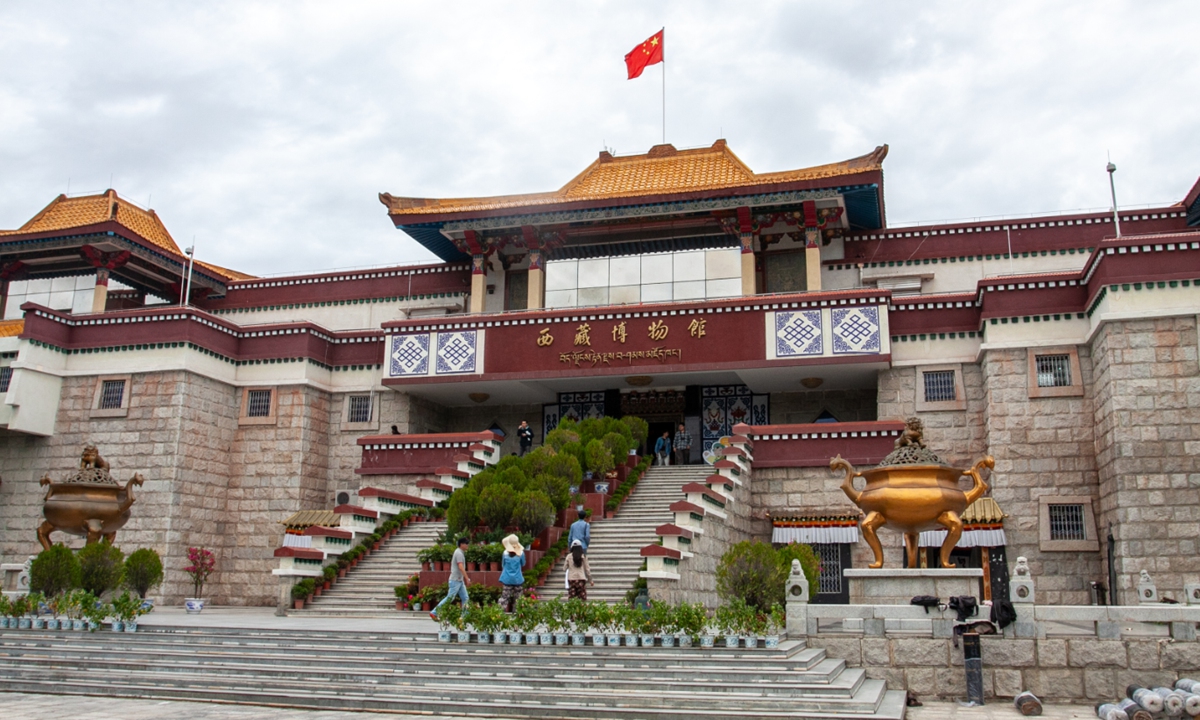
Tibet Museum Photo: VCG
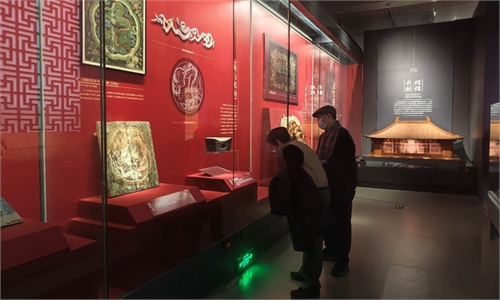
Marking the 60th founding anniversary of the Xizang Autonomous Region, a joint exhibition organized by the Palace Museum and the autonomous region opened on Thursday at the Tibet Museum in Lhasa. The exhibition brings together 114 cultural relics from the Palace Museum and institutions across Xizang, presenting the centuries-long exchanges and integration between the region and the Chinese heartland.The exhibition is curated around the theme of "flowers," symbolizing the historical process of interaction, flourishing mutual appreciation, and fruitful unity.
By pairing relics that once traveled between Beijing and Lhasa as tribute and imperial gifts, the show reflects the intertwined destinies of the central government and the Xizang region, the organizers noted, highlighting that it represents not only a reunion of artifacts long separated by geography but also a testament to enduring cultural bonds.
This also marks the first time that relics from the Palace Museum in Beijing have been exhibited in Xizang.
A total of 53 items were carefully selected, including those that were once tributes from Xizang to the Ming and Qing Dynasty (1368-1911) courts and later treasured within the Forbidden City. The Tibet Museum, together with the Potala Palace and Norbulingka, contributed 61 additional items, many of which are being displayed publicly for the first time.
Among the cultural relics exhibited is a sandalwood statue of Avalokitesvara, presented as a tribute by the 7th Dalai Lama to the Qing court in 1752. Modeled after a revered image in the Potala Palace, the statue was later enshrined in the Forbidden City with a specially crafted silk robe and base commissioned by the Qianlong Emperor of the Qing Dynasty (1644-1911).
"Featuring relics including porcelains, jade, ivory works, and thangka paintings, the exhibition tells the story of the long-term exchanges and integration between Xizang and other parts of China, and reinforces the importance of cultural institutions in building a strong sense of the Chinese national community," Cheng Zhonghong, an associate research fellow at the Tibet Museum, told the Global Times.
She noted a highlight of the exhibition is the symbolic reunion of two parts of the historic artwork Domain of the Sala Trees.
The piece, inscribed with verses in Putonghua, Tibetan, Manchu, and Mongolian and bearing the seals of the Qianlong Emperor, witnesses the deep historical ties between Xizang and the central government. It was engraved on a stele in 1780 to commemorate the 6th Panchen Lama, who passed away while visiting Beijing. For the first time, the original painting preserved in the Tibet Museum and a rubbing from the Palace Museum made from the stele are displayed together.
Furthermore, a standout feature of the exhibition is its innovative curation, which pairs artifacts from the Palace Museum and collections in Xizang to illustrate the fusion of Han and Tibetan artistic styles.
The exhibition also demonstrates how years of academic research has been transformed into public cultural experience. Lin Huan, one of the curators as well as a researcher from the Palace Museum, said in an interview on Thursday that the project took more than five years of preparation, following nearly a decade of preliminary study, the Global Times confirmed.
"We carried out at least 10 years of academic research before sorting through and selecting the exhibited cultural relics. True history does not need to be embellished. The stories carried by these relics are already striking enough," Lin said, adding that the exhibition represents an effort to convert research outcomes into accessible cultural education.
The partnership behind the show is rooted in the broader framework of cooperation between the Palace Museum and the Xizang Autonomous Region government. In 2015, the two sides signed a comprehensive agreement covering museum construction, relic research, exhibitions, conservation, and talent training.
It’s also worth noting that this is not the first time the exhibition has been held. Back in May 2023, it was first staged at the Palace Museum.
“This exhibition is a pilot effort, and similar themed exhibitions will be held across the country in the future. Cultural and museum institutions nationwide will also draw on historical records and their collections to extract important information for such practices,” Lin said.
RELATED ARTICLES