SOURCE / PRESS RELEASE
5G-A technology provides strong support for China's football sensation Suchao
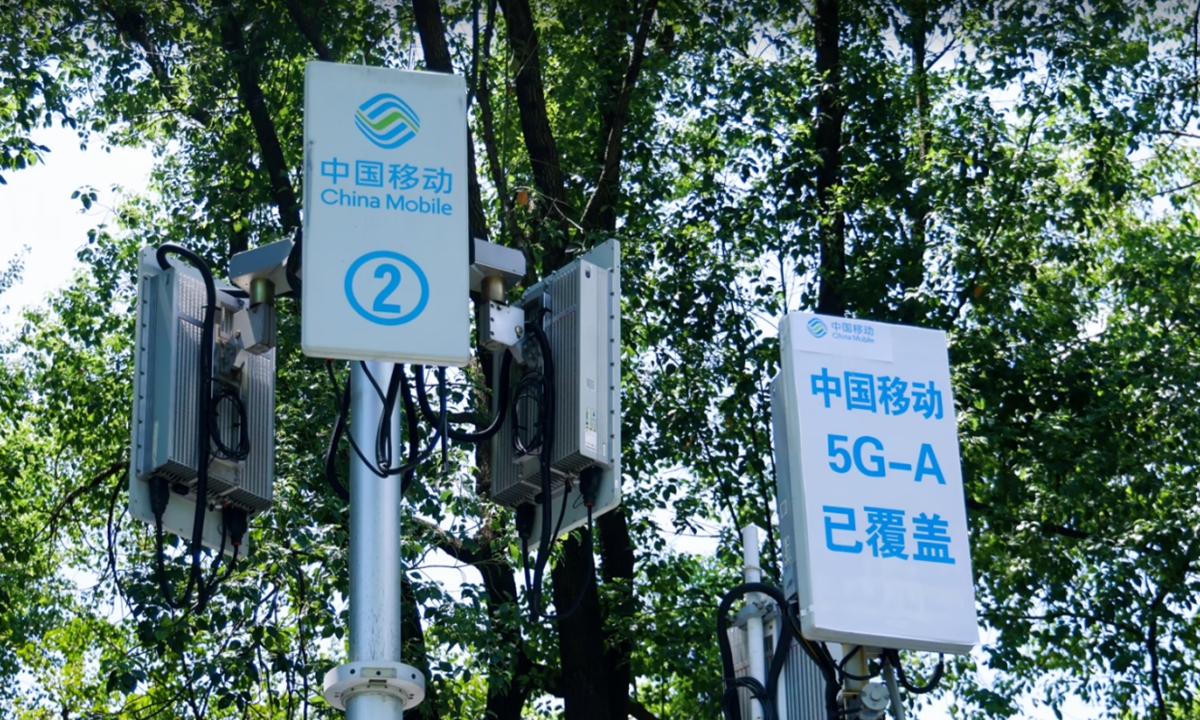
A highly anticipated Jiangsu City Football League (also known as Suchao) match between Nanjing and Yancheng on August 17th in Nanjing, East China's Jiangsu Province, set a new record in attendance at 60,633, according to official data. As the amateur regional football league gaining increasing popularity, there is also a surging demand for real-time sharing of match updates, interactive participation, and instant access to information. With 5G-A technology deployed by China Mobile Jiangsu Co, "real-time video sharing" and "buffer-free live streaming" have been effectively achieved, and the strong demand for high uplink network capability is no longer a challenge.
To ensure network quality during Suchao, China Mobile Jiangsu deployed a comprehensive network assurance plan at the Nanjing Olympic Sports Center, utilizing multiple innovative technologies and precise strategies to deliver premium network services, the company told the Global Times. As the technical partner of the event, China Mobile Jiangsu provided full venue support with its cutting-edge 5G-A technology. Within 48 hours before the match, the team completed base station expansion and AI-powered scheduling, striving to create a 5G-A "super home stadium" experience for Suchao.
Prior to matches, based on big data analysis, the company conducted precise network capacity forecast. By maximizing spectrum efficiency, it built ultra-dense network to fully meet network demands during the event. Additionally, new technologies such as 5G-A 3CC carrier aggregation and AI-enabled intelligent single boards were comprehensively applied, 5G-A users recorded peak download speeds of up to 2 Gbps on site at the competition venue, providing users with higher speeds and lower latency for an enhanced experience, according to the company.
In addition, during the matches, AI-driven scheduling algorithms were activated to monitor network operations in real time and dynamically adjust resource allocation. This ensured stable connectivity for over 60,000 fans simultaneously online. Whether for live-streaming, high-definition video transmission, or social interactions, the network remained smooth, meeting diverse user needs effectively, the company said.
Jiangsu has built the nation's leading 5G-A network, deploying 37,000 5G-A base stations, with comprehensive commercialization of networks, packages, and applications. During this year's Suchao, 5G-A coverage spanned 26 stadiums across the province, key commercial districts, high-speed rail, and metro hubs, sustaining fan enthusiasm throughout the events. According to data, download speed on Nanjing Metro Line 5 covered by 5G-A can reach 2.48 Gbps, and upload speed can reach 200 Mbps. Whether it is video conferencing, mobile gaming, HD video, or real-time live-streaming, everything is at the ultra-fast speed of 5G-A.
In China, 5G-A networks now cover over 330 cities, with more than 30 provincial-level regions launching 5G-A primary packages, and the number of 5G-A users has exceeded 20 million, Chen Shi, vice president of Wireless Marketing at Huawei, told the Global Times.
The 5G-A network surpasses the current 5G network in terms of speed, latency, and connection scale. Chinese provinces and cities such as Jiangsu, Beijing and Shanghai have made achievements in pioneering the application of the technology.
Having seen commercialization for a year, the global 5G-A industry is posting accelerated development across terminals, networks and the number of users, Chen said. Telecommunications carriers in the Middle East, Europe, and Asia-Pacific are actively advancing 5G-A network deployment and business expansion, he said, noting that the global number of commercially deployed 5G-A networks is expected to reach 50, or five-fold that of last year, while the number of 5G-A users expected to exceed 100 million.
With the rapid rise of AI and the large-scale commercialization of 5G-A, the era of mobile AI has arrived. Currently, 70 percent of new smart terminals support AI capabilities, and 80 percent of the top 100 mobile apps have integrated AI functions. Through the deep integration of 5G-A and AI, significant driving forces will emerge across smart living, smart Internet of Things, and smart manufacturing sectors, Chen said.
