BRASIL 247 / MORE
State Grid-owned CPFL reaches 100% renewable energy matrix in Brazil
CPFL Energia anticipates its ESG 2030 goal and strengthens role in Brazil’s clean energy transition
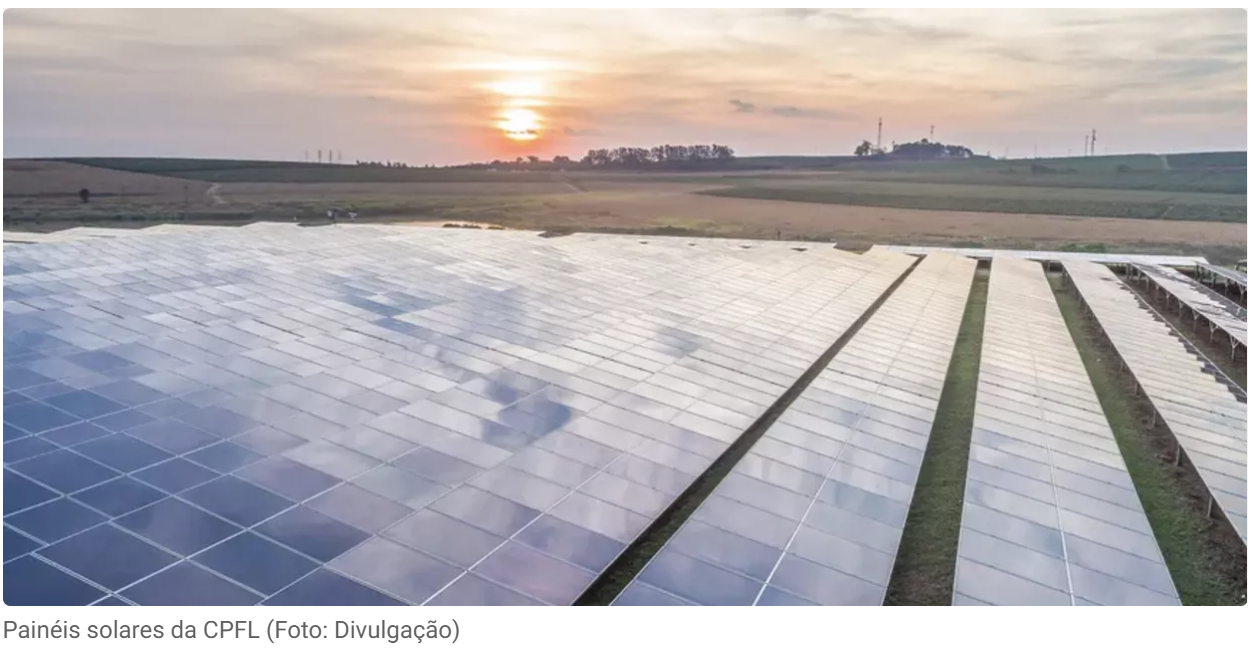
Photo: screengrab from the official website of Brasil 247
By Brasil 247 - CPFL Energia, controlled by China's State Grid, announced that its power generation portfolio is now 100% renewable, marking a milestone in the Brazilian energy sector and underscoring the company's leadership in the clean energy transition. The announcement was made in an official company statement.
The milestone was achieved with the permanent shutdown of the EPASA thermal power plant in Paraíba, which had accounted for 4% of the company's generation. This move eliminates fossil-fuel assets entirely from CPFL's portfolio. "By reaching 100% renewable generation five years ahead of schedule, we reaffirm the seriousness of our ESG 2030 commitments and demonstrate our ability to advance beyond what was initially planned," said Gustavo Estrella, CEO of CPFL Energia.
Portfolio and investments
CPFL Energia's generation matrix is now composed exclusively of hydropower, wind, biomass thermal and solar photovoltaic plants, with a total installed capacity of 4,044 MW. Of this, 60% comes from hydropower, 35% from wind, and 5% from biomass and solar projects.
The company is also advancing a pipeline of more than 4.4 GW of new renewable projects, ensuring that its future growth remains fully aligned with sustainability goals. Earlier this year, CPFL inaugurated the Cherobim small hydro plant in Paraná, which added clean energy capacity to Brazil's national grid.
In 2024, CPFL had already reduced greenhouse gas emissions by 59% compared to its 2021 baseline, and it remains on track to achieve carbon neutrality starting in 2025.
ESG agenda and global recognition
CPFL Energia's climate strategy has been endorsed by the Science Based Targets initiative (SBTi), which scientifically validated the company's emissions-reduction targets. This ensures CPFL's commitments are aligned with the Paris Agreement and global efforts to limit global warming to 1.5°C.
On the social front, the company runs the CPFL in Hospitals program, which has supported more than 600 public and philanthropic institutions across 300 municipalities, with investments totaling R$ 300 million (about $60 million). The initiative is estimated to save R$ 33 million annually in energy costs, reduce more than 7,000 tons of CO₂, and benefit over 16 million patients a year. A newly announced Phase 3 will add another R$ 120 million ($24 million) to the program.
In governance, CPFL adheres to leading international standards, including TCFD, CDP and the UN Global Compact, reinforcing its transparency and credibility.
Brazil-China connection
CPFL's sustainability strategy is closely tied to that of its parent company, State Grid, which has spearheaded a series of socio-environmental projects in Brazil. One flagship initiative is a desalination project in Rio Grande do Norte, which provides drinking water for roughly 3,000 people in João Câmara using cutting-edge Chinese technology.
In southern Brazil, CPFL has also invested nearly R$ 18 million in socio-environmental programs that benefit 2,800 families in 140 municipalities and restore more than 5,000 hectares of the Pampa and Atlantic Forest biomes.
Outlook and COP 30
The company's shift to 100% renewable energy comes at a symbolic moment, as Brazil prepares to host the COP 30 climate summit. For CEO Gustavo Estrella, the achievement highlights both corporate responsibility and the need for collective action. "The energy transition is not just an individual responsibility but a collective effort that requires cooperation between companies, governments and civil society. Public policies and strong infrastructure investments are essential to accelerate decarbonization," he said.
In 2024, CPFL invested R$ 5.8 billion in its operations and plans to invest R$ 29.8 billion through 2029, prioritizing infrastructure, digitalization and climate resilience, and further consolidating its leadership role in Brazil's clean energy transition.
(Reported by Brasil 247 on August 28, 2025)
