ARTS / CULTURE & LEISURE
Newly unearthed smelting furnace reveals well-preserved ancient ironworks
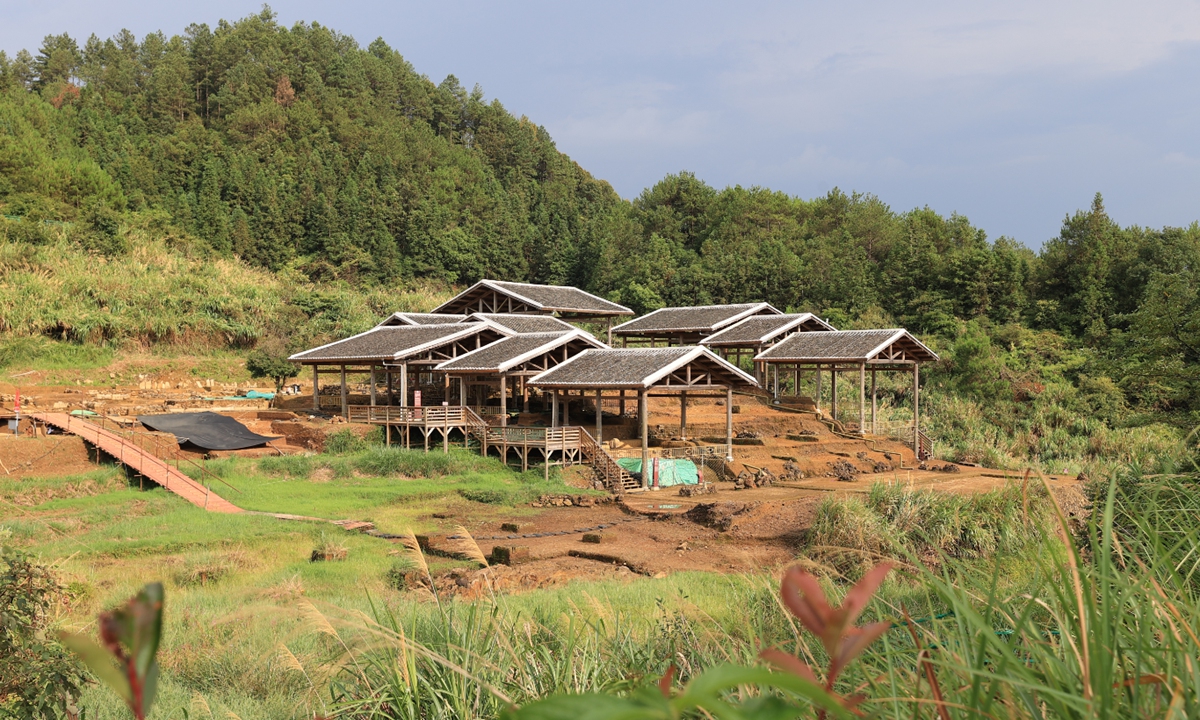
The Xiacaopu iron production site in Qingyang village, Anxi, East China's Fujian Province Photo: VCG
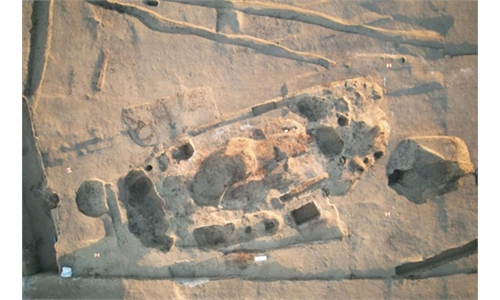
At the Xiacaopu iron production site in Qingyang village, Anxi, East China's Fujian Province, a well-preserved smelting furnace workshop, along with several furnaces and tuyere pits have been uncovered, the Anxi Museum told the Global Times on Monday. These finds provide crucial physical evidence for studying the iron-smelting technology and production organization of Quanzhou, dating from the Song Dynasty (960-1279) to the Yuan Dynasty (1279-1368).The excavation covers an area of 400 square meters, with 16 trenches planned, and will continue through the end of September. Several trenches have already been completed, leading to the identification of a new smelting zone, according to the Fujian Daily.
Li Jiasheng, a postdoctoral researcher at the School of Archaeology and Museology, Peking University, and head of the excavation, told media that this intact combination of furnaces provides new insights into both the site's smelting technology and the organization of its workers.
According to Li, compared with previous excavation phases, the newly uncovered smelting area features furnaces, hearths, tuyere channels, and flues in good condition. This not only offers excellent samples for reconstructing individual furnaces but also lays the groundwork for estimating the scale of Quanzhou's iron-centered trade during the Song-Yuan period.
Since 2019, under the coordination of the National Cultural Heritage Administration, six phases of archaeological excavation have been carried out at the Xiacaopu iron-smelting site in Qingyang. To date, archaeologists have uncovered 10 furnaces and four house foundations, with the excavated area reaching 5,000 square meters, making it the best-preserved and largest site among the iron-smelting remains in Qingyang from the Song and Yuan dynasties, according to Quanzhou News.
Located deep in the northwestern mountains of Quanzhou, the Xiacaopu site is endowed with rich mineral resources, abundant timber for fuel, nearby water sources, and convenient transport conditions, making it ideal for iron-smelting. In the early Northern Song Dynasty (960-1127), the government established a dedicated ironworks in Qingyang, known in historical records as the "Qingyang Ironworks," according to the Fujian Daily.
During the Song and Yuan dynasties, as Quanzhou Port flourished, ironware became one of the key commodities in maritime Silk Road trade. The Daoyi Zhilüe records more than 200 overseas destinations for Quanzhou's seafaring merchants, with iron products traded to 48 of them. Leveraging its natural advantages, Anxi emerged as one of the most important iron-producing centers in Quanzhou and southern Fujian at the time.
Zhang Yin, an archaeologist with the Society for East Asian Archaeology, told the Global Times on Monday that the Xiacaopu discoveries are not only crucial for understanding Quanzhou's role in the Song-Yuan economy but also for placing China's metallurgical development within a broader global context. "The evidence shows that southern China had already mastered a highly diversified iron-smelting system by the Song-Yuan period," Zhang said.
"The evidence shows that southern China had already mastered a highly diversified iron-smelting system by the Song-Yuan period, including both bloomery and pig-iron techniques," Zhang said. "This complexity is rarely seen in other regions of the same era and demonstrates China's leading position in metallurgical innovation."
According to Zhang, after the decline of maritime trade following the Song-Yuan period, Quanzhou's iron-smelting industry gradually waned. However, iron-related craftsmanship did not disappear but continued to be passed down through generations.
RELATED ARTICLES