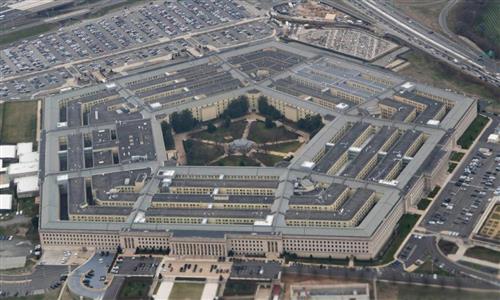
US changes Department of Defense to Department of War; the move may indicate more aggressive use of US military power, says Chinese expert
By Published: Sep 06, 2025 10:57 AM

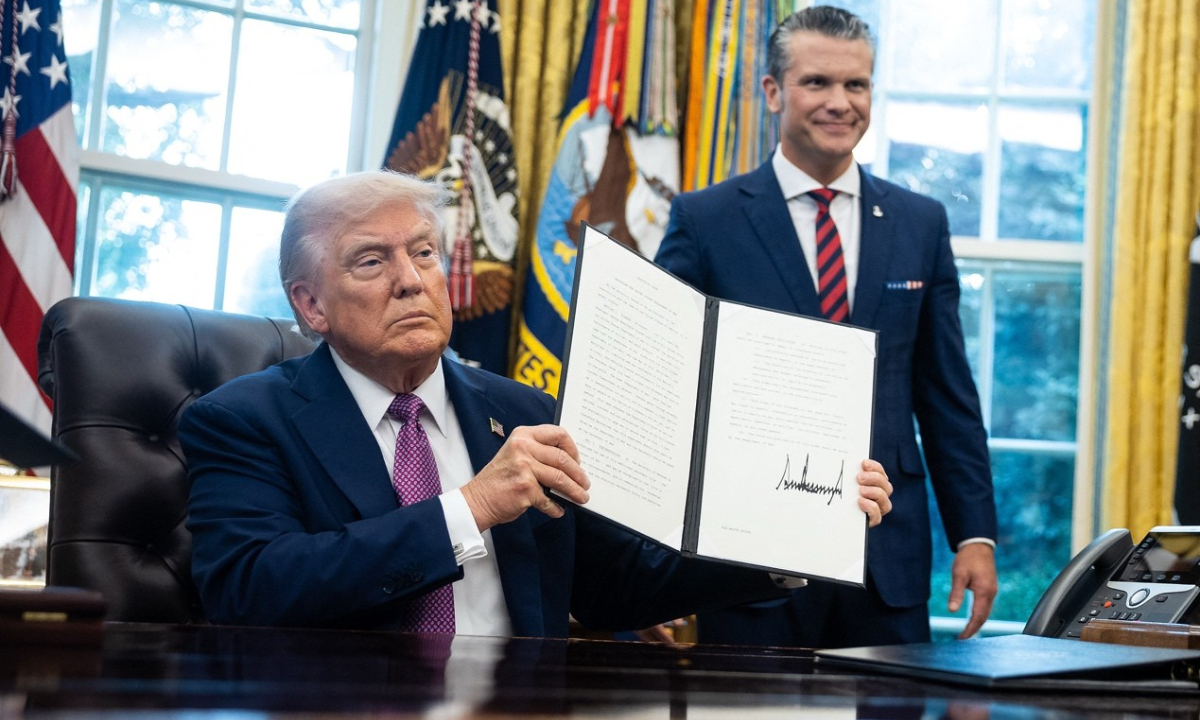
US President Donald Trump holds a signed executive order for the Department of Defense to be renamed the Department of War as Defense Secretary Pete Hegseth looks on in the Oval Office at the White House September 5, 2025. Photo: VCG
US President Donald Trump's renaming of the Department of Defense has sparked mixed reaction in the US, with many expressing frustration, anger and confusion, given it could cost American taxpayers over 1 billion dollars, according to media reports. Regarding the move's implications, a Chinese expert said that it may indicate more aggressive use of US military power and a potential shift by the US away from a "defensive" posture toward embracing a "belligerent" stance.
Democratic Senator Andy Kim of New Jersey said the renaming was a childish idea, adding: "Americans want to prevent wars, not tout them," BBC said.
Trump signed an executive order on Friday to rebrand the Department of Defense as the Department of War, reviving a name that was last used in the late 1940s, the Xinhua News Agency reported.
The order would authorize the Department of Defense, the secretary of defense and subordinate officials to use secondary titles such as "Department of War," "Secretary of War," and "Deputy Secretary of War" in official correspondence and public communications, according to a White House fact sheet, Xinhua said.
It also instructs Pentagon chief Pete Hegseth to recommend actions, including legislative and executive actions, to make the renaming permanent. A full legal change would still require congressional approval, per Xinhua.
The details of the order Trump signed Friday are still vague, but officials may need to change Defense Department seals on more than 700,000 facilities in 40 countries and all 50 states, Politico said.
This includes everything from letterhead for six military branches and dozens more agencies down to embossed napkins in chow halls, embroidered jackets for Senate-confirmed officials and the keychains and tchotchkes in the Pentagon store, according to the US media report.
The New York Times (NYT) said this rename reminds "a terrifying time for Americans," and the new name was intended to reflect an era in which deterrence was critical. "All of which makes President Trump's executive order on Friday seeking to restore the Pentagon to its old name — the War Department — more than just a throwback, a restoration of tough-guy nomenclature," the NYT said.
Bloomberg said the shift dovetails with Trump's bid to project a more aggressive posture for the Pentagon by touting "lethality" and an emphasis on the "warfighter." He said he would ask Congress to make the change formal but seek to implement the shift immediately.
US Congress established the War Department in 1789 to oversee the Army, Navy and Marine Corps, US media Axios said, citing the department's website.
After World War II in 1947, then president Harry Truman merged the Navy and War Departments, as well as the Air Force, into a single National Military Establishment through the National Security Act, the US media said.
About two years later, the National Security Act was amended and the National Military Establishment was renamed the Department of Defense.
The European Democrats Party said in a Instagram post on Friday that "While symbolic, this shift marks a dangerous normalization of aggression over diplomacy — and a worrying step away from international cooperation."
The choice of words can change a country's posture toward the world. From safeguarding peace to glorifying conflict, this rebranding says it all, the post said.
While this renaming may seem like a symbolic adjustment of an institution's name, it essentially sends a dangerous signal: The US will more openly and blatantly define its military and foreign policy with "war" at its core, Li Haidong, an expert on US affairs at the China Foreign Affairs University, told the Global Times on Saturday.
This may indicate a more aggressive use of US military power and reflects a potential shift by the US away from a "defensive" posture toward embracing a "belligerent" stance, which will bring greater uncertainty to global peace and stability, the expert said.
When asked about the US' plans to change the name of the Defense Department, the Chinese Foreign Ministry spokesperson Guo Jiakun said on Friday that "this is the US' domestic affair. I will not make a comment."
RELATED ARTICLES