ARTS / CULTURE & LEISURE
Fitness expected to be key part of China’s pet economy
Paws in motion
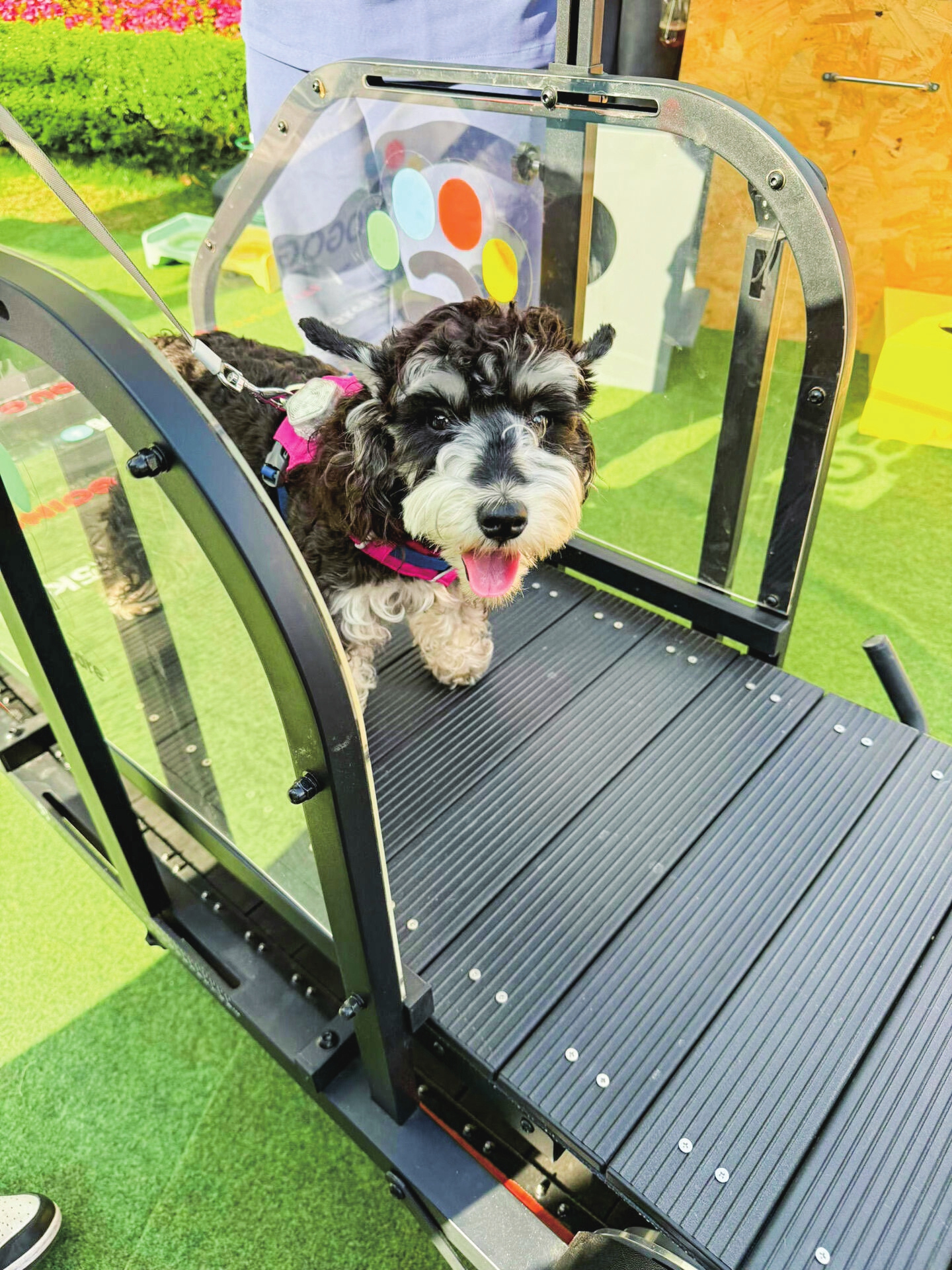
Giant schnauzer Chris practices on a treadmill in April 2025. Photo: Courtesy of Chang Ke
When 29-year-old Jiang Yue realized her 18-month-old corgi, Liulian, needed to shed a few pounds, she didn't turn to diet food alone. Instead, she took her pup to a dedicated pet gym in Shanghai - a place offering not only swimming and treadmill workouts but also spa massages."It started out as curiosity," Jiang told the Global Times. Later, the workouts became routine out of necessity for the dog's health.
Her corgi now goes to the gym twice a month, and, in addition, runs outdoors and swims three times a month, Jiang said. She has noticed the difference: The dog is slimmer and has basically maintained a healthy weight. Once the weather cools down, she plans to add more outdoor exercise to complement the indoor workouts.
Jiang is among a growing number of Chinese pet owners bringing their animals to fitness centers. On social media, pet fitness has become a trending topic. For example, a search for "pet fitness" on the lifestyle-sharing platform Xiaohongshu brings up posts of owners doing yoga with their pets, checking in at gyms designed for pets, or heading outdoors with their pets for long walks and other workouts.
Pet fitness is meeting the growing demand as owners focus more on their pets' health and strength. It offers an alternative to traditional activities, adds variety, and strengthens the bond between pets and their owners, Wang Peng, an associate research fellow at the Beijing Academy of Social Sciences, told the Global Times.
"This trend reflects the rise of 'pet humanization,' with owners treating pets like family and investing in their well-being," Wang added. He also noted that pet fitness, as an emerging segment of the pet economy, complements traditional sectors and could become a key driver of market growth.
Keeping fit
According to Jiang, corgis tend to gain weight easily and have bone issues. If they get too heavy, it will put too much pressure on their legs.
"To keep his weight under control, we made fitness a habit. Pet fitness, like human fitness, is about health. For dogs that are overweight or don't get enough exercise, it's really necessary," added Jiang.
Such growing awareness of pets' health has also driven new business opportunities. In July, Shanghai opened what is being described as the country's first dog gym, with all equipment and programs tailored specifically to animals. According to the Jiefang Daily, the 300-square-meter facility is divided into retail, fitness, spa, and massage areas, offering pet owners a one-stop experience for everything from exercise and rehabilitation to shopping for daily essentials.
Chang Ke, a 34-year-old in Shanghai, visited the gym with her giant schnauzer, Chris, after noticing the dog's rear legs seemed weak. Animal doctors and trainers suggested more uphill exercise, so she explored the gym's offerings.
"The gym's facilities include treadmills, swimming pools and a spa area," Chang told the Global Times. But she realized not all dogs are suited to that environment after visiting. Puppies can be too playful or nervous to stay steady on a treadmill. Additionally, a treadmill or swimming session can cost 300 yuan ($42), which is more expensive than most human gyms. Instead, she opted for outdoor alternatives. She takes the dogs to parks and mountain streams, where they can run and swim freely.
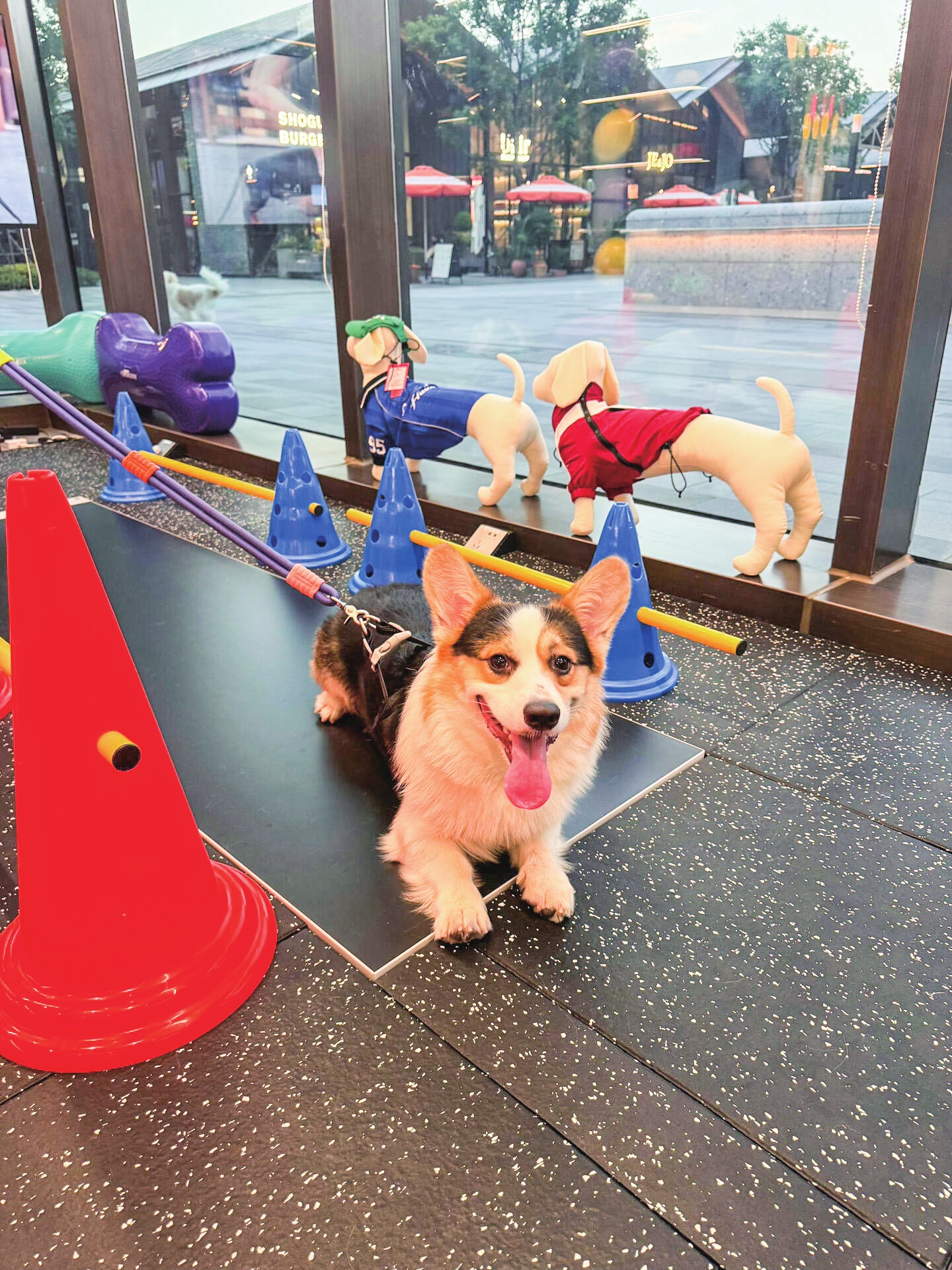
Corgi Liulian rests after tackling the obstacle jumps at a pet gym in Shanghai on July 5, 2025. Photo: Courtesy of Jiang Yue
Booming trendAccording to the Asia Pet Research Institute, China was home to 187 million pet dogs and cats in 2024, while the value of its pet market exceeded 300 billion yuan, the Xinhua News Agency reported.
Meanwhile, a report released by iiMedia Research shows that China's pet economy is expected to grow to 1.15 trillion yuan by 2028. The report notes that looking ahead, as people increasingly recognize the emotional value of pets and their spending power grows, the pet industry is expected to continue to thrive, becoming an increasingly influential force in the consumer market.
For many, pets serve as companions in fast-paced cities, providing both comfort and motivation, even if it means higher expenses.
Lin Xiao, a 29-year-old, based in Beijing, told the Global Times that she spends around 1,000 yuan a month on food, supplements, toys and treats for her chinchilla cat Didi. This does not include grooming, bathing, or occasional medical expenses. For her, the cat is like a family member, offering companionship and love.
Compared with dogs, cats are usually lighter and spend more time indoors. She told the Global Times that she currently has no plans to take Didi to fitness sessions, unless the cat gains a bit more weight.
"As pet owners place increasing importance on their pets' health and quality of life, demand for pet fitness is expected to grow, with the market likely to expand further," Wang told the Global Times.
Both Jiang and Chang noted that pet fitness can be costly. Chang told the Global Times that she supports pet fitness, but there are still significant challenges, including improving the safety of equipment and the professionalism of staff.
Wang highlighted that the pet fitness industry is expanding, offering a wider range of products and services to meet diverse needs. From personalized exercise programs to comprehensive health management, owners will have more choices. Industry standards will also be gradually established to protect both pets and owners, supporting healthy, orderly development, added Wang.
RELATED ARTICLES