SOURCE / PRESS RELEASE
Global AgriInno Challenge 2025: covering 97 countries, global youths showcase agricultural innovation
The Global AgriInno Challenge (GAC) 2025, co-organized by the FAO, Zhejiang University, and Pinduoduo, supported by the Foreign Economic Cooperation Center, MARA, P.R.China (FECC) and Government of Binjiang District, Hangzhou City, successfully concluded in Hangzhou. This year's competition attracted over 500 digital agricultural innovation solutions from 97 countries, setting new records in terms of geographical coverage, technological sophistication, and youth participation, highlighting global cooperation and innovative vitality within the agricultural technology sector.
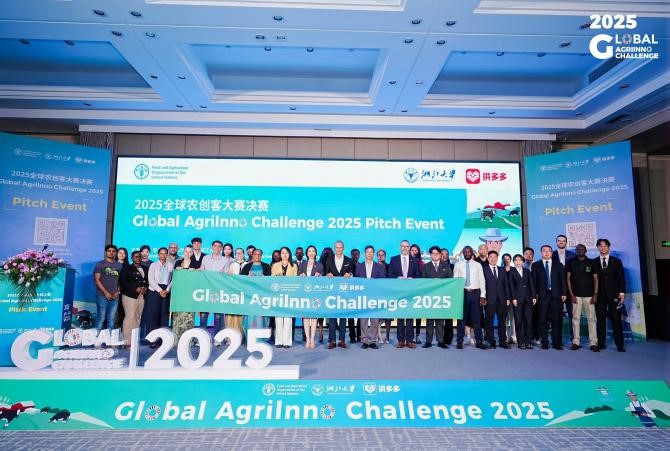
After intense competition, Tanzania's SafeSip team won the gold prize with their portable water filters improving health and productivity in East Africa's communities. A Chinese team's AI-powered pig farming solution secured the silver award, while the bronze award went to the US-based PlantPulse Patch team for their early warning system for plant diseases. These three solutions are not only technologically robust but also directly address the pain points of smallholder farmers, demonstrating the practical impact of digital agriculture.
Global youths unite, ushering in a highlight moment for agricultural innovation
The Global AgriInno Challenge was co-launched in 2020 by FAO and Zhejiang University to motivate young people to drive sustainable agricultural transformation using digital technologies. Over the past five years, the competition has evolved into a flagship agricultural science and innovation event for FAO, cumulatively attracting thousands of young participants from nearly a hundred countries. Pinduoduo, as a supporting partner for five consecutive editions, has consistently contributed resources and platform strength to the competition.
This year's edition received 519 submissions of solutions, covering core digital agriculture fields such as smart livestock farming, plant medicine, precision irrigation, remote sensing monitoring, and cold chain optimization. After multiple rounds of selection, nine teams from Kenya, Uganda, Tanzania, China, Thailand, Colombia, Hungary, and the US advanced to the finals. These teams received "project seed funding" from Pinduoduo to advance their work, and the top two winning teams will also be invited to present their innovations at the 2025 FAO Science and Innovation Forum on the international stage.
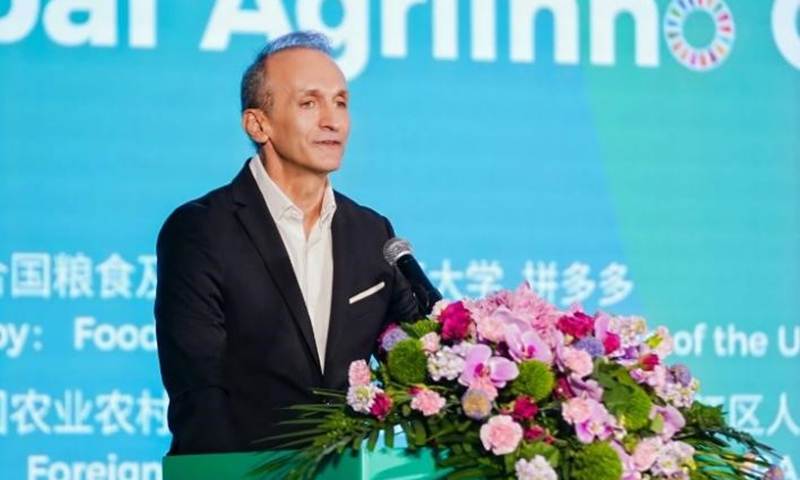
Vincent Martin, director of the FAO Innovation Office, stated during the event that challenges like climate warming and resource scarcity are currently threatening the livelihoods of millions of smallholder farmers and rural communities. Youth-led innovative solutions are key to addressing these challenges. FAO will continue to deepen cooperation with partners like Zhejiang University and Pinduoduo to scale innovative solutions from local pilots to global implementation, helping achieve the goals of enhancing climate resilience, supply chain efficiency, and nutritional security.
Digital technology deeply empowers agriculture
The proposals in this year's competition demonstrated significant technological integration. Cutting-edge technologies such as artificial intelligence (AI), Internet of Things (IoT), nanomaterials, and remote sensing satellites were widely incorporated into agricultural scenarios, showcasing the young agri-innovators' acute grasp and deep understanding of technology application.
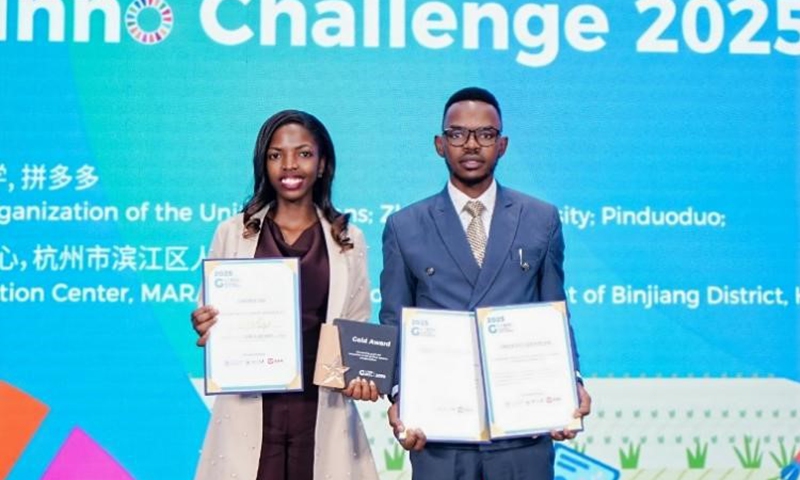
The gold prize-winning SafeSip team targeted the drinking water safety issue in the poultry industry across seven East African countries, introducing an integrated service combining a five-stage bionic ultra-filtration, solar-powered IoT monitoring, and tiered subscriptions. The system operates without grid electricity, monitors water quality in real time, and provides early warnings. In pilot areas, it reduced the incidence of poultry infectious diseases by 67 percent and mortality rates by 58 percent. Users only need to pay $6 per month, recouping the cost within 4.5 months, truly achieving "solving big problems at low costs."
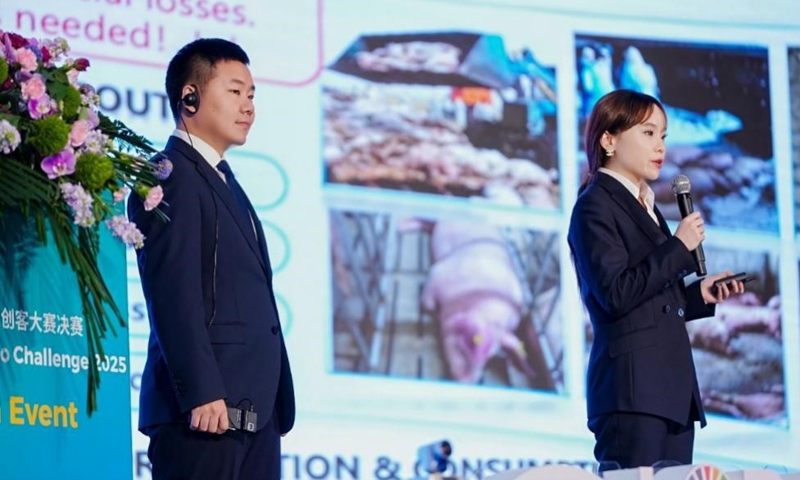
The silver award-winning project, the Swine Herd Real-time Guard Battle team, utilizes an AI acoustic recognition and multi-sensor fusion system to provide a 7-day early warning for porcine respiratory diseases. It also monitors body temperature, feeding, and activity levels 24/7, significantly reducing the need for manual inspections. Already deployed on several pig farms, the project enables one breeder to manage 10,000 pigs annually, markedly improving labor efficiency and modernizing production.
The bronze award-winning team, PlantPulse Patch, focuses on health monitoring for high-value crops. Using nano-scale VOC sensors attached near plant leaves, the system can issue warnings 2-3 days before disease onset by detecting changes in volatile gases, allowing farmers to intervene early. This technology has the potential to reduce global crop losses by over $100 billion annually.
Diverse tech solutions for global agriculture
Although only three teams stood on the highest podium, the other finalists also demonstrated strong innovative capabilities and application potential. A Hungarian team developed a high-altitude balloon farmland monitoring system for low-cost, real-time observation of irrigation, pests, diseases, and wildlife damage. A Ugandan team leveraged solar power to drive irrigation and cold chain systems. A Thai team combined satellite remote sensing and AI for accurate straw burning prediction. These solutions collectively outline a multidimensional vision for digital agriculture and the potential for global collaboration.
Jianghong Zhou, vice president of Zhejiang University, pointed out: "Through this competition, we have seen many outstanding digital agricultural solutions, innovative ideas, and technologies that are transforming global agri-food systems. These innovations and dedication will become the seeds that change the future of the agri-food system, making it more resilient."
Professor Longbao Wei, director of the Institute of Food Economics and Agribusiness Management at Zhejiang University and a competition judge, added: "The platform built by prestigious universities, leading enterprises, and international organizations to support youth-led technological innovation and promote the transformation of the global agri-food system will undoubtedly encourage more rural youth and women to engage in agricultural science and innovation, fostering a better ecosystem for building a more resilient and sustainable agri-food system."
Pinduoduo continues to boost agricultural R&D
As a comprehensive e-commerce platform founded on agriculture, Pinduoduo has long placed agriculture at the core of its strategy, focusing both on deepening the "last mile" of production-sales connection and continuously investing in the "first mile" of agricultural technology. In addition to supporting the Global Agri-tech Innovation Competition for five consecutive years, Pinduoduo has also hosted five editions of the "Smart Agriculture Competition," and jointly launched the "2025 Digital Agriculture Innovation Bootcamp" with FAO and Zhejiang University to promote exchanges among international young agricultural technology talents.
Earlier this year, Pinduoduo announced a "Hundred Billion Support Program," explicitly listing agricultural scientific research and technological innovation as one of the key supported areas. Vice President of Pinduoduo, Kaidi Hou, stated in her speech at the competition: "Over the next three years, we will further utilize our digital advantages to help improve production and life in rural areas."
Although the Global AgriInno Challenge has concluded, the wave of innovation in global agricultural technology is still gaining momentum. As more young people bring their skills, passion, and sense of mission into this field, coupled with the continuous empowerment from international organizations, universities, and enterprises, a more efficient, greener, and more resilient global agricultural system is gradually becoming a reality through these small yet steadfast innovations.
Global AgriInno Challenge (GAC) 2025
After intense competition, Tanzania's SafeSip team won the gold prize with their portable water filters improving health and productivity in East Africa's communities. A Chinese team's AI-powered pig farming solution secured the silver award, while the bronze award went to the US-based PlantPulse Patch team for their early warning system for plant diseases. These three solutions are not only technologically robust but also directly address the pain points of smallholder farmers, demonstrating the practical impact of digital agriculture.
Global youths unite, ushering in a highlight moment for agricultural innovation
The Global AgriInno Challenge was co-launched in 2020 by FAO and Zhejiang University to motivate young people to drive sustainable agricultural transformation using digital technologies. Over the past five years, the competition has evolved into a flagship agricultural science and innovation event for FAO, cumulatively attracting thousands of young participants from nearly a hundred countries. Pinduoduo, as a supporting partner for five consecutive editions, has consistently contributed resources and platform strength to the competition.
This year's edition received 519 submissions of solutions, covering core digital agriculture fields such as smart livestock farming, plant medicine, precision irrigation, remote sensing monitoring, and cold chain optimization. After multiple rounds of selection, nine teams from Kenya, Uganda, Tanzania, China, Thailand, Colombia, Hungary, and the US advanced to the finals. These teams received "project seed funding" from Pinduoduo to advance their work, and the top two winning teams will also be invited to present their innovations at the 2025 FAO Science and Innovation Forum on the international stage.
Vincent Martin, director of the FAO Innovation Office
Vincent Martin, director of the FAO Innovation Office, stated during the event that challenges like climate warming and resource scarcity are currently threatening the livelihoods of millions of smallholder farmers and rural communities. Youth-led innovative solutions are key to addressing these challenges. FAO will continue to deepen cooperation with partners like Zhejiang University and Pinduoduo to scale innovative solutions from local pilots to global implementation, helping achieve the goals of enhancing climate resilience, supply chain efficiency, and nutritional security.
Digital technology deeply empowers agriculture
The proposals in this year's competition demonstrated significant technological integration. Cutting-edge technologies such as artificial intelligence (AI), Internet of Things (IoT), nanomaterials, and remote sensing satellites were widely incorporated into agricultural scenarios, showcasing the young agri-innovators' acute grasp and deep understanding of technology application.
The gold prize-winning SafeSip team
The gold prize-winning SafeSip team targeted the drinking water safety issue in the poultry industry across seven East African countries, introducing an integrated service combining a five-stage bionic ultra-filtration, solar-powered IoT monitoring, and tiered subscriptions. The system operates without grid electricity, monitors water quality in real time, and provides early warnings. In pilot areas, it reduced the incidence of poultry infectious diseases by 67 percent and mortality rates by 58 percent. Users only need to pay $6 per month, recouping the cost within 4.5 months, truly achieving "solving big problems at low costs."
The silver prize-winning team: Swine Herd Real-time Guard Battle
The silver award-winning project, the Swine Herd Real-time Guard Battle team, utilizes an AI acoustic recognition and multi-sensor fusion system to provide a 7-day early warning for porcine respiratory diseases. It also monitors body temperature, feeding, and activity levels 24/7, significantly reducing the need for manual inspections. Already deployed on several pig farms, the project enables one breeder to manage 10,000 pigs annually, markedly improving labor efficiency and modernizing production.
The bronze award-winning team, PlantPulse Patch, focuses on health monitoring for high-value crops. Using nano-scale VOC sensors attached near plant leaves, the system can issue warnings 2-3 days before disease onset by detecting changes in volatile gases, allowing farmers to intervene early. This technology has the potential to reduce global crop losses by over $100 billion annually.
Diverse tech solutions for global agriculture
Although only three teams stood on the highest podium, the other finalists also demonstrated strong innovative capabilities and application potential. A Hungarian team developed a high-altitude balloon farmland monitoring system for low-cost, real-time observation of irrigation, pests, diseases, and wildlife damage. A Ugandan team leveraged solar power to drive irrigation and cold chain systems. A Thai team combined satellite remote sensing and AI for accurate straw burning prediction. These solutions collectively outline a multidimensional vision for digital agriculture and the potential for global collaboration.
Jianghong Zhou, vice president of Zhejiang University, pointed out: "Through this competition, we have seen many outstanding digital agricultural solutions, innovative ideas, and technologies that are transforming global agri-food systems. These innovations and dedication will become the seeds that change the future of the agri-food system, making it more resilient."
Professor Longbao Wei, director of the Institute of Food Economics and Agribusiness Management at Zhejiang University and a competition judge, added: "The platform built by prestigious universities, leading enterprises, and international organizations to support youth-led technological innovation and promote the transformation of the global agri-food system will undoubtedly encourage more rural youth and women to engage in agricultural science and innovation, fostering a better ecosystem for building a more resilient and sustainable agri-food system."
Pinduoduo continues to boost agricultural R&D
As a comprehensive e-commerce platform founded on agriculture, Pinduoduo has long placed agriculture at the core of its strategy, focusing both on deepening the "last mile" of production-sales connection and continuously investing in the "first mile" of agricultural technology. In addition to supporting the Global Agri-tech Innovation Competition for five consecutive years, Pinduoduo has also hosted five editions of the "Smart Agriculture Competition," and jointly launched the "2025 Digital Agriculture Innovation Bootcamp" with FAO and Zhejiang University to promote exchanges among international young agricultural technology talents.
Earlier this year, Pinduoduo announced a "Hundred Billion Support Program," explicitly listing agricultural scientific research and technological innovation as one of the key supported areas. Vice President of Pinduoduo, Kaidi Hou, stated in her speech at the competition: "Over the next three years, we will further utilize our digital advantages to help improve production and life in rural areas."
Although the Global AgriInno Challenge has concluded, the wave of innovation in global agricultural technology is still gaining momentum. As more young people bring their skills, passion, and sense of mission into this field, coupled with the continuous empowerment from international organizations, universities, and enterprises, a more efficient, greener, and more resilient global agricultural system is gradually becoming a reality through these small yet steadfast innovations.
