ARTS / CULTURE & LEISURE
AI digital guides, technological archaeology debut at CIFTIS
Cultural innovation products bring more choices
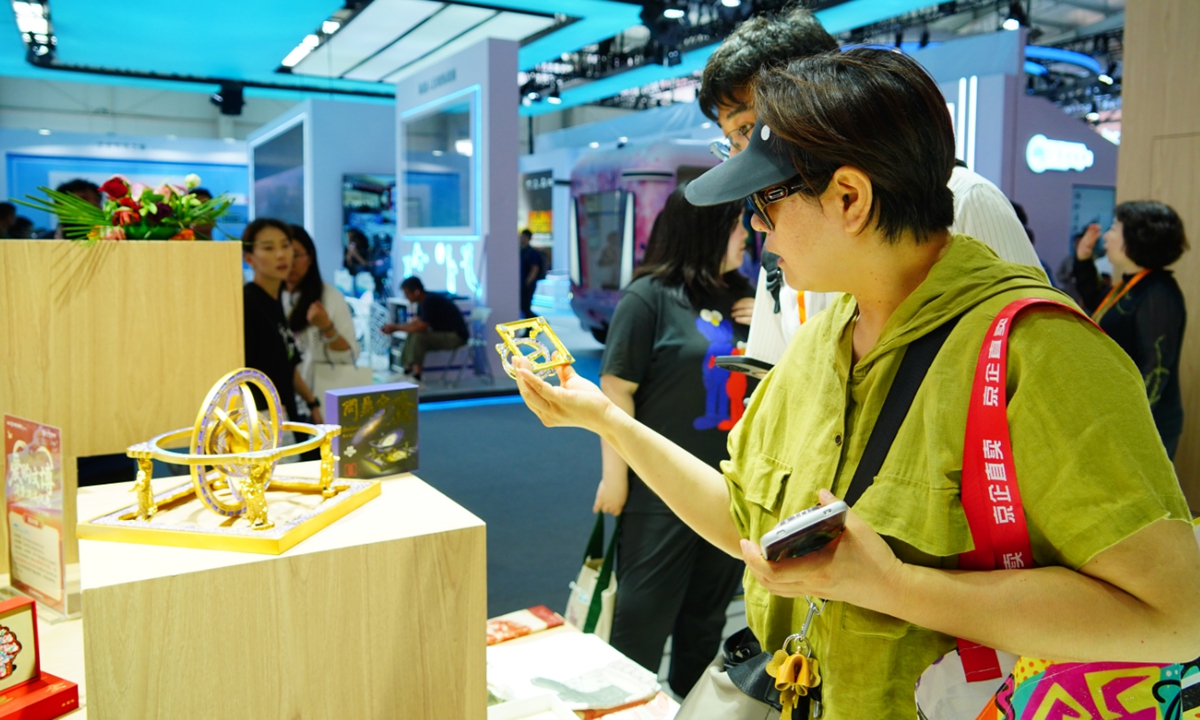
Visitors view exhibits at the China International Fair for Trade in Services in Beijing on September 11, 2025. Photo: IC
At the ongoing 2025 China International Fair for Trade in Services (CIFTIS) in Beijing, the Shougang Park venue has witnessed the exhibition of more than 500 cultural and creative products from iconic parks like the Summer Palace, alongside 20 brand-new items making their debut. Adding to the attraction are smart experiences powered by AI and mixed reality (MR), showcasing how technology is reshaping the cultural sector.Among the highlights is the introduction of AI-powered digital park guides.
"Take the Beijing Ancient Architecture Museum as an example. Visitors renting this guide device can receive automatic explanations through Bluetooth as they approach exhibits. Beyond voice and text, the system integrates videos that are especially appealing to young audiences," Chen Zhenfeng, vice president of Aikesheng Digital Cultural (Beijing) Co Ltd, explained to the Global Times, noting how technology transforms the museum-going experience.
Unlike traditional audio guides, the AI digital humans offer interactive engagement with over 98 percent recognition accuracy and instant multilingual switching.
"It's like a one-on-one guide who answers your questions anytime," Chen said, noting that visitors can even continue exploring for three days after leaving the museum via mobile connectivity.
The company behind the device has now partnered with more than 100 museums nationwide and helped set industry standards for AI guides. Beyond technology, it promotes global cultural outreach through the "Tracing Civilization" project, inviting youth worldwide to explore Chinese heritage. "While human guides may vary in knowledge or style, AI ensures objectivity, interactivity and consistency in relaying historical facts."
The integration of technology into heritage preservation was also evident at the cultural relics conservation section, guided by the Beijing Municipal Cultural Heritage Bureau. Here, the Institute demonstrated how advanced scientific tools can shed light on the city's 3,070-year history.
Under high-resolution 3D microscopes, visitors to the exhibition were able to examine micro-samples of ceramics, seeds and bones, gaining a microscopic perspective of relics that are rarely accessible. Artifacts on display ranged from pottery unearthed at the Liulihe site to Ming and Qing dynasties (1368-1911) porcelain shards, as well as Han Dynasty (206BC-AD220) coins and thin-section soil samples.
"Beyond traditional excavation, we employ technological analysis to study the shapes, images and compositions of artifacts. This helps us reconstruct ancient production techniques and better understand daily life, including the development of handicrafts," Wang Shuyun from the Beijing Archaeological Research Institute told the Global Times. "We further want the public to gain a clearer, more engaging view of archaeology through both direct displays and digital presentations."
In addition to products related to technology, the cultural section also welcomed over 20 new cultural products that were making their debut, such as the Summer Palace's new refrigerator magnet featuring the iconic Seventeen-Arch Bridge, and the Beijing Zoo's AI-enabled plush toys that can talk and introduce animal habits.
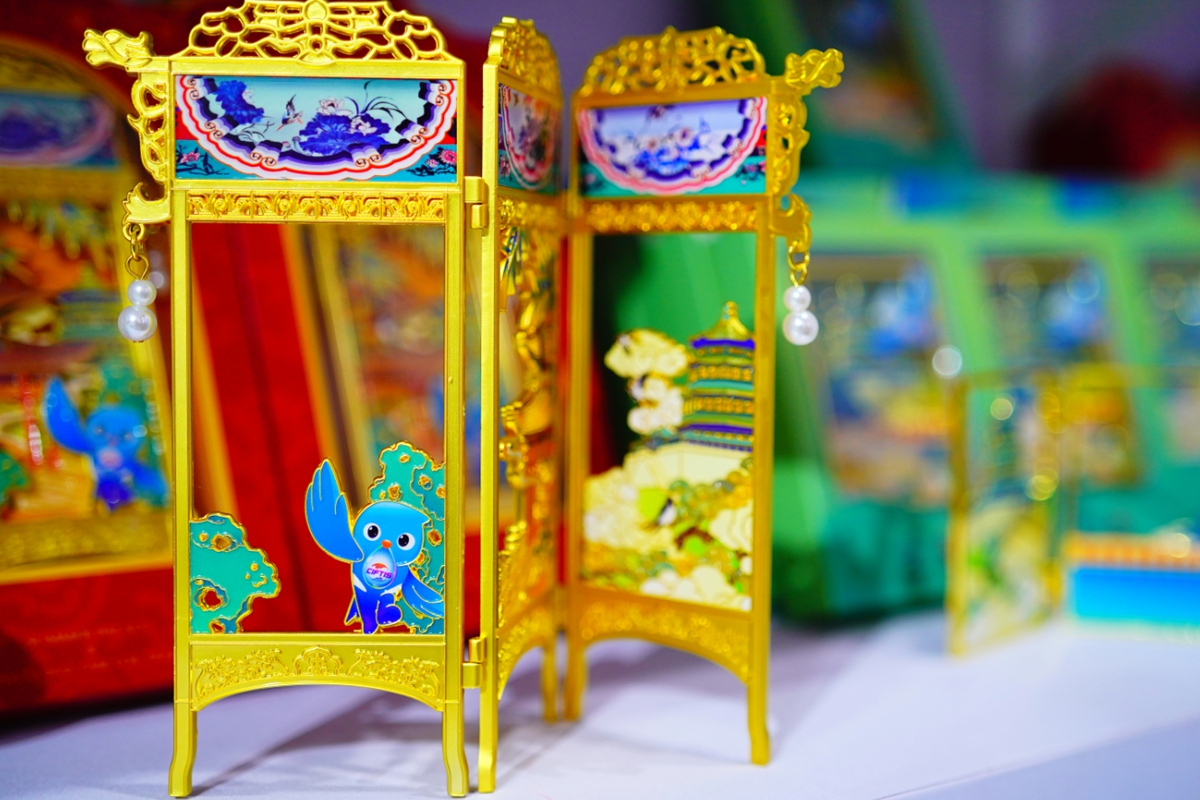
A refrigerator magnet on display Photo: IC
A blind box of ancient coins from the Luxian County Ancient City Ruins Park and bookmarks modeled on Han-era golden ornaments were also seen in the section, offering visitors a vivid sense of life and craftsmanship from 2,000 years ago.Beyond product showcases, Beijing's parks brought immersive experiences to CIFTIS. On Thursday, Zhongshan Park offered a Song brocade workshop. On Friday, the Luxian County Ancient City Ruins Park will invite visitors to craft golden-foil relic reliefs.
"We want to show that parks are not only green spaces but also cultural platforms," said a representative from the Beijing Park Management Center. "From archaeological experiences to creative workshops, parks can bring more cultural vitality to the city's tourism landscape."
Performances such as The Marriage of Figaro were also livestreamed via the world's first 8K ultra-HD second-stage distribution platform. Other innovations included Beihai Park's AI digital human customer service, humanoid service robots, and interactive 3D AI avatars.
"By combining cultural relics, creative products, and cutting-edge technologies, this year's CIFTIS highlighted the deepening integration of culture and tourism with science and innovation. From archaeological blind boxes to digital humans, the event brought heritage closer to the public, making history tangible and enhancing cultural confidence," Wang Dan, from the Chinese Academy of Social Sciences (CASS), told the Global Times.
RELATED ARTICLES