ARTS / CULTURE & LEISURE
China’s Austronesian culture-themed museum receives first batch of relics
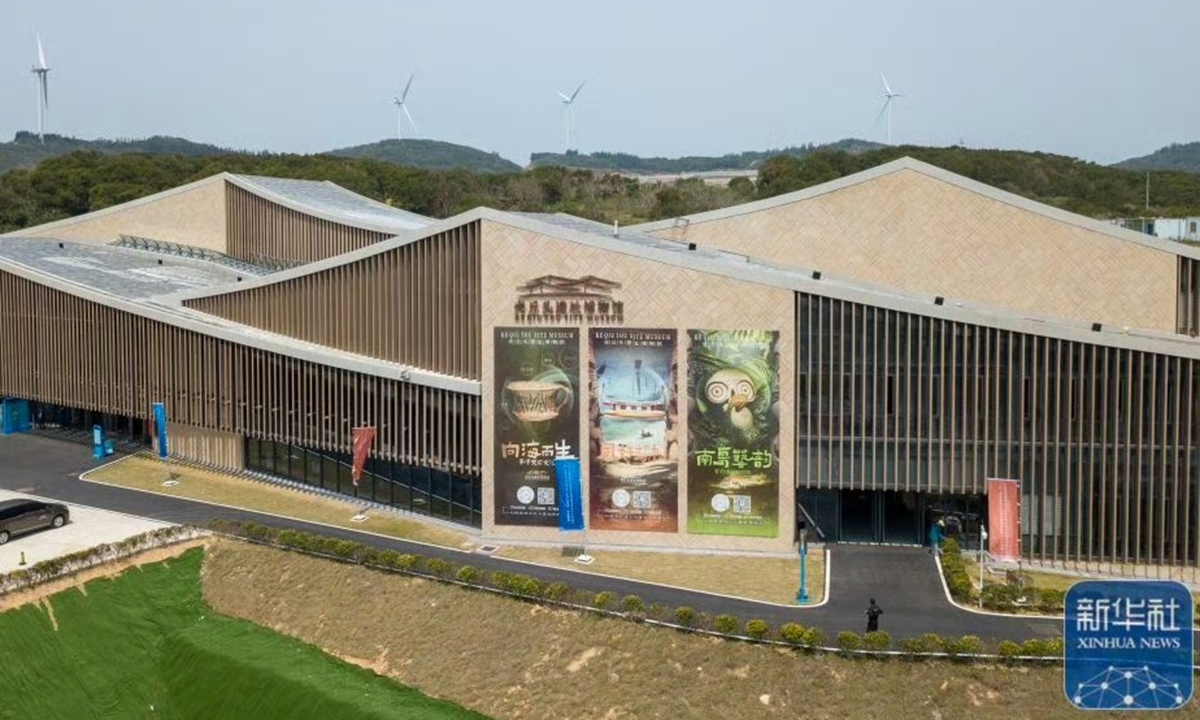
Keqiutou Site Museum
Featuring artifacts that showcase the cultural and lifestyle heritage of Austronesian-speaking peoples, the Keqiutou Site Museum in Pingtan, East China's Fujian Province, recently added a total of 103 relics to its collection.This batch of artifacts marks the "first collection acquired by the museum" since its establishment in December 2024, Chen Sheng, a representative of the museum, told the Global Times. The new batch includes production tools, daily utensils, and artworks once used by Austronesian-speaking people in Southeast Asia and the Pacific region, covering categories such as navigation tools, figurines, shields, weapons, and scepters.
Although these collections are "still in the authentication phase" and have not yet been unveiled to the public, Chen revealed to the Global Times that highlights among them include "an ancient stone axe," as well as "a model of the meticulously crafted canoes" that were used by ancient Austronesian-speaking people.
People of the Austronesian-speaking community refers to a vast cultural and linguistic group encompassing over 1,200 languages and a total population of approximately 400 million. The community is distributed across a vast region - from China's Island of Taiwan and the Hawaiian Islands in the US in the north to New Zealand in the south, and from Madagascar off the coast of Africa in the west to Easter Island in the southeastern Pacific Ocean in the east.
Riding the waves, the canoe was not only a means of transportation for the ancestors of Austronesian-speaking peoples, but also "a witness to their outward exploration and cultural exchanges," said Ao Peng, a cultural researcher. Ao also added that different studies have confirmed that "Austronesian-speaking people originated from the southeastern coastal region of China 8,400 years ago."
To better engage visitors with the community' niche yet important culture, the museum has specially designed three thematic themes - yuan (origin), liu (migration) and cai (colorful) - to allocate the 103 relics.
The first section of the exhibition titled "Origin" will showcase where the Austronesian-speaking people began, and use artifacts to illustrate the diverse roots of their culture. The next section "Migration" tells the story of how they traveled across the seas and fused their indigenous cultures with others, and the third section "colorful" is a metaphor to highlight these peoples' rich craftsmanship and artistic wisdom, Chen told the Global Times.
These artifacts were donated to the museum by private collector Jiang Min. Over the past few decades, she "has traveled to more than 10 countries and regions across the South Pacific to assemble this collection," the collector told the Global Times, adding that these gems are "finally home." "I will continue searching for artifacts that contribute to research into the Austronesian-speaking community," Jiang remarked.
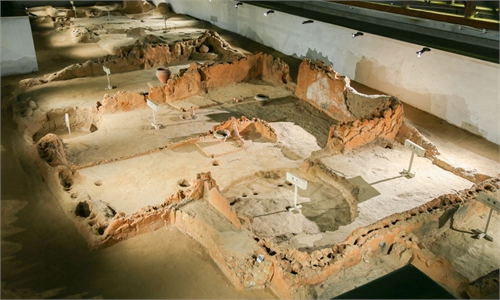
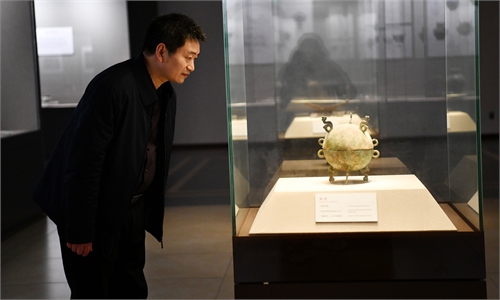
Prior to the new batch of artifacts, the Keqiutou Site Museum had already exhibited over 600 cultural relics during its opening in 2024, many of which were excavated from the Keqiutou archaeological cluster.
Including the Keqiutou ruins that date to 5,000 to 6,500 years ago, the cluster boasts several other spots such as the Xiying and Donghuaqiu ruins. It represents the largest and most completely preserved prehistoric settlement complex discovered in the southeastern coastal region of China. Within the settlement, there were distinct functional zones designed by ancient people, including residential areas, food processing quarters, craft production zones, and waste disposal sites, demonstrating a remarkably "modern" approach to spatial organization.
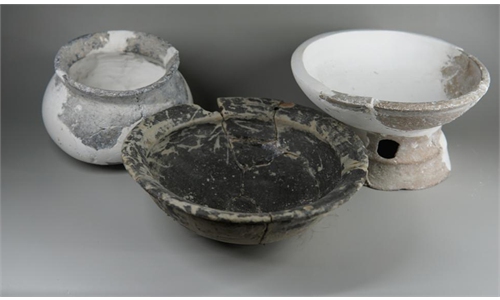
Abundant fish, shellfish and pottery remains were excavated from these sites. The remains of the earliest rice, foxtail millet, and broomcorn millet show that they once thrived on the coastal islands of southeastern China. They also reveal that the Austronesian-speaking peoples trace their earliest origins to the mainland.
A leading researcher of the Keqiutou culture, Fan Xuechun, told the Global Times that taking similar decorative patters on pottery as an example, the Keqiutou culture appears to "belong to the same cultural sphere of the Dabenkeng culture" that was discovered on the island of Taiwan.
"We believe the origin of the Dabenkeng culture can be traced back to Keqiutou," said Fan, while adding that the Keqiutou site serves as a vital historical testament to the formation of China's unified yet diverse cultural developments.
Both the original archaeological site and its museum are parts of the Pingtan Keqiutou Archaeological Site Park. It was selected in the fifth batch of national archaeological site park projects in July by the National Cultural Heritage Administration.
"We are planning to develop a cultural plaza to engage the public in experiencing and learning about the culture of the Austronesian-speaking peoples," said Chen, while revealing that in November, the site park will also serve as the venue for an international forum.
RELATED ARTICLES