BRASIL 247 / MORE
Brazil sets grain production record, bolstering food sovereignty
Harvest reaches 350.2 million tons in the 2024-25 season, driven by expanded farmland and favorable weather, according to Conab
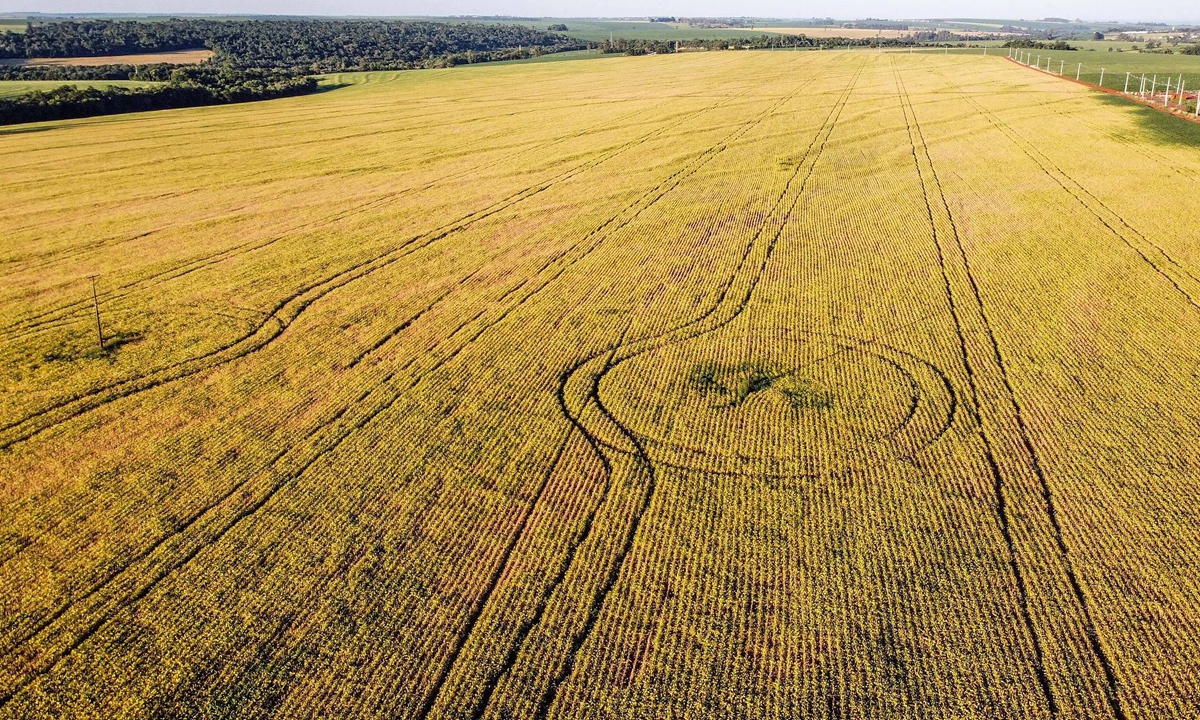
By Brasil 247 - Brazil has reached a historic milestone in agricultural output, producing 350.2 million tons of grains in the 2024-25 harvest, according to data released Thursday (Sept. 11) by the National Supply Company (Conab). The figure represents a 16.3 percent increase compared with the previous harvest of 324.36 million tons and underscores the country's expanding role as a global agricultural powerhouse. The findings were first reported by Conab.
The record output not only reinforces Brazil's ability to supply its own domestic market, but also strengthens its position as one of the world's leading food exporters. Brazil is a top supplier of soybeans and beef to China, as well as other agricultural products, cementing its role as a key player in global food chains.
What food sovereignty means
Food sovereignty is defined as the right of nations and communities to establish their own food and agriculture policies — not only ensuring access to food, but also prioritizing sustainable practices, local control and cultural traditions. Unlike food security, which focuses narrowly on whether people have enough to eat, food sovereignty emphasizes independence, environmental stewardship and resilience.
Analysts argue that for Brazil, expanding food sovereignty is not solely about record yields, but also about adopting policies that strengthen family farming, agroecology and equitable food distribution.
Expansion and productivity
The jump in production was driven by an increase of 1.9 million hectares in planted area, rising from 79.9 million to 81.7 million hectares, coupled with favorable weather conditions, especially in the Midwest.
Average national productivity climbed 13.7 percent, reaching 4,284 kg per hectare, up from 3,769 kg/ha in the prior season. The data highlights Brazil's ability to boost output not only through land expansion but also through gains in efficiency.
Crop-by-crop highlights
●Soybeans: The top-performing crop, with 171.5 million tons, up 20.2 million tons from last season. Average yield reached 3,621 kg/ha. Goiás recorded the highest productivity at 4,183 kg/ha, while Rio Grande do Sul lagged at 2,342 kg/ha due to drought and high temperatures.
●Corn: Another record, with 139.7 million tons, a 20.9 percent increase. The first harvest totaled 24.9 million tons (+8.6%), the second 112 million (+24.4%) and the third is expected to reach 2.7 million.
●Cotton: Forecast at 4.1 million tons, a rise of 9.7 percent.
●Rice: Output of 12.8 million tons, up 20.6 percent.
●Beans: Combined harvests estimated at 3.1 million tons, ensuring domestic supply.
●Wheat: Acreage fell 19.9 percent to 2.4 million hectares, but productivity is projected to recover to 3,077 kg/ha. Overall production is expected to reach 7.5 million tons, down 4.5 percent from last year.
Challenges ahead
Despite record-breaking numbers, experts caution that the broader challenge lies in ensuring that production growth translates into healthier diets and more sustainable rural development. Policies that support small farmers, strengthen local markets and address inequalities in food access will be essential, they say.
Brazil's record harvest strengthens its position in global grain markets, but the future of its food sovereignty will depend on how effectively the country balances large-scale agribusiness with the needs of local communities and environmental sustainability.
(Reported by Brasil 247 on September 11, 2025)
